Country under the dome: aviation experts assess Ukraine’s real capabilities for anti-drone protection
22 January 12:17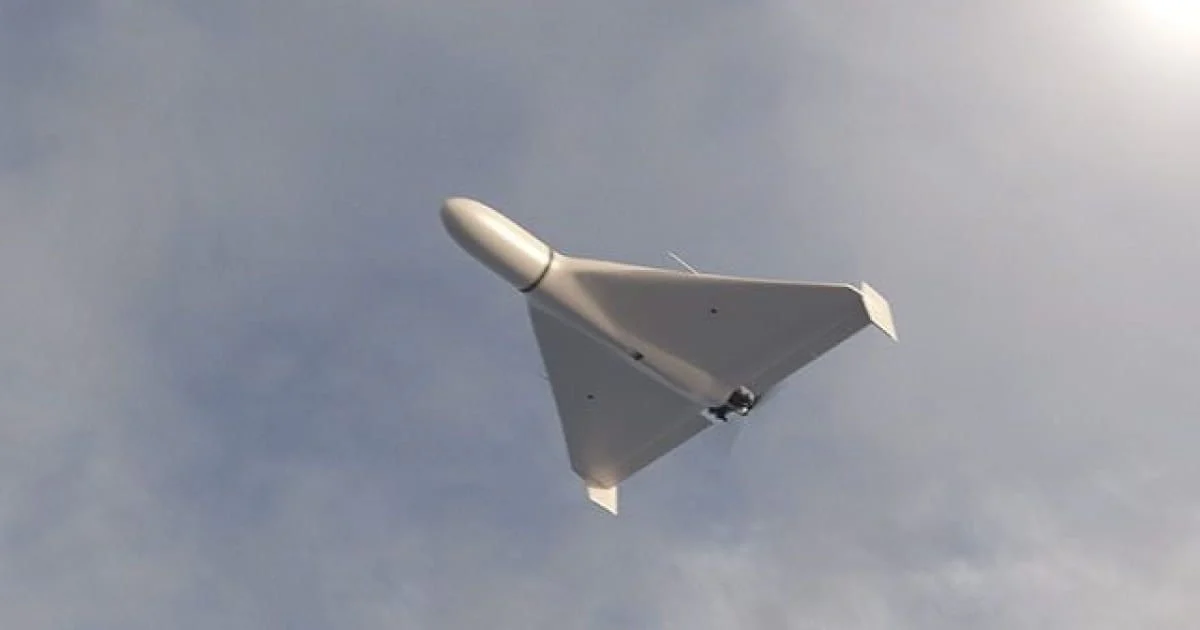 ANALYSIS FROM
There are plans to build an anti-drone dome over Ukraine. Komersant investigated how realistic and how quickly this can be achieved, and how exactly this system will work.
The proposal to create a large-scale system to counter Russian drones, which will detect and neutralize enemy targets as soon as they cross the Ukrainian border, is not new.
This time, it was announced—already in the form of a specific task—by the new Minister of Defense of Ukraine,Mykhailo Fedorov.
“Our task is to build an anti-drone dome over Ukraine. A system that does not react after the fact, but destroys the threat as it approaches… To build a system that works not locally, but nationwide… The anti-drone dome is not about the future. It is about survival today and the possibility of Ukraine’s development even in times of war,” the minister wrote on Telegram.
A large dome for a small air defense system
What should Ukraine’s response to enemy attacks be? Fast, systematic, and technological — these are the characteristics used by the new defense minister when talking about the task of building an anti-drone dome over Ukraine.
For more detailed explanations, see
“How does the air defense system work? First of all, you need sensors and detectors. Large air defense systems use radars. Satellite navigation and intelligence data. All this is done automatically and sent to the command post. The command center distributes target designations through processor systems. This system is too large for drones. A subsystem is needed that will be controlled by the overall system, but it will consist of small radars that can see 10-15 kilometers away and can communicate with each other automatically. In other words, we need to provide a system of sensors. These could be infrared devices, radar systems, or optics with improved properties. And if we have this information, we have the firepower to destroy the Shahed drones. First and foremost, these are our anti-aircraft drones or light missiles,” the expert notes.
The “anti-drone dome” that will cover the whole of Ukraine from enemy drones is a very large-scale project. It will require tens of thousands of radars and even more interceptor drones. Aviation expert Bohdan Dolintse draws attention to this.
“When we talk about unmanned interceptors, we must understand that this technology can only be effective when, for example, the interceptor’s operating radius is several kilometers. In order to cover the entire country or at least part of it with such systems, it is necessary to have launchers every few kilometers. That means tens of thousands of such systems located throughout the country in places where there is the highest risk of enemy targets appearing. The same applies to the timely detection of enemy targets and their immediate tracking. Given the low flight altitude of enemy “Shaheds” and their ability to use the terrain, the coverage area of such radars will be small, which means that thousands of such radars or detection systems will be needed,” the expert explains.
Bogdan Dolintse believes that from a technological point of view, it is possible to implement the “Anti-Drone Dome” project, but since such technologies are still relatively expensive, the key challenge, according to him, remains the high cost of the project.
Chances of success
The idea of creating an anti-drone dome is not new, but it sounds somewhat new now. First, the Ministry of Defense is now headed by a new minister, Mykhailo Fedorov, who, together with his colleagues, has been implementing digital technologies in Ukraine for many years, including those based on artificial intelligence. And who else but him could implement such a high-tech project? The chances of success are definitely increasing. Aviation expert Valery Romanenko agrees with this.
“Artificial intelligence needs to be used to control this system. It’s one thing to work with ballistics and winged missiles flying in dozens. It’s another to repel 600 or even more than 800 drones. Everyone already knows what a ‘drone swarm’ is. To counter them, you need the right technology. And now, in fact, a system center will be created to manage, i.e., receive information from sensors and transmit it to fire control systems. This requires the appropriate software, the appropriate specialists, and a single command,” says the expert.
The emergence of unified leadership is another new advantage. The new minister announced the task of building an anti-drone dome over Ukraine during the presentation of the new deputy commander of the Ukrainian Air Force. Pavlo Yelizarov (Lazar) was appointed to this position and will be responsible for the development of small air defense and drone interception. Aviation expert Bohdan Dolintse considers it positive that there is now a person who will be personally responsible for small-scale air defense.
“We see that in the previous configuration of countering enemy drones, there was no unified command. And, as a rule, resources and forces were scattered across different units and structures. The emergence of a key person who will be responsible for this area will, at a minimum, ensure coordination, unification, and acceleration of the development and implementation of relevant technologies. This person will also be able to lobby for certain decisions that will contribute to the effectiveness and scaling of the project,” the expert emphasizes.
Military officer and aerial reconnaissance specialist Ihor Lutsenko notes that similar projects to counter enemy drones have been undertaken before, but unfortunately not as quickly as necessary. In order to optimize the process, it is necessary to combine efforts at various levels.
“If we have a product that all interceptors need, our manufacturers have not yet shown any precedents of them joining forces and jointly developing one for all. That is, we simply need to unite, rather than each sitting in our own garden and digging something there. But we are used to someone coming along and forcing everyone to do something. And here, perhaps, we need to do the same. The Ministry of Defense needs to become an active player and set tasks for manufacturers to produce specific products. Is the new minister capable of doing this? I think he is, as long as he has enough people to carry out his orders,” says the military officer.
And here’s another relatively new detail. Ukraine has had many defense ministers, most of whom came without setting specific, practical tasks for themselves and their subordinates, and left without reporting on whether those tasks had been completed. The new head of the defense ministry and his new colleagues have a task, formulated by the minister himself: to build an anti-drone dome over Ukraine. All that remains is to carry it out.
Author: Serhiy Vasilevich