China has opened its market to Ukrainian flour: what this means for exporters and why shipments won’t begin immediately
7 April 12:21 ANALYSIS
Ukraine has officially opened the door to exporting wheat flour to the People’s Republic of China. On April 6, the State Service of Ukraine for Food Safety and Consumer Protection and the General Administration of Customs of the PRC signed a protocol outlining inspection, phytosanitary, and sanitary requirements. Authorities call this a step toward expanding exports of value-added products. However, the mere opening of the market does not yet mean that Ukrainian flour will flood into China in the coming weeks or months. Rodion Rybchynskyi, director of the Ukrainian Flour Millers Association, stated this in an exclusive comment to "Komersant Ukrainian" .
What exactly has been opened up for Ukraine
This refers to an officially agreed mechanism for Ukrainian wheat flour to access the Chinese market. In other words, there is now a legal and technical framework that allows Ukrainian producers to enter the Chinese market provided they comply with all established requirements.
In other words, this is no longer just a diplomatic statement of intent, but a concrete tool for the potential export of value-added products. For the Ukrainian agricultural sector, this is also important because opening new sales markets reduces dependence on specific markets and strengthens the country’s position in global trade.
On the Ukrainian side, the international agreement was signed by Serhiy Tkachuk, Head of the State Service of Ukraine for Food Safety and Consumer Protection; on the Chinese side, by Ma Shengkun, Ambassador Extraordinary and Plenipotentiary of the People’s Republic of China to Ukraine.
Iryna Ovcharenko, Deputy Minister of Economy, Environment, and Agriculture of Ukraine, emphasized that the signing of the document is an important step toward expanding access for Ukrainian products to the Chinese market and creates predictable conditions for producers:
“The signing of this Protocol is an important step toward expanding access for Ukrainian products to the market of the People’s Republic of China. The document sets out clear and transparent requirements for production, control, and export, creating predictable conditions for Ukrainian producers. This opens up new opportunities for increasing exports of value-added products, particularly wheat flour. At the same time, it is an important step toward diversifying export markets and strengthening Ukraine’s position in global markets.”
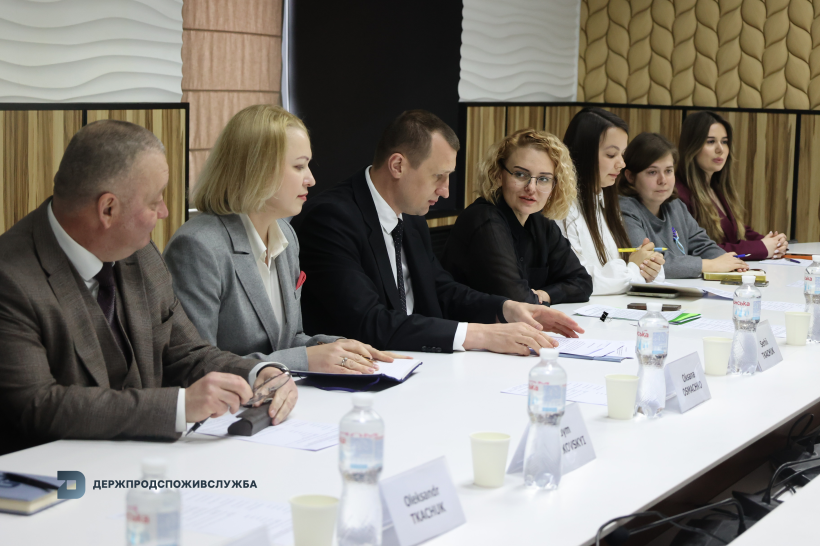
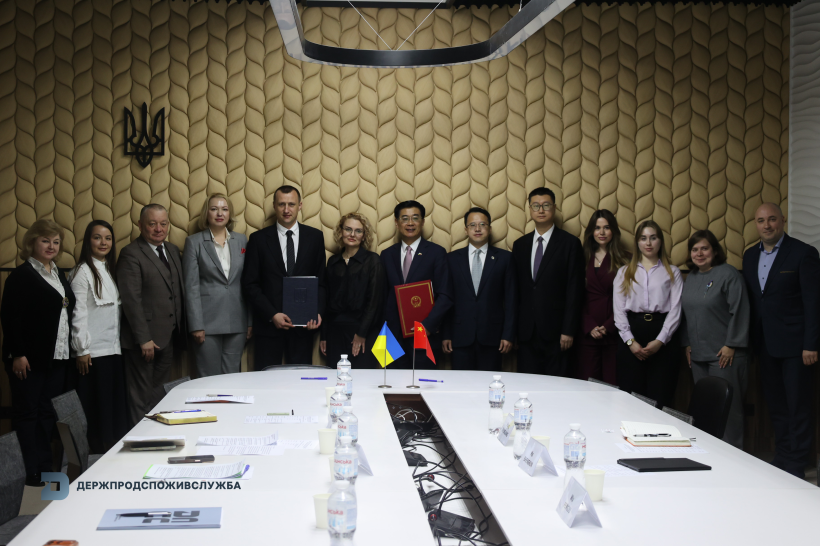
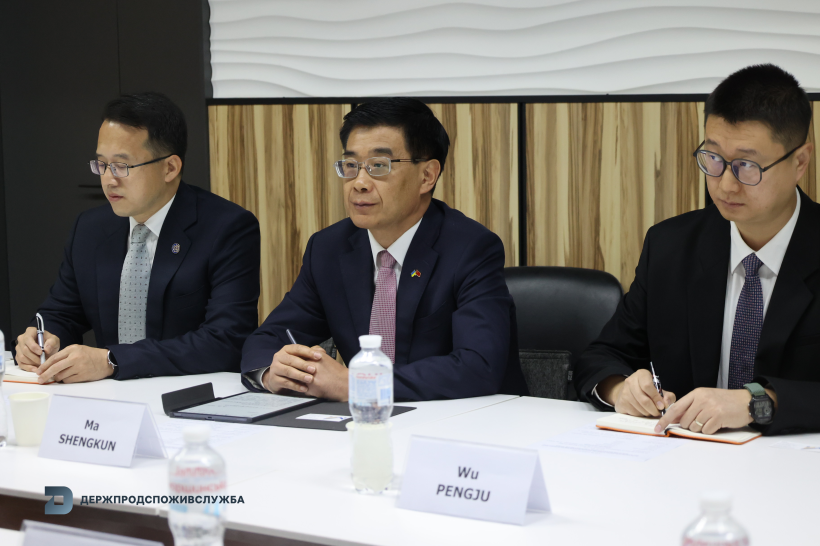
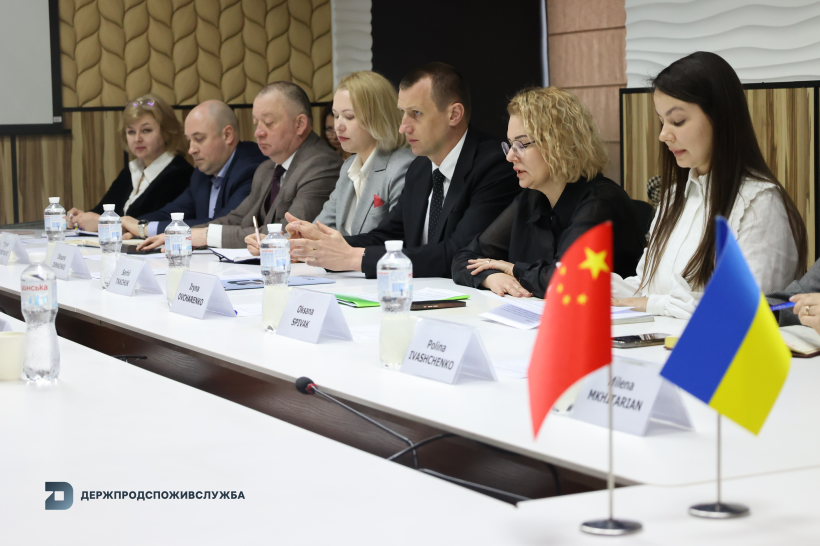
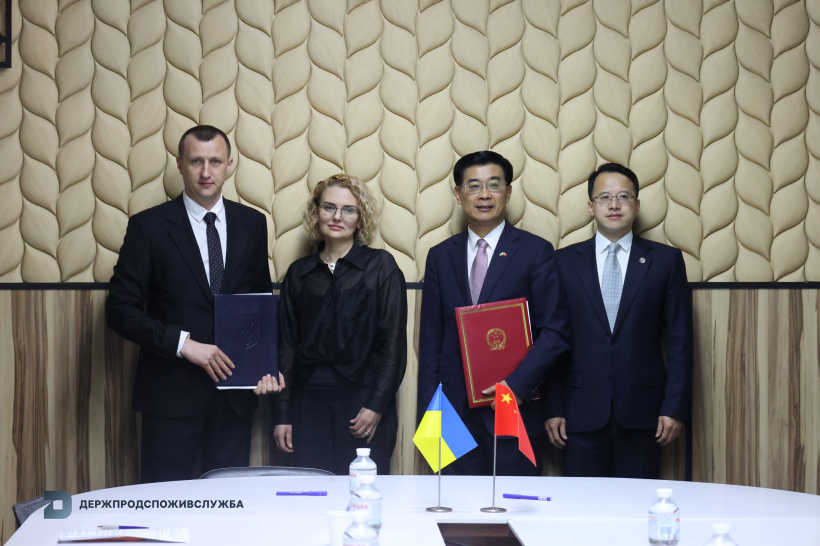
The document is the result of extensive work by experts, negotiations, and a comprehensive assessment of Ukraine’s food safety control system. In effect, the Chinese side has confirmed that Ukrainian products meet high standards and are eligible to enter one of the world’s largest markets.
Serhiy Tkachuk, Head of the State Service of Ukraine for Food Safety and Consumer Protection, described this decision as far more significant than simply opening a new export market:
“This is not just a formality—it is a ‘green light’ for Ukrainian producers to enter one of the world’s largest and most demanding markets. This decision is much more than a new export market. It is about developing processing, increasing added value, and strengthening Ukraine’s position as a reliable supplier of high-quality and safe products on the global market. Ukraine is not just exporting raw materials—we are confidently entering the finished goods segment and doing so in accordance with the highest international standards.”
What Ukraine guarantees under the new protocol
The Ukrainian side guarantees that the products comply with the requirements of the PRC, specifically:
- compliance of flour with Chinese legislation on food safety;
- the absence of quarantine organisms, specifically Tilletia controversa;
- full control at all stages—from wheat cultivation to the export of finished products;
- the implementation of a monitoring system and regular inspections.
Separately, the document provides for transparency and traceability of each shipment: products must be properly labeled and accompanied by a phytosanitary certificate and an international certificate for the export of food products of non-animal origin.
The protocol also establishes mechanisms for cooperation between the parties, information exchange, the possibility of conducting inspections, and risk assessments. Thus, Ukraine has received not only formal permission but also clearly defined rules for operating in the Chinese market.
Why opening the market does not mean an immediate start to exports
At the same time, there is a significant difference between the opening of the market at the intergovernmental level and the actual start of commercial shipments. This is precisely what Rodion Rybchynskyi, director of the Ukrainian Flour Millers Association, emphasizes, urging people not to confuse the legal opening of the market with the immediate start of exports. The expert explains that the industry does not expect rapid deliveries immediately after the protocol is signed:
“The fact that it has been opened is wonderful. We are delighted about this; we played a certain role in it.”
At the same time, he emphasizes that this is only the beginning of a longer process.
“Our companies underwent preliminary certification; we demonstrated our compliance with the requirements and so on. But to say that starting tomorrow, or in three months, our products will be shipped there—no. They won’t be shipped,” Rybchynskyi noted.
According to the expert, the market is open de jure, but actual exports will require time for procedural and technical steps.
Read us on Telegram: important topics – without censorship
The main problem is traceability
One of the key requirements for entering the Chinese market is product traceability. In the case of flour, this means traceability not only of the finished product but also of the wheat from which it is made:
“The thing is, flour traceability means wheat traceability. And the system itself doesn’t even exist yet.”
The expert explains that launching such a mechanism doesn’t happen in a few days.
“This is a process that takes more than a day or a month,” he explained.
That is why, even after the intergovernmental document is signed, producers still have to go from preliminary readiness to full market authorization.
Why China has long been a difficult market for Ukrainian flour
Rybchynskyi notes that the Chinese market has never been a real mass market for Ukrainian flour:
“We didn’t export to China. China has very high import duties—60% plus 17% VAT. In other words, Ukrainian flour has never been on the Chinese market.”
He also adds that statistics from previous years could have created a false impression of the existence of shipments.
“What was counted as flour exports to China before the war never actually went to China; it went to North Korea. In other words, it was exported there via Chinese ports. This was even before 2019. De jure, it sort of appeared to be going to China, but de facto it was never in China, because it was impossible to deliver it there.”
What is hindering exports right now
Even if the protocol has already been signed, logistics and security remain the main obstacles in practice. The director of the Ukrainian Flour Millers Association says that China needs large shipments of goods, and shipping them under current conditions is difficult:
“China is an attractive market, but under current conditions, we probably won’t be able to talk about exports to China. Under current conditions.”
He explains it this way:
“These would have to be large shipments, which are difficult to load at our ports right now due to security concerns. I mean, we’re talking about container ships.”
In addition, shipping costs are rising.
“Because container ships are sailing around Africa, the price is becoming very high,” added Rybchynskyi.
In other words, the problem lies not only in market access but also in whether such exports would be economically viable.
Could China become a promising market in the future?
Despite his cautious assessments, Rybchynskyi does not deny that the Chinese market is of interest to Ukrainian producers:
“China is interesting.”
But right now, he says, it’s almost impossible to predict exactly when exporting there will become attractive for businesses.
“At this stage, it is very difficult to predict when it will become attractive for Ukrainian flour exporters to China.”
Thus, the Chinese market for Ukrainian flour can be described more as a strategic opportunity for the future rather than a quick source of significant foreign exchange earnings today. This follows both from the very fact of the protocol’s signing and from industry assessments.
Can global flour prices be predicted right now?
Separately, Rodion Rybchynskyi commented on the issue of global flour prices and the new season against the backdrop of the fuel crisis for the agricultural sector. His answer was quite brief: it is currently impossible to make an accurate forecast:
“I don’t know, just as you don’t know, how the price of grain on the domestic market will change at the start of the new marketing year, yet you’re asking me to forecast prices on the global market.”
In fact, the expert warns against overly bold forecasts when the market is simultaneously under pressure from war risks, logistics, fuel costs, the state of the new harvest, and the unpredictable conditions of foreign markets.
What this means for Ukrainian producers
For Ukrainian flour millers, the news of the opening of the Chinese market is positive primarily in a strategic sense. This means that:
- an official channel of access to one of the world’s largest markets has emerged;
- the Ukrainian side has completed an important stage of compliance with requirements;
- producers can prepare for certification and future operations under the new rules.
But there is another side to this: the Chinese market is unlikely to yield immediate commercial results. This is indicated by traceability requirements, logistics costs, and military risks for port exports.
Read us on Telegram: important topics – without censorship