Medicines like hot dogs: experts criticize the idea of selling drugs at gas stations
14 January 11:46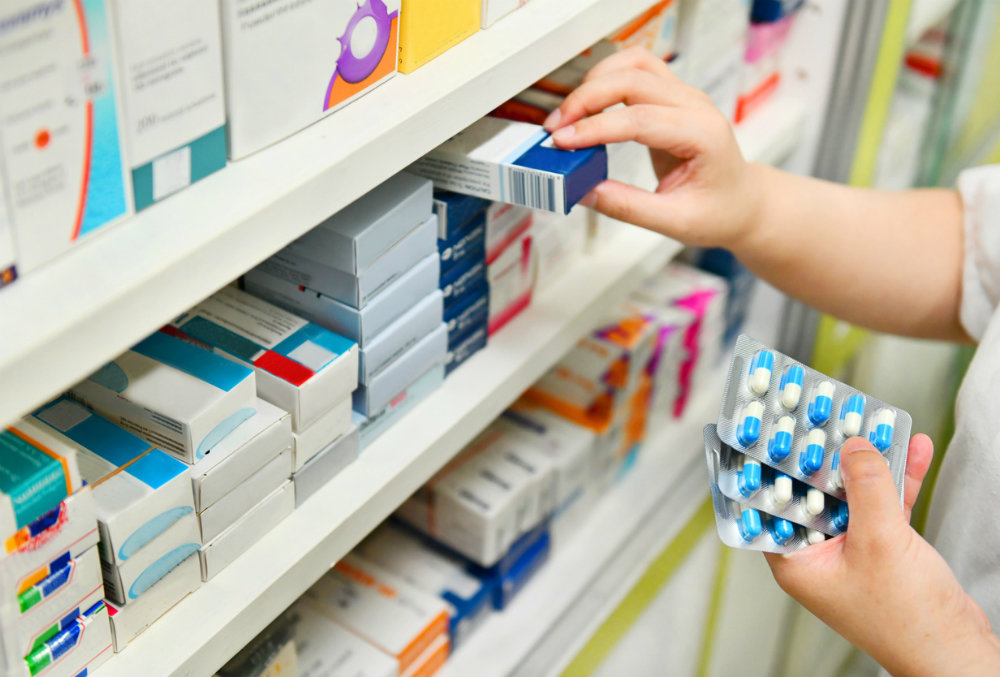
The government has allowed the sale of medicines through gas stations, supplementing Resolution No. 1803. Soon, gas stations will begin selling over-the-counter medicines through employees or vending machines. Expert opinions on this innovation are divided. Komersant investigated the pros and cons of this new point of sale on the highways.
The revolutionary proposal to sell medicines at gas stations was put forward by the State Service of Ukraine on Medicines and Drugs Control, whose head was dismissed at the end of last year due to a negative assessment of his performance. The government supported the idea of issuing licenses to gas stations to sell medicines, but on condition that they comply with storage and delivery rules. A special area must be designated for medicines, separate from other goods. They will be sold by gas station employees, and pharmacists will be responsible for monitoring compliance with the rules.
There is no list of drugs for sale at gas stations
Pharmacists unanimously note that medicines are not ordinary goods, but are subject to strict state control. Pharmacies operate under strict rules: licensing, qualified personnel, storage control, professional advice, and supervision. Gas stations operate under a different logic, where medicines risk becoming ordinary consumer goods. This is not fair competition, but a game with different rules.
The main thing is that gas stations will be allowed to sell about 3,400 over-the-counter drugs (35% of the market) without setting up pharmacies. At the same time, about 400 of these drugs, which are banned by the Ministry of Health for advertising due to the risks of self-medication (Analgin, Barboval, Ascofen, etc.), can be sold without pharmaceutical control. This increases the risk of a “gray” market and the circulation of counterfeit or expired drugs. In addition, prices at gas stations may be significantly higher, and it will be more difficult to control them.
“The main question is which drugs will be allowed to be sold at gas stations. There is no list. And while driving, you cannot take drugs that cause drowsiness, slow reactions, or reduce concentration, such as some cold remedies, first-generation antihistamines, painkillers, sedatives, and cough medicines containing codeine. And all of them are available without a prescription,” says
[Komersant] .
She warns that the absence of a pharmacist who could provide advice is dangerous: taking the wrong medication could lead to a traffic accident.
The problem with control
Licensing expert Vladimir Smirnov believes that the claim that competition with gas stations will lower prices in pharmacies elicits a bitter smile from economists.
“The business model of any gas station is based on convenience pricing—a markup for convenience. Have you ever seen water or chocolate cheaper at a gas station than at a supermarket? No, everything there is 30-50% more expensive. It is naive to expect that chains that sell hot dogs at triple the price will suddenly become social donors of cheap medicines,” he emphasizes.
In his opinion, a high price is the lesser evil. The greater evil is the lack of control. Medicines are chemical compounds that are sensitive to temperature. Pharmacies spend huge amounts of money on climate control and refrigeration equipment, which are regularly inspected by the State Service of Ukraine on Medicines and Drugs Control. Who will control the thousands of vending machines on the roads? What will happen to syrup or pills that have been sitting in a vending machine heated by the sun in July or frozen in January? These are no longer medicines—they are potential poisons. And when a patient experiences complications, there will be no one to file a claim against: the cashier at the gas station is not responsible for this.
Medicines should be dispensed by pharmacists
As noted by People’s Deputy Serhiy Kuzminykh, state regulation cannot be reduced to simply multiplying “points of sale.” Medicines are not snacks.
“Selling OTC drugs without control, without consultation, without pharmaceutical services is not about accessibility. It is a direct path to complications and harm to people’s health,” the MP wrote on his Telegram channel.
He stated that he consistently opposes the sale of medicines by non-specialists, as this is dangerous for patients and devalues the profession of pharmacist.
Gas stations are ready to sell drugs
However, it will not be easy to fight against the sale of medicines through gas stations. As one of the pharmacy managers said on condition of anonymity, the new point of sale is being promoted by one of the Ukrainian pharmaceutical manufacturers. Their products, which are stored in warehouses, are already being sold through Ukrposhta, and now it is the turn of gas stations.
Inna Tishchenko, manager of one of the OKKO gas station chain, says she is waiting for clear instructions. Setting aside a separate corner for a medicine shelf or vending machine is not a problem.
“No one refuses profit. If we expand the range, the revenue will be higher. The sale of food or even alcohol at gas stations also came gradually. So medicines can also take root,” the manager believes.
One thing is clear at the moment: the licensing conditions need to be worked out in detail and it needs to be clearly defined who will check compliance with all the requirements for medicines at thousands of gas stations hundreds of kilometers from cities and how.
Author: Alla Dunina