Maneuverable Defense or Losses? How is the situation for the Armed Forces of Ukraine in Kursk region changing?
13 March 2025 19:08
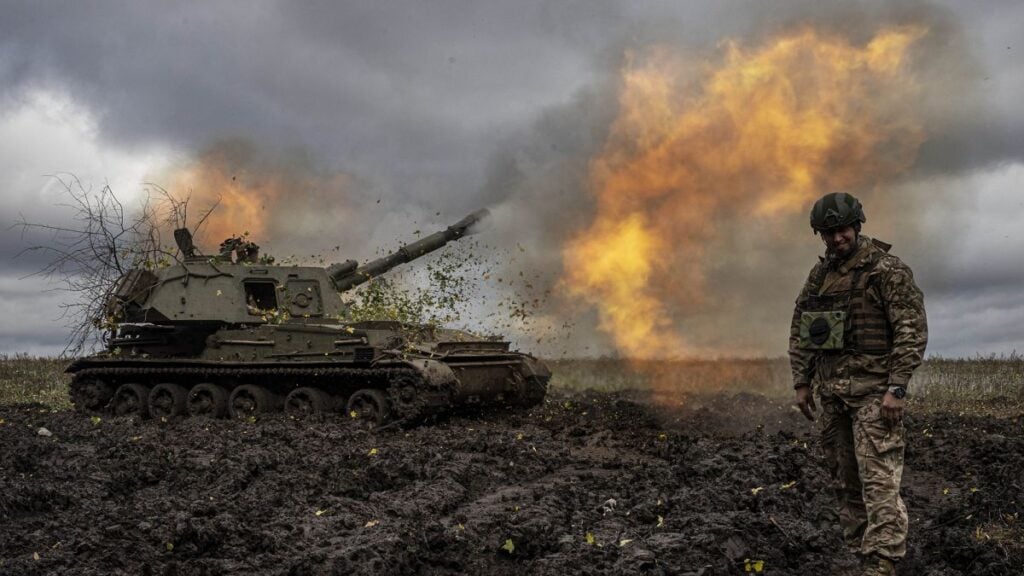
As of March 13, 2025, the Armed Forces of Ukraine (AFU) are conducting a strategic withdrawal from their positions in the Kursk region of Russia following the intensification of Russian offensive actions.
The Ukrainian military command recognizes the partial withdrawal of troops from certain areas of the Kursk region, emphasizing that fighting on the outskirts of key settlements continues. President Volodymyr Zelenskyy, in turn, emphasized the priority of protecting the lives of soldiers during these maneuvers.
In addition, the Commander-in-Chief of the Armed Forces of Ukraine, General Oleksandr Syrskyi, said that Ukrainian troops would continue operations in the Kursk region as long as necessary, focusing on tactical regrouping in more secure positions.
Meanwhile, Russian media outlets have been broadcasting the idea that the Ukrainian military command is “trying to pass off the panicked flight of the Ukrainian Armed Forces from Suzha as a regrouping.” And Russian President Vladimir Putin himself says that “the situation in the Kursk region is under our control, the Ukrainian Armed Forces are trying to leave the region by 2-3 people. The control of these troops has been lost”.
What is actually happening in and around Suzha and whether we can expect the end of the Ukrainian Armed Forces’ “Kursk operation” in the near future,
He immediately warned that we should divide all the statements coming from all participants in the information confrontation not even in half, but in eight.
This is because the Ukrainian General Staff is very cautious and sparing about the processes taking place in Kursk region in order to keep the information silence and maximize the security of the Ukrainian Armed Forces in this area of the front.
“It is obvious that maneuverable defensive actions and rearguard battles are being conducted there (meaning that the battles are being fought by cover forces that are separated from the army units during retreat and when moving or maneuvering – ed. General Syrsky, the chief of the Ukrainian Armed Forces, said that there was no encirclement of the Ukrainian defense forces in the Suzha area. What the Russian top propagandists say should not be taken into account at all, because they usually lie every time they open their mouths,” Selezniov said.
Operation in the Kursk region: in whose favor is the balance of power now
The expert emphasized that over the past period of time, the Armed Forces of Ukraine have lost a large part of the foothold they had been controlling in the Kursk region of Russia, and this is obvious. The DeepState monitoring project also clearly demonstrates the fact that the territory under the control of the Ukrainian army has significantly decreased.
“The enemy is trying to cut the very highway that will connect Sudzha with Sumy, attacking across the state border near the village of Basivka, making its way there past the village of Novenke. In this way, the Kremlin claims that they have even this village under control. But whether this is true or not, I think we should at least wait for reports from our border guards, who operate, in particular, in this area of the front. In order to verify the information,” said Vladyslav Selezniov.
According to him, regardless of the information messages from both sides, Ukrainians should understand that the situation in the area of the Kursk bridgehead of the Ukrainian defense forces is determined solely by the resource capabilities (both of the Russians and the Ukrainian defense forces).
While the Russian Armed Forces have concentrated a 60,000-strong group in the Kursk region, the number of Ukrainian soldiers there is a multiple of that number.
“I don’t know how many thousands, but I’ve seen figures up to 10 thousand. Although I think it’s much less, given that some brigades that were there report withdrawing their forces and equipment. Given this ratio of forces and means, it is probably not worth talking about the likelihood of further holding the borders and positions in the Kursk region,” the military expert explained.
What should be discussed in the context of the fighting in Kursk region
According to Vladyslav Selezniov, attention should be paid to the fact that the Ukrainian army, acting in maneuver defense, increases the level of enemy losses by a multiple. After all, the defending side always suffers losses several times more than the advancing army.
We should not dismiss the fact that there is a certain negative dynamic for the Ukrainian Armed Forces in the Kursk sector. This is evidenced by the fact that Vladimir Putin, imitating his presence in the Kursk region, announced on March 13 the need to create a “sanitary zone” in order to protect the Bryansk and Kursk regions. Accordingly, the enemy will try to create buffer zones, such as those it tried to create in the north of Kharkiv region in early May 2024.
Will the Armed Forces of Ukraine have enough power to hold favorable positions during the “Kursk operation”?
A military expert in a conversation with
Ukrainian Armed Forces Operation in Kursk Region: How Ukraine’s Allies See It
The loss of Suja and the Russian offensive
The Financial Times reports that Russian troops have retaken the key town of Sudzha, which had been under Ukrainian control for about six months. This loss means a significant setback for Ukrainian operations in the region.
Ukrainian forces occupied the area as part of their cross-border operations, disrupting Russian logistics and pushing the front line deeper into enemy territory. In recent weeks, however, the Russian military has stepped up its efforts to retake the region, deploying additional ground forces, artillery, and air support. And Russian President Vladimir Putin has ordered his command to speed up the withdrawal of Ukrainian troops from Russian territory.
Activation of the Russian Armed Forces in Kursk Region: What is Ukraine’s Response?
Despite the loss of Suzha, the Ukrainian military emphasizes that the withdrawal from certain positions in the Kursk region is a calculated tactical maneuver rather than a full-scale retreat.
According to military analysts, this movement is aimed at preserving manpower and preventing overstretching of Ukrainian troops in a vulnerable position. Maintaining defense flexibility remains critical, as official Kyiv still has strategic objectives in the border regions.
Furthermore, it is worth considering that President Zelenskyy has been reassuring the Ukrainian public and international partners that this redeployment of the Armed Forces does not mean a broader retreat, but is part of a long-term military strategy. He reiterates that the safety of Ukrainian soldiers remains a priority and emphasizes the need for continued international military support for Ukraine.
International reaction and ceasefire negotiations
Changes on the battlefield in the Kursk region have also affected ongoing diplomatic efforts. The United States led the negotiations for a temporary ceasefire, proposing a 30-day truce aimed at facilitating humanitarian aid and diplomatic negotiations.
Steve Witkoff, a special envoy of US President Donald Trump, visited Moscow on March 13 to discuss the proposed ceasefire with the Russian side.
Official Washington has already warned of additional sanctions if the Kremlin refuses to participate in the talks. And Secretary of State Marco Rubio has publicly stated that the United States supports a peaceful settlement, but will continue to provide military assistance to Ukraine if necessary.
However, Russia’s reaction has been mostly dismissive. Yuri Ushakov, a top aide to the Russian president, rejected the ceasefire proposal, calling it a “temporary measure that serves only Ukrainian interests.” He also said that Russia sees no long-term strategic benefit in agreeing to a ceasefire without territorial concessions from Ukraine.
What’s next for Ukraine in the Kursk region?
European analysts and military experts note that as the situation develops, Ukraine faces several key military and diplomatic challenges. Among them:
1. Stabilization of the front line. The Ukrainian Armed Forces must maintain defensive positions, avoiding encirclement by Russian troops.
2. Ensuring further military assistance. Official Kyiv continues to put pressure on its Western allies to provide more air defense systems, long-range artillery, and armored vehicles.
3. Peace negotiations. While the ceasefire may have temporarily reduced tensions, the lack of agreement on territorial control remains the main obstacle to a lasting peace.
They emphasize that the events taking place on the battlefield in the Kursk region are an important moment in the war. While Ukraine remains committed to maintaining pressure on Russian forces, the loss of Suji and Russia’s growing military presence in the region suggest that the situation may continue to escalate.
Thus, as diplomatic efforts intensify, the coming weeks will be crucial in determining whether military or political decisions will shape the next phase of the war between Russia and Ukraine.
Читайте нас у Telegram: головні новини коротко