A chain of home appliance stores was caught engaging in “business fragmentation”: details of the investigation
2 April 01:23
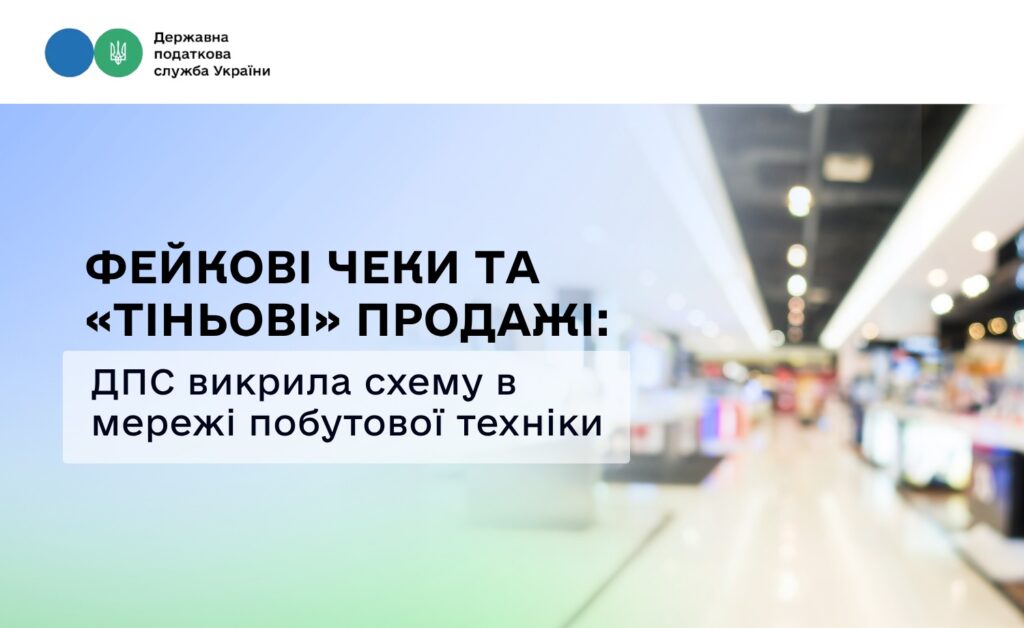
The State Tax Service reported that it had uncovered a large chain of home appliance and electronics stores where it found evidence of receipt tampering, off-the-books sales, and signs of “business fragmentation.” According to the State Tax Service, the chain comprises nearly 150 stores, and dozens of sole proprietorships operating under a simplified tax system were effectively operating under a single brand. Some of the transactions did not go through official accounting at all.
Danylo Getmantsev, head of the parliamentary tax committee, stated that the chain in question is “Otak,” which previously operated under the SmartShop brand.
What exactly did the State Tax Service uncover?
According to official information from the tax service, in March, specialists conducted a series of test purchases. During these, it was discovered that customers were issued receipts from software-based cash registers that merely imitated fiscal documents. Such transactions were not recorded on the State Tax Service’s fiscal server and, consequently, did not reflect actual sales volumes.
In addition, during on-site inspections, more than 20 instances of using counterfeit receipts created with special software were documented.
The tax authority also identified violations of labor laws: six employees were working without proper documentation.
According to preliminary estimates, the total amount of penalties could reach approximately 3 million UAH. The audit materials are scheduled to be handed over to law enforcement agencies.
What is “business fragmentation”?
“Business fragmentation” is a scheme in which a large company formally divides its activities among many individual entrepreneurs to pay less tax and remain on the simplified tax system. In practice, a store or chain may operate as a single business, but on paper appear as dozens of separate small individual entrepreneurs.
This allows for minimizing VAT, income tax, and other payments.
In this case, the tax authority explicitly noted that dozens of sole proprietorships were operating under a single brand on the simplified tax system, and a portion of sales went unreported.
Why is this considered a serious violation?
When a large chain registers its operations through dozens of sole proprietorships and simultaneously does not process part of its sales through fiscal servers, the state loses out on tax revenue. In addition, this creates unfair competition: companies that operate “above board” find themselves at a disadvantage compared to those who conceal their turnover. This is an analytical conclusion that directly follows from the described mechanism of violations.
It is also important to note that the case involves not only tax violations but also labor violations. The use of unregistered workers is another sign of business shadowing, which tax authorities uncovered during the audit.