A loss of 12 ports and $100 billion for road and bridge repairs: Ukraine is tallying the war’s toll
25 March 14:03 ANALYSIS FROM
Nearly $100 billion needed for reconstruction, more than a dozen seaports effectively out of service, and a lack of basic data on damaged roads—this is the official picture of the state of Ukraine’s transportation infrastructure after four years of full-scale war. In response to an information request, the Ministry of Community and Territorial Development effectively confirmed that some key data has either not been compiled or is not publicly available. At the same time, even the figures cited by international partners and government officials demonstrate the scale of the destruction—ranging from billions in losses to systemic blows to the country’s logistics. How many roads and bridges have actually been destroyed? How many ports have actually been lost, and how is this impacting the economy? What is happening to the railway under constant attack—and how is it managing to hold on? "Komersant Ukrainian" investigated.
Restoring Ukraine’s transport infrastructure following Russia’s full-scale invasion will require $96.3 billion over the next nine years. Meanwhile, at least 12 seaports remain closed or are not operating due to the war.
“The total funding needed for the recovery and reconstruction of Ukraine’s transport sector in 2026–2035 amounts to $96.3 billion,” said Artem Rybchenko, Deputy Minister of Community and Territorial Development of Ukraine.
This refers to the RDNA5 report, prepared jointly with the World Bank, the European Commission, and the UN.
Ports: some are occupied, some are paralyzed
The Ministry also provided details on the situation with maritime infrastructure.
According to the response, nine ports remain completely closed.
“The seaports of Kerch, Sevastopol, Feodosia, Yalta, Yevpatoria, Berdyansk, Mariupol, Skadovsk, and Kherson are closed until control is restored,” said Artem Rybchenko.
Three more ports are not operating due to the security situation.
“The seaports of Mykolaiv, Bilhorod-Dnistrovskyi, and… Olvia are not handling ships due to the security situation,” said Artem Rybchenko.
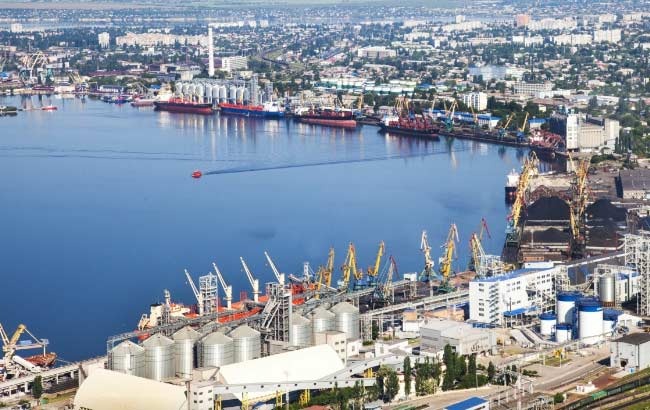
Thus, a significant portion of the country’s port infrastructure is effectively out of service.
Data on destroyed roads and railways
At the same time, the ministry did not answer the key question—how many kilometers of roads and bridges have been destroyed or damaged.
“There is a need for additional research and analysis… of the information,” said Artem Rybchenko.
And they added, in response, that the ministry will compile the information currently available at the Ministry of Development. In effect, this means that even after years of war, there is no comprehensive public assessment of the damage to road infrastructure.
Regarding other issues—the cost of reconstruction, the state of the railway, and international aid—the ministry declined to comment. The key explanation is based on legislation.
I would add that the latest official data on the state of the railway dates back to January 2026. It was released by Oleksiy Balesta, Deputy Minister of Community and Territorial Development.
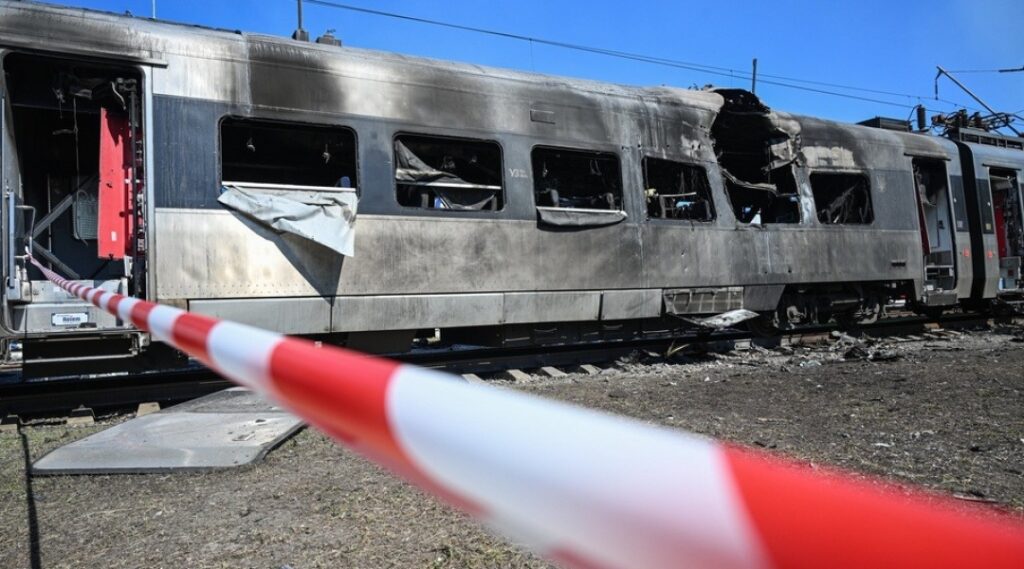
Last year alone, Russia carried out over 1,195 strikes on the Ukrainian railway—more than in 2023 and 2024 combined. In total, since the start of the full-scale invasion, approximately 130,000 infrastructure facilities have been damaged or destroyed.
“Since the start of the full-scale invasion, approximately 130,000 damaged and destroyed railway infrastructure facilities have been recorded—these include tracks, stations, depots, and more. Some of them require immediate repairs, others need long-term restoration, and some, unfortunately, cannot be restored,” said Oleksiy Balesta.
He specifically highlighted the scale of the damage to train stations: during the war, about 40 stations across the country have been damaged, and the total direct losses are already estimated at hundreds of billions of hryvnias.
Despite this, efforts are being made to restore the infrastructure as quickly as possible. Some stations have already resumed operations—specifically in Synelnykove, Pavlohrad, and partially in Lozova. At the same time, in many cities, they serve not only a transportation function but also become hubs of resilience—places where people can warm up, charge their phones, and wait out power outages.
There are also facilities with critical damage. For example, the Fastiv train station in the Kyiv region suffered a direct missile strike—options for installing modular solutions to restore operations are currently being considered there.
And while infrastructure is being repaired “on the fly,” a key question remains unanswered: will the state be able to assess and restore everything just as quickly and transparently after the war?