Moon Mission: The Orion spacecraft has left Earth’s orbit and is heading toward the Moon
3 April 21:37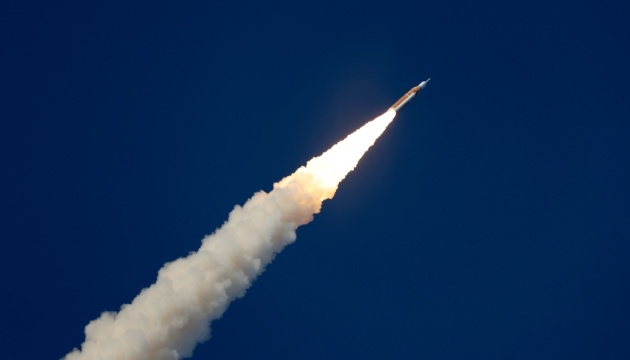
The Orion spacecraft, carrying the Artemis II mission crew, has left Earth’s orbit and is heading toward the Moon.
This was reported by NASA , according to "Komersant Ukrainian".
To transition to the flight path to the Moon, the spacecraft performed a critical maneuver—firing the service module’s main engine, which operated for about six minutes.
The maneuver that changed the flight path
According to NASA, the Orion spacecraft fired the service module’s main engine for approximately six minutes.
This made it possible to:
- place the spacecraft on a flight path to the Moon;
- perform a gravity assist maneuver for the return to Earth;
- transfer the mission to a so-called free-flight return trajectory.
This trajectory allows the spacecraft to use the Moon’s gravity so that it naturally returns to Earth after orbiting the Moon.
Engine Thrust
The main engine of the Orion service module has a thrust of approximately 2,700 kg (about 6,000 pounds).
According to NASA estimates, this power is sufficient to accelerate a car from 0 to 96 km/h in approximately 2.7 seconds.
At the moment the engine was fired:
- the spacecraft’s mass was 26,300 kg;
- about 450 kg of fuel was consumed during the maneuver.
What lies ahead for the crew
According to the Artemis II mission plan, the crew will be able to observe the Moon’s surface for about six hours during the flyby of Earth’s satellite.
This is scheduled to take place on April 6.
Part of a larger program to return to the Moon
The Artemis II mission is one of the key stages of the Artemis program.
Its goal:
- to test crewed flight systems;
- to fly around the Moon;
- prepare for the next mission—Artemis III, which is set to return humans to the Moon’s surface for the first time since the Apollo program.
The Artemis II launch took place on April 1 and marked the first crewed flight of the Artemis program.