Between deficit and surplus: how Ukraine is taking advantage of the benefits of integration with the EU energy system
19 December 2025 18:20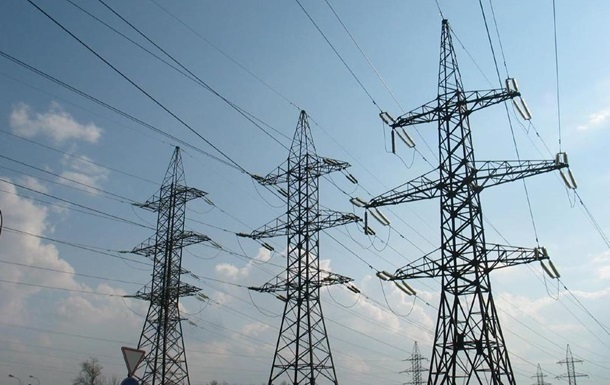
Since mid-March 2022, the Ukrainian power system has been operating in synchronization with the EU power system. This has increased the reliability of the Ukrainian power system and created conditions for electricity imports and exports. However, due to hostile attacks on Ukrainian energy facilities, this potential cannot always be fully realized. Kommersant found out how European electricity helps Ukraine survive.
In November of this year, compared to October, Ukraine increased electricity imports by 17.2% to 414.7 thousand MWh. At the same time, capacity utilization in November averaged only 27.4%. These data are provided by the Ukrainian analytical center DiXi Group. Such figures may seem strange against the backdrop of regular and prolonged rolling blackouts, but there is an explanation for such a far from maximum utilization of electricity imports from the EU.
Limited availability
At one of his December briefings, Mykola Kolisnyk, Deputy Minister of Energy of Ukraine, explained the peculiarity of the current difficult situation in the Ukrainian energy system:
“The main complication is the limited capacity to transmit affordable electricity. We have 9 nuclear power units in operation, 2.1 GW of import capacity, and additional emergency assistance is used to balance consumption. But the most difficult thing is the availability of electricity transmission between the center and the east.”
The fact that the Russians are trying to disrupt the power transmission systems in the west of the country, where most of Ukraine’s electricity is generated, and thus limit supplies to the central and eastern regions, has already been reported by many foreign media outlets, citing their Ukrainian interlocutors. Ukrainian officials have actually confirmed this. Although they also claim that electricity is imported from neighboring EU countries almost every hour, they have not yet been able to use the full potential of European imports. Daria Orlova, electricity market analyst at ExPro, explains.
“Russians are deliberately shelling those substations that are usually located in the center of Ukraine. Therefore, imports cannot come to the eastern, central or southern regions. Therefore, there is no point in large imports. In November, electricity imports were record-breaking in terms of 2025, but overall not as high as they could have been. I think that in December, electricity imports will be slightly higher than in November, but they still do not reach the maximum possible level. That is, one of the main problems is the transmission problem. Imports are coming to the western regions, but the imported electricity cannot go any further. And what we see now, when there are fewer blackouts in the western regions than in the East or Kyiv, is also a merit of imports,” the expert explains.
The fact that electricity imports are important for overcoming deficits is also confirmed by DiXi Group data. According to the think tank’s report, daily fluctuations in imports closely correlate with Russia’s strikes on energy infrastructure.
“Peak import volumes are recorded mainly the day after or the day after massive attacks, when the amount of available generation decreases and the power deficit in the system increases. For example, after the attack on October 30, imports jumped to 23.6 thousand MWh on November 1 (plus 86.3% compared to October 30). A similar picture was observed after the shelling on November 8 (plus 32.9% on November 9), November 19 (plus 29.4% on November 21), as well as after the shelling on November 25 and 29,” DiXi Group notes.
Opportunities are obvious
One of the obvious advantages of uniting the Ukrainian energy system with the European one is the possibility not only of importing electricity in case of its shortage in Ukraine, but also of commercial exports in case of surplus, i.e. excess electricity.
It is clear that, given the current difficult situation in the energy system, exporting electricity to Europe would look as strange as possible. And, as DiXi Group confirms, electricity exports in November were insignificant and were carried out only until the 10th. Starting from November 11, supplies stopped completely.
Although now is not the time to make money on electricity exports, there is still an opportunity to earn extra money or save on imports. First of all, we are talking about commercial imports. Darya Orlova, electricity market analyst at ExPro agency, explains.
“For Ukrainian suppliers, this is relevant when the price abroad is lower than in Ukraine, which makes imports profitable. And now sometimes the price is favorable for imports. This is especially true on weekends, when the price in Europe is falling, while ours is still high. It will also be relevant during the Christmas and New Year holidays, because, as a rule, prices in Europe are very low during this period and it will be profitable for us to import. And if everything goes well with the transmission, it will help us a lot,” the expert emphasizes.
In addition, Ukraine has a government decree on the peculiarities of electricity imports under the legal regime of martial law in Ukraine, which stipulates that an enterprise needs to import 60% of its total consumption in order to avoid falling under the power limitation schedules that are now constantly applied to industrial consumers. Of course, electricity imports cannot protect against blackouts. Daria Orlova continues.
“The rule that companies must import 60% of their consumption to avoid blackouts encourages companies to import. Sometimes it can be more expensive, sometimes cheaper, but in this way they more or less protect themselves from power outages. As a rule, this is most relevant for large industrial facilities, for energy-intensive enterprises, for those who cannot afford to be idle due to lack of electricity. These are metallurgical plants and the chemical industry. These are large electricity consumers that are currently importing electricity,” explains the expert.
And starting in December this year, this activity has a chance to become more stable and predictable. Ukrainian and European partners have agreed to introduce long-term – monthly – auctions for the distribution of cross-border electricity imports and exports under European rules with Romania, Hungary and Slovakia for the first time since the beginning of the full-scale war. This is in addition to daily auctions. And on December 15 this year, monthly auctions for January 2026 have already started.
“Long-term auctions for the allocation of interstate capacity are something that will definitely benefit the Ukrainian electricity market. In the context of massive Russian attacks on our power system, we really need confidence in a stable supply of electricity imports every month,” said Vitaliy Zaichenko, Chairman of the Board of NPC Ukrenergo, and expressed hope that annual auctions will be introduced in the future.
For Ukraine, in addition to strengthening the resilience of the national energy system, such auctions mean the possibility of more effective price forecasting, and in the long run, a reduction in the cost of imported electricity.
It is probably worth recalling another December innovation: starting from December 1, 2025, the maximum capacity of international crossings for electricity imports will increase from 2.1 GW to 2.3 GW. Although it will not yet be possible to fully utilize the full potential of European imports, in the future this promises to increase the ability to respond quickly in the event of a shortage in the power system, as well as for commercial imports and exports of electricity.
Author Sergiy Vasilevich