Between large debts and low tariffs: how Ukrzaliznytsia is trying to break free from its problems
22 January 17:30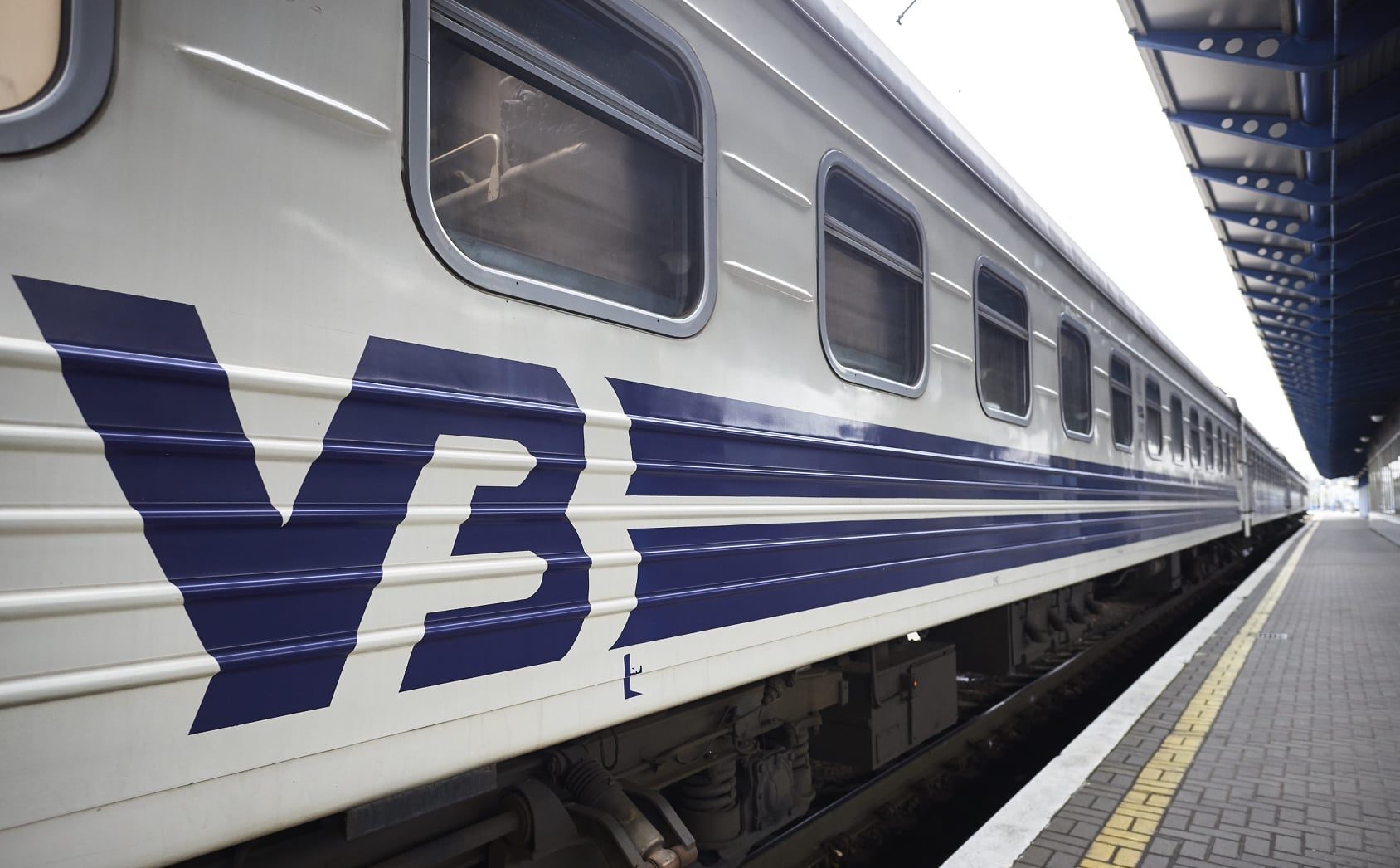
Ukrzaliznytsia is gradually “slowing down.” Growing debts, falling revenues from freight transport, unprofitable passenger transport, and more are taking their toll. Komersant investigated what is happening with the Ukrainian railway.
In early January, Ukrzaliznytsia failed to pay its creditors. What happened was called a technical default. Of course, there is hope that creditors will not go to court to demand their money and will agree to defer payments. But the overall problematic state of Ukrainian railways will certainly not contribute to such an optimistic development of events. Creditors will need serious arguments to wait, and it will not be easy to formulate them.
The problems of Ukrzaliznytsia
The critical nature of the debt problem is evidenced by the fact that in 2026, Ukrzaliznytsia will have to pay $703 million in Eurobonds and $45 million in coupon payments. And this is despite the company’s overall unprofitability. In the first nine months of 2025, its net loss amounted to UAH 7.3 billion, although a year earlier it had made a profit. The forecast for 2026 without a tariff increase is another UAH 22 billion loss. These estimates are provided by Iryna Kosse, a leading researcher at the Institute for Economic Research. In a comment to the publication
“Ukrzaliznytsia shows that the profitability of the freight segment has fallen sharply: profits from freight transportation in 2025 will be UAH 4-5 billion, compared to UAH 20.4 billion a year earlier. The decline in production across the country will lead to an even smaller freight base. At the same time, freight is the main source of income for servicing Ukrzaliznytsia’s loan portfolio and investments. Passenger transportation in 2025 generated more than UAH 18.6 billion in losses, and the profit from freight transportation is physically insufficient to cover passenger losses,” the expert notes.
This problematic picture is compounded by a shortage of personnel and worn-out assets. Iryna Kosse continues.
“Ukrzaliznytsia says that salaries in the company are already 15% below market rates, and the workforce is shrinking by 1,500 employees per month. More than 96% of locomotives are worn out. In addition, the infrastructure is constantly being damaged by shelling: in 2025, 1,195 attacks on the railway were recorded, 10 stations were destroyed, and more than 500 port and depot facilities were damaged,” notes Iryna Kosse.
All this does not inspire optimism not only among Ukrainian users of Ukrzaliznytsia’s services, but also among its foreign creditors. For the latter, a review of freight tariffs could be a positive and sufficiently convincing argument. But it’s not that simple — Ukrainian businesses are strongly opposed to raising tariffs.
Ambiguity of tariffs
The proposal to increase freight tariffs, or, as some say, to index them, is not new. The previous attempt dates back to mid-2024. At that time, it was planned to be done in the form of unifying tariff classes. However, due to protests from business representatives, this had to be abandoned. The last increase in freight tariffs took place in June 2022 and was justified by the need to compensate for the losses caused by the war. Currently, it is proposed to increase tariffs by 38% in two stages: first by 27% and then by another 11% in six months.
The business community is sharply critical of such a tariff update. It is obvious that the increase in tariffs will lead to a deterioration in the financial situation of enterprises. This will be felt most acutely by representatives of the agricultural, metallurgical, and mining industries. And we are talking not only about an increase in logistics costs, but also about an increase in the cost of production, a loss of competitiveness, and, as a result, a reduction in production and export volumes.
The Logistics Committee of the European Business Association, in particular, emphasizes that freight rail tariffs have undergone significant indexation in 2021–2022, which, according to businesses, has significantly exceeded the dynamics of prices for key Ukrainian export goods. Business representatives also point to the risks of tariff increases.
“Export-oriented enterprises are already operating at the break-even point or at a loss, reducing production and rail transport volumes. Further tariff increases will only exacerbate this negative effect, stimulating the outflow of cargo to road transport and making railways uncompetitive,” the EBA said in a comment.
The argument for reorienting business toward road transport is reinforced by research data recently shared by a member of the Ukrzaliznytsia Supervisory Board. It turns out that a 20% increase in tariffs leads to a 19% drop in freight volumes.
Nevertheless, it is unlikely that freight tariff indexation can be avoided.
Systematic changes
Debts, unprofitable passenger transportation, rising salary and electricity costs, and falling freight volumes. According to Iryna Kosse, a leading researcher at the Institute for Economic Research, all this indicates that an increase in freight tariffs and state support for passenger transport in 2026 are inevitable.
Incidentally, funds to support the railways are provided for in the state budget. Whether they will be sufficient is another matter. However, the European Business Association has welcomed the decision to provide partial budgetary support for passenger transport as an important step. There is another possible financial resource to support Ukrzaliznytsia. Volodymyr Omelyan, Minister of Infrastructure of Ukraine in 2016-2019, reminds us of this.
“What the Ukrainian government should do now is to involve Ukrzaliznytsia as much as possible in negotiations with our European partners and allied countries so that part of the financial aid that comes to support our state is directed to Ukrzaliznytsia. There is a perfectly logical explanation for this. Unfortunately, Ukrzaliznytsia has suffered and continues to suffer a terrible blow from the Russian Federation. Much has been destroyed, including the electrical infrastructure, as well as the local fleet and depot. In other words, it is not simply a matter of giving us money; it is for the restoration of rolling stock and the improvement of mobility for both cargo and the population. And it has not only a civilian but also a military purpose,” the expert emphasizes.
Convincing international creditors that Ukrzaliznytsia is worth investing in requires Ukraine’s readiness for systemic changes in the company. The EBA Logistics Committee points out the importance of this approach.
“The competitiveness of the railway requires systemic transformation, in particular the financial and organizational separation of the company, the opening of the market to private operators, and the creation of an independent tariff regulator. In addition, it is important to ensure the optimization of underutilized infrastructure, consider the issue of tax exemption for land under railway infrastructure, and work out the issue of restructuring Ukrzaliznytsia’s debt obligations,” the Association emphasizes.
Iryna Kosse, a research fellow at the Institute for Economic Research, also calls comprehensive structural reform of the industry the only way out of the crisis in her article for Rail.insider.
“In the short term (the next year or two), it is necessary to optimize costs by merging six regional branches into a single infrastructure operator, carry out balanced tariff indexation with differentiation for critical cargo, and liberalize tariffs for the premium segment of passenger transportation,” the expert emphasizes.
Ukrainian Railways also has other fully untapped reserves to improve its financial situation. It is worth remembering that Ukrzaliznytsia is one of the most important sources of high-quality scrap metal for the Ukrainian metallurgical industry. In May 2025, the company resumed auctions for the sale of scrap metal. However, according to experts, not everything went as planned. As Stanislav Zinchenko, CEO of the GMK Center analytical center, points out, scrap metal still needs to be sold.
“The inefficiency of Ukrzaliznytsia lies in the fact that it is a state-owned structure in which all processes are very slow. Only now are the first steps being taken to change the terms of the auctions, which should increase interest in their product. And if we take into account the company’s own statements, there are also problems with the availability of personnel who could prepare the scrap for sale. In short, Ukrzaliznytsia has not sold scrap for 1.5 years and has lost its understanding of the market and how to operate in it,” the expert notes.
However, Ukrzaliznytsia wants to improve the sales process and has recently invited businesses to a meeting to prepare for this year’s scrap metal sales campaign. The company calls this “one of the areas that can provide additional revenue, which is particularly important for the railway industry in the context of war and falling freight volumes.”
Author: Serhiy Vasilevich