The international literary festival “Frontera” has started its work
2 August 2025 16:14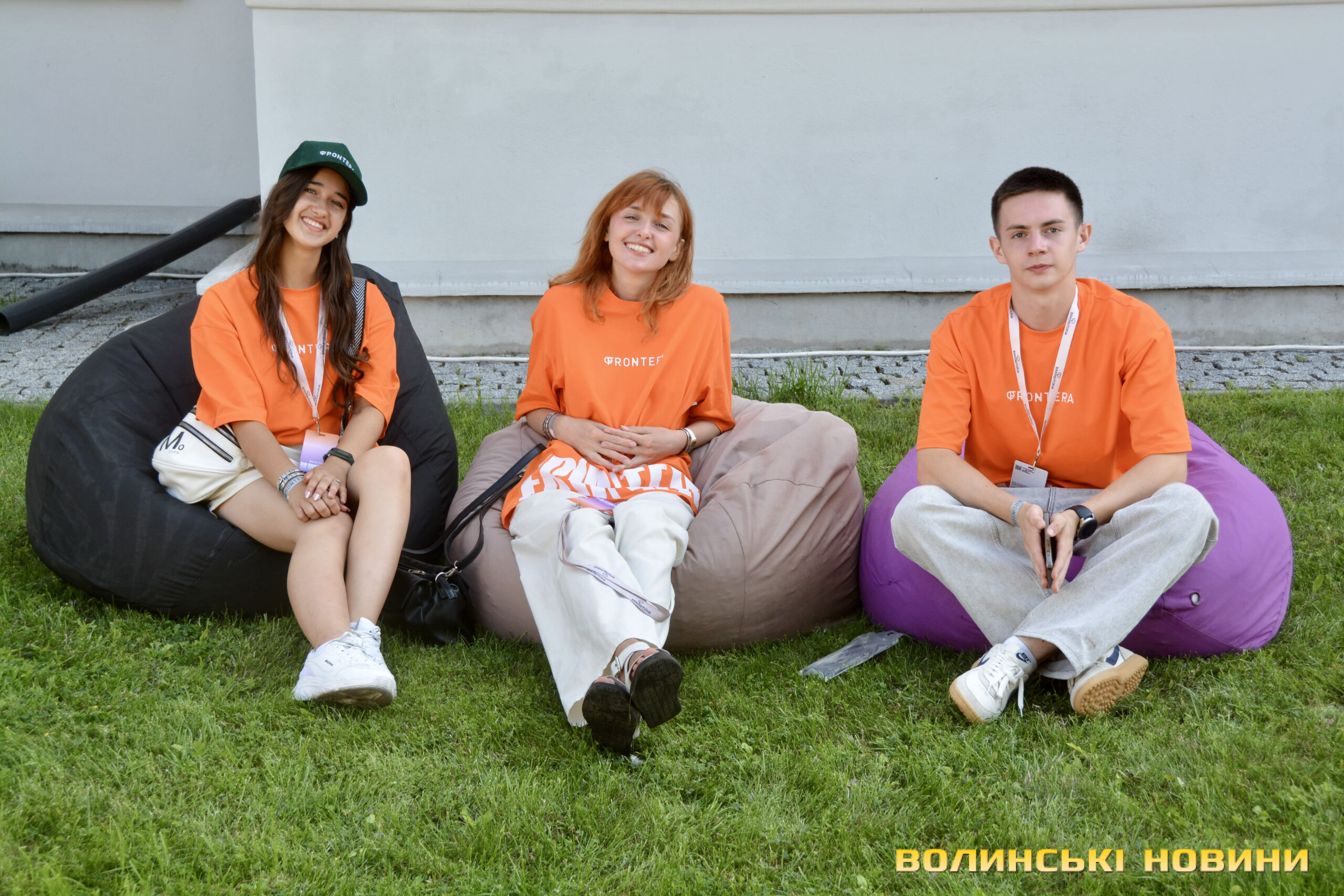
The V International Literary Festival “Frontera” has begun. It will take place on August 2-3 at the Okolny Castle in Lutsk. This year’s event once again brings together Ukrainian and foreign writers, translators, and media professionals. In addition to discussion panels and talks about important issues through literature, the program includes musical performances, performances and stand-up.
Among the festival participants are Pavlo Korobchuk, Iryna Tsilyk, Marichka Paplauskaite, Yurko Prokhasko, Andriy Lyubka, Pavlo Kazaryn, Maria Fabrycheva, Volodymyr Viatrovych, Tetiana Troshchynska, Oleksandr Mykhed, Oleksandr Pakholyuk, Maryna Krut, the Krykhitka band, and many others, "Komersant Ukrainian" reports, citing Volynski Novyny.
The location was equipped with a stage, a children’s area, food courts, and stalls with books and branded items. The proceeds from the sale of souvenirs will be used through the Angar charity fund to purchase drones for the army.


The festival was opened by Ella Yatsuta, the founder of Frontera.
“Greetings to everyone, Lutsk residents, those who came to us from other cities and countries. Let Lutsk and the Okolny Castle be cozy for you these two days. We are grateful to the Ukrainian military for the opportunity to gather here, for the opportunity to be, to dream, to love, to realize our plans.
This is the fifth festival. We can already see how far we have come. There are already people who will remind us: do you remember how it was? Someone will say: we’ve been with you since 2018, we were with you at the puppet theater then. By the way, the first Frontera was there. There are those who will say: we have been with you since 2013, since the moment when there was no talk of a festival, and you were organizing small literary events. And there are those who don’t know about it. They joined only now, heard about the Frontier, believed in it, and came to see what kind of event it is. All of you are the most valuable thing in this festival. Because you learn about the Frontier, because you talk about it, because you come. This means that we are doing everything right.
Ukraine, Spain, the USA, Colombia, the UK. Writers, media, public and cultural figures from these countries are here today to discuss important texts of wartime Ukrainian literature, topical issues of our time, European texts about Ukraine and for Ukraine, names, texts, and trends that we, Ukrainians, should know. Only when you are ready to learn about others and discover others are they ready to learn and understand you. During the two festival days, we will explore what commonality is, what keeps us together, where we come from, what we were like, how we are changing today, how we find ourselves, what gives us hope today,” said Ella Yatsuta.

Literature, music, theater, underground readings, installations, tours of the dungeons of the Okolny Castle, cocktails, a children’s stage, autograph sessions, donations for drones for the Ukrainian army – everyone at the festival will be able to spend quality time.
“Live these two days through different emotions: sadness, joy, laughter, denial, surprise, embarrassment. But I ask you: wake up on Monday feeling inspired. Inspiration that will charge you for the new day. Inspiration to come back here in 2026,” Ella Yatsuta encouraged the audience.


The Ambassador Extraordinary and Plenipotentiary of the Kingdom of Spain to Ukraine, Ricardo Lopez-Aranda Hagu, and Lutsk Mayor Ihor Polishchuk also delivered greetings.

“First of all, I would like to thank our Defense Forces for allowing us to hold this festival here in Lutsk, in the Okolny Castle, in a relatively calm, relatively peaceful atmosphere. It is wonderful that despite the full-scale war, which has been going on for four years, despite all the challenges of wartime, this festival, which is undoubtedly one of the symbols of our city, is taking place for the fifth time. There are probably hundreds of different festivals in Ukraine, including music and gastronomic festivals, but there are very few literary festivals. And it is very valuable for us that such a cool, wonderful festival as Frontera takes place in our city,” said Ihor Polishchuk.

The festival has a good tradition of an opening speech. This year it was delivered by writer and soldier Pavlo Korobchuk. He shared his childhood memories, which are actually common to many Ukrainians. These include a herd of cows, swimming in the river, grandmother’s pies and bedtime stories.

“My grandmother used to tell me fairy tales when I was little, and Valerian Polishchuk‘s mother used to tell my grandmother fairy tales when my grandmother was little. Of course, someone told Polischuk’s mother the same fairy tales when she was a child, but in the nineteenth century. And I know for sure that one day I will tell them to my children. This is how everything comes to light. Stories and cultures manifest naturally in you from childhood. At that time, they just stick to you. And over time, over the years, over the decades, we realize what a deep, close, bright, and sometimes tragic foundation they are passed down from generation to generation. Each of us has fairy tales and stories passed down through a thousand years in our memory. And each of these tales and stories has its own keys of comprehension, of presence,” said Pavlo Korobchuk.
So, what is our commonality? It is where there is a sense of Ukrainian socio-cultural continuity in time, where there is Ukrainian territory, where the Ukrainian language is heard. There are many features in our commonality by which we recognize each other. Among them are dignity, freedom, vitality, resilience, humor, pain, culture, language, geography, history, army, geopolitics, information space, judicial system, currency, economy, borders, budget, memes, coat of arms, flag, fairy tales, the author summarized.

“Ukraine is what we get from our ancestors and pass on to our descendants. And this is an ongoing process. It is happening right now. The voices of our ancestors ring out of the grass, future generations make noise from the water, our fallen comrades look down on us from the sky, and inside us we are one with you and them.
This is not just one memory from childhood. This is a memory in which you can feel millennia. It is not just your life. It is a tool that is looking for allies. It’s not just a festival. It is those who shine under a bush in the middle of a thunderstorm. And war, as another sign of community, is like the freezing rain in childhood, only on a huge, tragic scale. And grandma’s house and pies are like victory. The most important thing is to know that victory will not come once; it is always there. It is passed from generation to generation, from mouth to mouth. We exist because of previous victories.
So I know for sure that safety is not far away. I can cross the Styr River on a seagull, turn on a hill behind the ruined neighboring house and run to my grandparents. To the place where they bake cinnamon pies, where you can jump under the covers and fall asleep sweetly to the most drowsy, most secret fairy tale told by your grandmother. I have a fairy tale,” emphasized writer Pavlo Korobchuk.