The moment of truth is approaching: Ukraine is evaluating options for a trade regime with the EU
17 April 2025 09:42
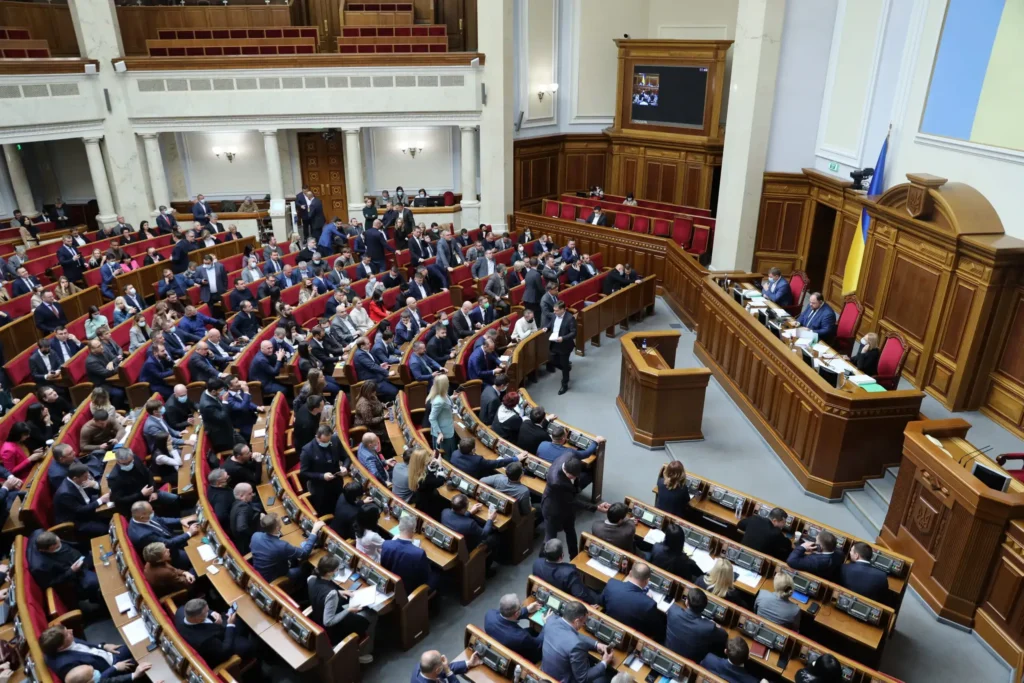
The Verkhovna Rada has called on the EU institutions to extend Ukraine’s autonomous trade measures after June 5, 2025, which include the abolition of duties, tariff quotas, and safeguards on Ukrainian exports. This is stated on the Parliament’s website, "Komersant Ukrainian" reports.
The Appeal also contains a proposal to start negotiations on mutual tariff concessions based on Article 29 of the EU-Ukraine Association Agreement, taking into account the dynamics of mutual trade in recent years.
Earlier, Ukraine’s Prime Minister Denys Shmyhal announced that the EU had requested Ukraine to maintain its trade preferences, which expire in early June.
What the EU plans to do
The European Union will not introduce new trade preferences for Ukraine immediately after the current trade liberalization mechanism expires after June 5, 2025. This was recently reported by Yevropeiska Pravda with reference to a European official.
According to the source, the EU will then continue discussions on amending Article 29 of the EU-Ukraine Association Agreement to develop the most favorable trade conditions for both parties and support Ukraine’s economy.
It is also worth mentioning that not so long ago, European Commissioner for Agriculture Christof Hansen stated that the current emergency measures in trade with Ukraine would be replaced by a new system of tariff quotas, although not at the same level as before.
The existence of such somewhat different forecasts suggests not only that there is still no unified vision of how Europe should trade with Ukraine. It also indicates that different options are still possible.
What could Ukraine’s trade with the EU look like?
The Ukrainian Agribusiness Club outlined three possible scenarios.
The first is the renegotiation of the free trade agreement and the conclusion of a long-term agreement that will provide predictable access for Ukrainian food to the European market until Ukraine’s possible membership in the EU in 2030.
The second scenario is actually a “rollback” of the terms of trade until May 2022, when restrictions on access to traditional markets will cause a huge shock to the Ukrainian economy, and prices for EU processors and end consumers will rise.
Under the third scenario, the current autonomous trade measures may be extended with the same list of restrictions on sensitive goods. The list of sensitive goods currently includes poultry, eggs, sugar, honey, oats, cereals, and corn. This will give both sides a little more time to invoke Article 29 of the Association Agreement and finalize negotiations on a long-term agreement. This promises relatively stable conditions for processors and end users in the EU, as well as predictable trade between the parties.
Veronika Movchan, Research Director at the Institute for Economic Studies, and Ricardo Giucci, Economic Policy Advisor at Berlin Economics, took a broader view of the situation and developed four scenarios of Ukraine-EU trade, and estimated the trade and fiscal implications of each of them.
For example, in case of a return to the previous conditions of the free trade area with tariff quotas – the most negative of the possible scenarios – Ukraine will lose $1.5 billion in exports to the EU annually. This will hit the agricultural sector, where quotas will limit the supply of wheat, poultry, eggs, sugar, honey, and some other products.
Other possible scenarios include:
– Return of quotas only for “sensitive” goods (wheat, poultry, etc.): exports would fall by $1.2 billion.
– Expansion of tariff quotas for “sensitive” goods and abolition of other quotas: in this case, exports could increase by $77 million.
– Full liberalization: in this case, we can expect an increase in exports by $290 million.