Against the backdrop of a labor crisis: Russia brings in migrant workers from Asia and Africa
8 March 12:17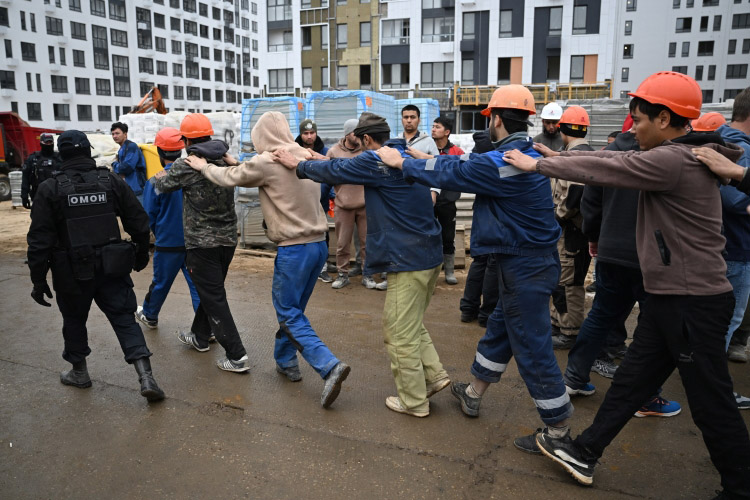
Russian businesses are switching to imported labor en masse, with 37% of companies already employing foreign workers and another 43% ready to hire them.
This was reported by the Foreign Intelligence Service of Ukraine, according to "Komersant Ukrainian".
According to intelligence data, in 2022 these figures were only 5% and 23%, respectively.
The main sources of imported labor are post-Soviet countries (38% of companies), China, North Korea, Thailand, and Cambodia (21%), Africa and India (13%).
“A telling example is Russian Railways: despite the announced 6% reduction in personnel, the state-owned company is recruiting workers from India. The first 35 people have already been employed in the Volga division with housing and social support provided,” the Foreign Intelligence Service noted.
The reasons for this are obvious: the structural shortage of personnel reached 2.7 million people at the end of 2025, with a 40-50% shortage of personnel in logistics, construction, and trade.
As noted, Russian businesses use low-skilled migration as a way to keep costs down.
In turn, the Russian government has increased the quota for attracting workers from visa countries to 279,000 people for 2026, which is 19% more than in 2025 and the highest in decades.
At the same time, the authorities are tightening control over migrants. In particular, the State Duma is considering a bill that would require foreigners to pay advance tax payments not only for themselves but also for their “dependents.”
Thus, the length of a family’s stay is tied to the duration of the employment contract, and migrant children over the age of 18 are required to leave the country within 30 days if they have no other grounds for residence.
In addition, the patent will be canceled if the employee’s income is below the subsistence minimum or if they have worked less than ten months per year.
“The growing dependence on foreign labor is a direct consequence of structural distortions in the labor market caused by the war against Ukraine. This model does not solve the problems of productivity and the shortage of skilled workers, but instead reduces incentives for technological modernization of the economy,” the SZRU concluded.