On top of the volcano: what awaits the global economy in 2026
12 August 2025 15:59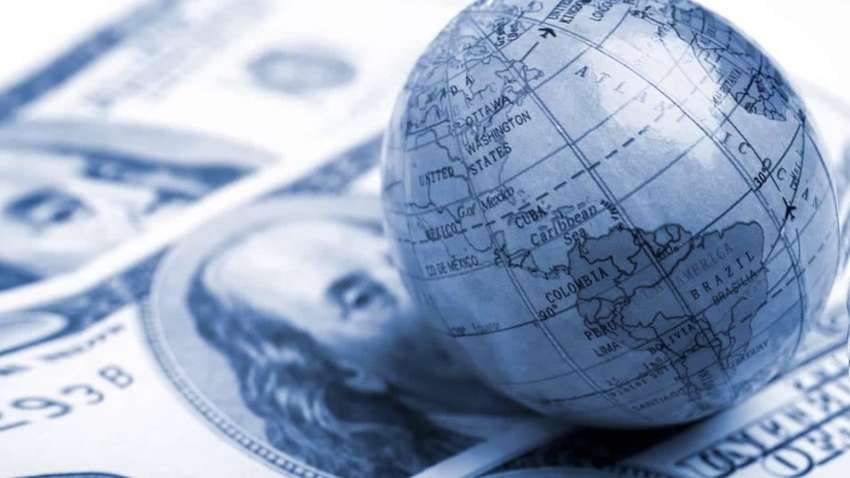
The global economy is entering a period of increased turbulence. Economists and financial analysts are increasingly warning that there is a high probability of another global financial crisis in late 2025 or early 2026. Although the probability does not reach 100%, signals from various sources are becoming too obvious to ignore.
In particular, Anatoliy Amelin, executive director and co-founder of the Ukrainian Institute for the Future think tank, wrote about this on his Facebook page.
He notes that over the past three decades, the world has repeatedly undergone similar tests: from the 1997 Asian crisis, Russia’s default, the dot-com bubble, the 2008 crash, to the COVID-19 pandemic and the banking stress of 2023. These crises share common features: excessive lending, overvalued assets, dependence on cheap funding, and weak risk controls in the financial sector.
Key risks and current signals
The global economy is currently experiencing a number of factors that could trigger a new wave of financial instability:
- The inversion of the US yield curve is a historically reliable indicator of recession (currently it is -0.45-0.90 percentage points).
- Slowdown in global GDP – growth in 2025 may fall to ~2.3%.
- Real estate crisis in China and local government debt problems (LGFV).
- Aggravation of trade conflicts – increased tariffs and barriers.
- Vulnerability of the financial sector, particularly in the segment of high-risk loans and non-bank financial institutions (NBFIs).
Analytical indicators that traditionally precede crises are already in the “red zone.”
- Buffett’s index (market capitalization to GDP ratio) exceeds 165%, which is a signal of overvaluation.
- The Shiller CAPE index (cycle-adjusted P/E) is over 32, which also indicates that the market is overheated.
- VIX, TED spread, Goldman Sachs and Chicago Fed financial conditions indices – volatility and distrust in the financial system are growing.
The probability of a new crisis is up to 45%
According to expert estimates, the probability of a global financial crisis is 30-45% in the next 12-18 months. For comparison:
- Before the 2008 crisis, this probability was 30-35%.
- Before the COVID shock, it was almost 0%.
- Before the banking stress of 2023 – only 10-12%.
So the current level of estimates is not as “low” as it may seem.
The scenario that is considered the most likely:
- Q4 2025 – Q2 2026: rising volatility → falling investment → capital outflows from emerging markets → financial market correction by 15-20% → defaults on risky bonds up to 4-5% → policy easing by central banks.
Paradoxically, Amelin writes, in the event of a financial crisis, Ukraine may be less vulnerable than many other economies. The reason is the absence of bubbles:
- The stock market is virtually non-existent.
- The level of lending is the lowest in Europe.
However, there is another side to the coin: without access to external capital, the country’s recovery will become even more difficult. Therefore, it is critical to focus on reforms now.
In summary, the global economy is preparing for a new stage of turbulence. The financial crisis, which analysts predict may erupt in late 2025 or early 2026, is of a completely different nature than previous global shocks. Economist Oleg Pendzin and political expert Taras Zahorodnyi spoke to journalists "Komersant Ukrainian" about its preconditions, the role of the United States and China, and possible consequences for Ukraine.
Has the world economy not recovered from the crisis?
Oleh Pendzyn, economist and executive director of the Economic Discussion Club, is convinced that it is a mistake to talk about the beginning of a new economic turbulence, because the world has not been overcoming the crisis for many years.
“Over the past 20 years, there hasn’t been a single calm year. The global economy is constantly in a state of survival,” Penzin said.
In his opinion, the biggest irritant to the global economy today is the US foreign trade policy, which has completely changed the rules of the game under Donald Trump.
“We don’t even remember the World Trade Organization anymore – it doesn’t exist, in fact. It all comes down to the principle: the one with the most power is right,” he adds.
Penzin also draws attention to the risks associated with Trump’s return to the White House, as his style of politics is unpredictable, self-centered and conflictual.
“His emotionality and fantastic ego distort the global economy so much that stability is out of the question,” the economist says.
Oleg Pendzin believes that the future of the war in Ukraine will be decided not between Kyiv and Moscow, but between Washington and Beijing.
“Putin has completely lost his economic sovereignty. The illusion that by giving him a part of Ukraine, Trump will be able to pull him away from China is absurd,” the expert emphasizes.
According to Penzin, the meeting between Trump and Putin in Alaska is just a tool to put pressure on China in a big trade game where Ukraine can become a bargaining chip.
This is an artificial crisis, and Trump is provoking it
Taras Zahorodniy, managing partner of the National Anti-Crisis Group and political expert, calls the possible crisis artificial and also directly links it to Trump’s economic policy.
“This crisis has a different nature. It is a crisis of Chinese overproduction provoked by US protectionism,” Zahorodniy explains.
In his opinion, the main goal of the United States is to collapse the Chinese economy:
“America is playing its usual game: when there is a major crisis in the world, capital returns to the United States. They want to make China ‘drown’ in its own economic crisis,” the expert notes.
Zagorodnyi draws a historical parallel to the early twentieth century, when new hegemons were fighting for markets:
“Back then, Germany was trying to oust France and Britain. Today, China is challenging the United States and the EU. Everything looks like before the First World War.”
China is on the verge of its first major economic crisis
According to Zahorodnyi, the Chinese economy is facing a real crisis for the first time, which threatens mass unemployment and political upheaval.
“For 40 years they have had constant growth. And now we have high youth unemployment, automation, and artificial intelligence. This creates millions of ‘extra people’. And no one knows how China will react,” he notes.
According to Zahorodnyi, the structure of the new crisis is deeper and more global than the previous ones. It could end in a large-scale military conflict:
“This is a crisis of overproduction. Historically, such crises have ended in a major war to restart the economy,” he said.
Thus, according to experts, 2026 may be the year of global reformatting of the world economic and geopolitical order. The crisis of overproduction, trade wars, and the economic confrontation between the United States and China are creating an explosive situation.