Powerful magnetic storms have created a new radiation belt around the Earth: what are the consequences for people and technology?
20 August 2024 15:55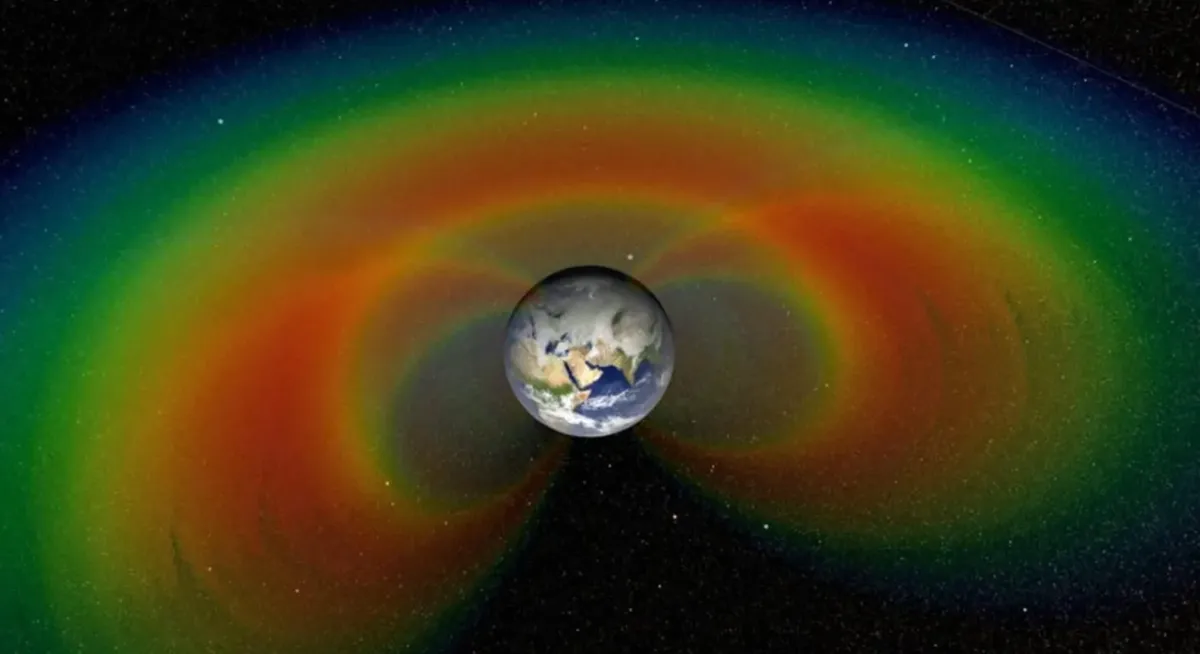
In May 2024, a powerful solar storm caused not only the aurora borealis, which were visible from different parts of the world, but also left a new, rather strange phenomenon – a temporary third Van Allen belt around the Earth. These belts usually consist of two main zones filled with charged particles that are trapped by the Earth’s magnetic field, writes "Komersant Ukrainian" with reference to IFL Science.
The new temporary belt was discovered using NASA’s Colorado Inner Radiation Belt Experiment (CIRBE) CubeSat, a small satellite specifically designed to study radiation belts. This third belt could exist for several months or possibly years, although a similar phenomenon in 2012 lasted only a few weeks.
Typically, the two permanent Van Allen belts are located at altitudes of 1,000 to 6,000 km and 13,000 to 19,000 km above the Earth. They form a kind of protective barrier for the planet, protecting it from solar radiation. The third time zone was created as a result of a strong solar storm that disturbed these stable zones.
Solar storms are caused by the sudden release of a large number of charged particles from the Sun’s atmosphere. They travel at the speed of light, reaching the Earth in a few hours. This process leads to the interaction of particles with the magnetic field of our planet, which causes the appearance of auroras and sometimes additional radiation belts.
NASA scientists believe that the new belt may exist for quite a long time due to the extreme strength of the May storm, which was the largest in the last 20 years. This explanation helps to better understand the processes that take place in the Earth’s magnetosphere during such powerful phenomena.
Follow us on Telegram: the main news in a nutshell
According to research, the temporary third belt can negatively affect the operation of satellites, especially those in low orbits. This poses risks to GPS and other communication systems that depend on these satellites. There is also a potential risk to astronauts in orbit. There is no reported danger to people on the ground.
While such belts were previously thought to be a rare occurrence, recent events suggest that they may be more common than we thought. This discovery forces us to reconsider some aspects of our knowledge of solar activity and its impact on near-Earth space.
To predict future similar events, NASA constantly monitors solar activity. They use sophisticated computer models and data from numerous satellites to analyse solar storms and their impact on the Earth.
In addition to impacting technology, solar storms can also affect human health, especially those living at high latitudes or in flight. Intense sunlight can increase radiation levels in aircraft cockpits and on the ISS.
Scientists continue to study this phenomenon, as its impact on the Earth and its near-Earth space remains poorly understood. They hope that the new data will help to better understand these processes and develop effective ways to protect against possible negative consequences.
Follow us on Telegram: the main news in a nutshell