Semi-Siege in Donetsk Oblast: What the Military Say and Whether a Breakthrough Is Possible
13 August 2025 08:32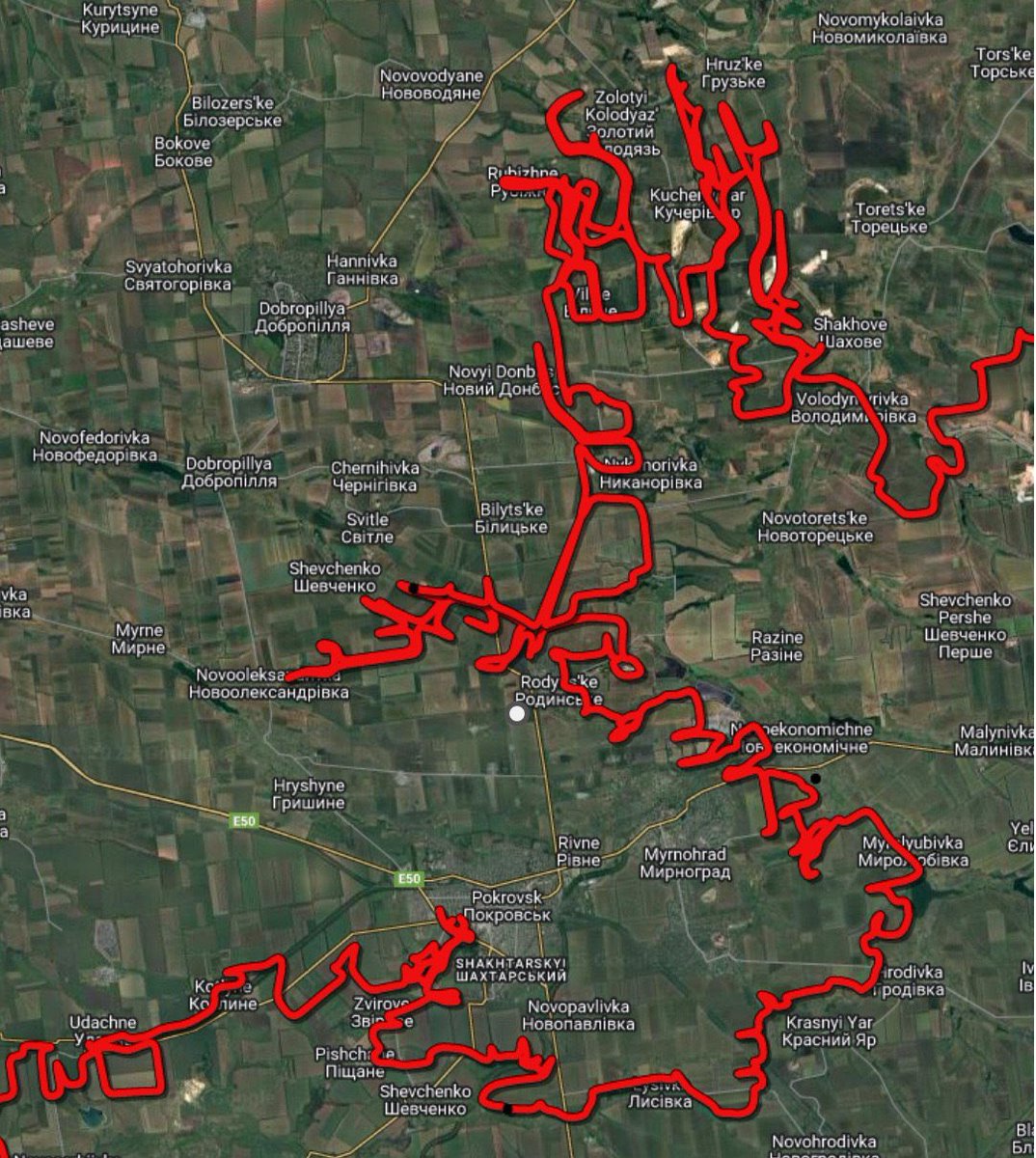
Bohdan Krotevych, a veteran of the Azov regiment , said the situation on the Pokrovsk-Konstantinovka frontline is extremely difficult, warning of a semi-circumvention of key cities. At the same time, Western analysts are writing about a “catastrophic scenario” for Donetsk region, predicting the loss of control over a large part of the region.
Bohdan Krotevych, a veteran of the Azov Regiment , called on President Zelensky to pay attention to the difficult situation on the Pokrovsk-Konstantynivka line, which has been there for a long time and is only getting worse every day. According to him, there is no longer a stable line of contact, and the enemy is gradually advancing.
“Pokrovsk and Myrnohrad are almost surrounded, Kostiantynivka is semi-encircled. The enemy is advancing towards Kramatorsk and Druzhkivka,” Krotevych wrote in an emotional post on social media platform X, addressing President Volodymyr Zelenskyy.

The situation in Donetsk region is difficult, but there is no question of encirclement
Against the backdrop of Azov veteran Bohdan Krotevych’s statements about the critical situation on the Pokrovsk-Konstantinovka line, Ukrainian Armed Forces colonel in reserve, pilot instructor Roman Svitan in an exclusive commentary
“We can’t talk about a cordon-off for sure. Logistics chains are working. But any rotation creates preconditions for a breakthrough, and the Russians are taking advantage of it. Now they are pressing along the entire front with small tactical groups, trying to infiltrate between our positions,” emphasized Svitan.
Svitan explained that the current problems are related, in particular, to rotational moments that create conditions for enemy breakthroughs. A special role is played by the fact that some units, in particular the 1st Corps of the National Guard (Azov), are formally subordinated to the Ministry of Internal Affairs, not the Armed Forces. According to him, the National Guard should have been incorporated into the Armed Forces long ago, which would have given the command more than a thousand additional soldiers.
“If this organizational issue is not resolved, similar problems will recur. And now it is important to prevent the tactical infiltration from turning into an operational breakthrough with the entry of Russian equipment into Dobropillya. This will pose a threat not only to Pokrovsk, but also to Kostyantynivka, Druzhkivka, Sloviansk and Kramatorsk,” warned Roman Svitan.
The expert also criticized the decision of the military and political leadership, which, in his opinion, prematurely recognized the summer offensive of the Russian Federation as “exhausted” and pulled back some forces from Donetsk region to the Sumy direction, creating additional risks in the East.
“It is possible to level the situation. There is no strategic catastrophe, but the signal is very serious. If no conclusions are drawn, the consequences will be much more severe,” summarized Roman Svitan.
We would like to add that on August 11, DeepState reported that the situation near Dobropillia is quite chaotic. According to them, Russian troops have identified gaps in the defense and are trying to use them to advance further.
The Dnipro Operational and Tactical Group confirmed that the enemy is infiltrating small assault groups past the first line of Ukrainian positions in the Dobropillia and Pokrovsk sectors. At the same time, the headquarters emphasized that it was not a case of capturing new territories, but rather attempts at a local breakthrough.

BILD again draws a “catastrophic scenario” for Donetsk region: should we believe it?
The German edition of BILD has published another article about the events at the front, this time concerning the situation near Pokrovsk. The author of the article, journalist and analyst Julian Röpke, claims that “the next few hours will be decisive for the 29% of the territory of Donetsk region controlled by Ukraine.”
In his post on social media, Röpke describes a scenario in which Russian troops allegedly pushed 18 km deep into Ukrainian defense, bypassed Dobropillia and reached the key highway between Dnipropetrovs’k and Sloviansk/Kramatorsk. In his opinion, Ukraine has only a “very small window of opportunity” to counterattack, otherwise the front line will begin to “spiral” toward further losses.
He even offers a specific “recipe for victory”: to gather several hundred soldiers of mechanized units and attack while there is no active support from Russian FPV drones in the area. If this is not done, Röpke predicts, Sloviansk and Kramatorsk could find themselves cut off from the Dnipro and dependent on supplies through Kharkiv.
It sounds like a thriller scenario, but there are a few points to be made here.
First, the data on the “18 km of breakthrough” and “access to the highway” have not yet been confirmed by official sources. The Ukrainian military officially reports localized attempts by the enemy to infiltrate in small groups, but denies seizing new territory in the area.
Secondly, such overdramatization of events, when every day is called “decisive for the entire region,” has already become typical for a number of Western observers. Such statements often ignore the complex logistics, real rotation processes, and the current tactical situation on the ground.
Thirdly, it is not the first time that Röpke himself has made “apocalypse predictions” that have not come true. Military experts in Ukraine emphasize that, although the situation in the Pokrovsk sector is difficult, it is too early to talk about the inevitable loss of the region.
Therefore, BILD’s statements should be taken with caution: they reflect the emotional view of an individual journalist rather than a verified operational picture. Ultimately, the events at the front are not decided by loud posts on social media, but by the specific actions of the command and troops on the ground.