Training or preparing for an offensive: an expert explains how and to whom the West-2025 could threaten
7 August 2025 19:29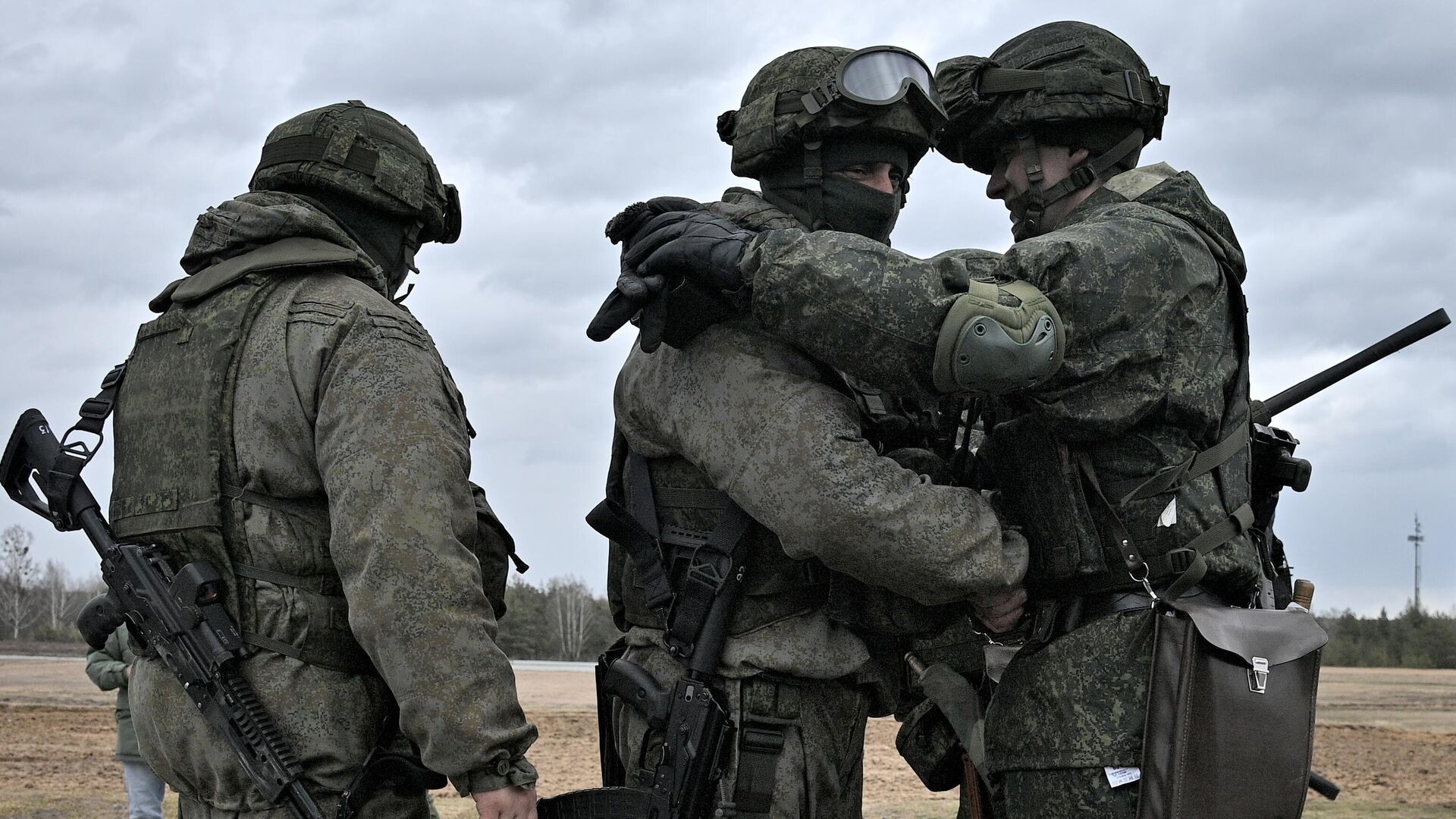 ANALYSIS FROM
The first echelon of Russian troops and equipment has arrived in Belarus to participate in the joint strategic command and staff exercises West 2025, which will take place in September. This was reported by the Ministry of Defense of the Republic of Belarus on its official Telegram channel. According to the ministry, Belarusian and Russian units are already in the final stages of preparation. The Belarusian Defense Ministry called the exercise a “major milestone” in the military training of both countries in 2025. At the same time, Minsk is forming a new air assault brigade near the border with Ukraine, and the country’s legislation allows for martial law even in the event of internal protests.
What does all this mean? What scenarios can be practiced within the framework of the West 2025 – defensive or offensive? And why should these events be perceived not only as military maneuvers, but as elements of a large political game?
Colonel Pavel Shebeko, deputy commander of the Northwestern Operational Command, said that the West 2025 exercise is intended to develop new forms and methods of using ground forces, in particular, taking into account the experience of modern armed conflicts.
The military alliance between Russia and Belarus is an indispensable condition for the further development of our countries. With the beginning of the “SVO” (Russia’s full-scale invasion of Ukraine – ed.), this has become a priority,” Shebeko said.
He did not specify what kind of threats he was talking about, but aggressive rhetoric comes amid the deteriorating security situation in the region.
Why is West 2025 a cause for concern?
Ukrainians remember well that after the previous Zapad 2021 exercise, Russia launched a full-scale invasion of Ukraine. Therefore, it is not surprising that the current preparations for the maneuvers are being actively monitored both in Ukraine and in NATO countries, particularly in Poland and the Baltic states. Strategic exercises of this level often model not only defensive but also offensive scenarios. Even if no real invasion is planned, such actions create a high level of military and political tension in the region.
In an exclusive commentary
The equipment is just arriving, and we are just beginning to observe what is happening there. I always say that the main indicator for us is the number of people who will participate in these exercises,” said Ivan Stupak.
The expert recalled that about 3,500 military personnel took part in the previous Zapad 2021 exercises. If this time the number remains at about the same level, there is no reason to panic.
If the number increases – 5, 7, 10 thousand soldiers – then, of course, there is reason for concern. We also monitor the number of vehicles. If the count goes up to hundreds of units, it is a bad sign,” emphasized Stupak.
Stupak drew special attention to the issue of ammunition. According to him, it is important to keep track of whether the shells are just being transported or are already being unloaded on the ground.
The last signal is the unloading of shells. If you see a photo of them being unloaded from trucks or railroad cars onto the ground, it means that they will definitely be fired. No one will load the shells back,” explained Stupak.
There is no serious threat to Ukraine
Despite the loud information campaign around the Russian-Belarusian West 2025 exercises, the real threat from these maneuvers at the start is minimal. This was stated in a commentary for
The first echelons with Russian military and equipment have already arrived in Belarus in preparation for the Zapad 2025 exercise. However, as Roman Svitan emphasizes, the scale of the transfer of forces is currently too small to pose a real military threat.
By early September, they will definitely not be able to create a group that could threaten anyone. The first echelon is a maximum of one battalion, i.e. 500-700 soldiers with equipment and ammunition. This is about 3 thousand tons of cargo, 50-60 railroad cars. This is nothing,” explains Roman Svitan.
To create a serious strike group, Svitan believes that an army structure of at least 40-50 thousand soldiers is needed, and its formation takes months.
Even in 2022, it took them almost six months to bring such a group to Belarus. Then about 50 thousand, or three divisions, entered. It was a real army. And now this is not the case,” emphasized Roman Svitan.
“Restrictions on railroad logistics are another deterrent. Even if they really wanted to, their railroad would not be physically able to transport that many troops in such a short time. There is simply no capacity, explains Svitan.
“The current exercises are part of Russia’s information campaign aimed at putting pressure on Europe, not a prerequisite for real hostilities.
All we are seeing now is an informational show of force. They will highlight this in the media as a “big stick” trying to put psychological pressure on Europe,” Roman Svitan concludes.
A signal for NATO, not for Ukraine
At the same time, Ivan Stupak believes that the direct threat from Belarus does not concern Ukraine.
There is a threat to the Baltic states. Perhaps a little bit for Poland. But most of all, it is for the Baltic States. In recent months, the situation there has been very tense, and things have been escalating,” Stupak said.
Thus, according to the expert, the West 2025 exercise is more of a demonstration of force to NATO than a realistic scenario of an invasion of northern Ukraine.
Belarusian authorities are legalizing martial law against their own people – an analyst explains the essence of changes in legislation
The new changes to Belarusian legislation on martial law are part of a broader strategy of the Lukashenka regime, which is trying to legalize the ability to use the army not only against external threats but also against its own citizens. This was stated by Pavlo Rad, an analyst at the Foreign Policy Council’s Russian and Belarusian Studies Program “Ukrainian Prism”, on the Apostrophe TV channel.
“The new law actually transfers the right to determine the grounds for martial law from the law to the military doctrine, which gives Lukashenko more maneuverability,” explained Pavlo Rad.
Lukashenko between fear of Putin and the people
Commenting on the foreign policy aspect, the analyst emphasized that deepening integration with Russia, including in the military sphere, only increases Belarus’ dependence on the Kremlin. Moscow has been actively involving Minsk in joint military initiatives, exercises, and propaganda campaigns. Although Lukashenka is trying to balance, Putin remains a real threat to him.
Putin is a threat to the Belarusian dictator. The new changes to the legislation are part of a game of getting ahead of the game in order to have more leverage to control the situation and, if necessary, to escape under the cover of the law,” summarized Pavlo Rad.
“The Zapad 2025 exercise, the creation of a new combat brigade, and the adopted amendments to the law on martial law are not isolated events. These are elements of a strategy in which Belarus is finally losing the remnants of its neutrality and turning into a military satellite of Russia. Torn between fear of Putin and fear of his own people, Lukashenka is trying to keep the balance while demonstrating strength, loyalty, and readiness for repression.
Author – Anastasia Fedor
Читайте нас у Telegram: головні новини коротко