Exercise West 2025: Premonitions of a New War and Warning Signals for NATO
15 September 2025 17:40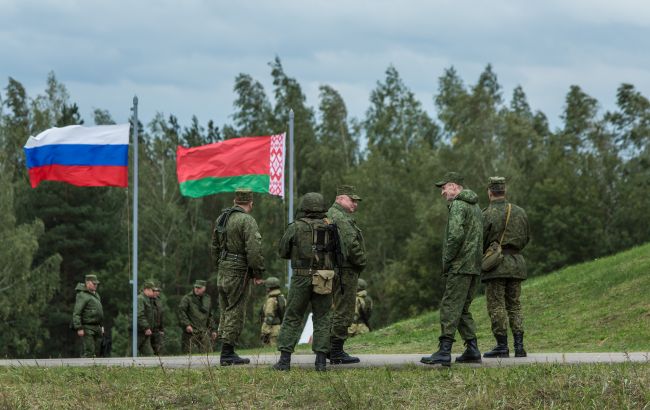
On September 12, Russia and Belarus launched a major joint military exercise called Zapad 2025. Two days earlier, Poland accused Moscow of escalating the situation by launching drones into its airspace.
NATO countries to the east – Poland, Lithuania, and Latvia – that border Belarus are on high alert in the wake of the maneuvers that Minsk says will take place near Barysau. All three states have stepped up security measures ahead of the drills, with Poland completely closing its border with Belarus.
At the same time, Polish authorities emphasized that the border closure was not related to the exercises only, and would be reopened only after the threats were eliminated. Other NATO countries have also introduced preventive security measures.
Polish Prime Minister Donald Tusk said that the country is experiencing “critical days” and is closer to “open armed conflict” than at any time since World War II. These statements were made after Poland and its allies sent up fighter jets on September 10 to intercept Russian drones that violated Polish airspace.
Moscow, in turn, denies the accusations, saying that the North Atlantic Alliance is misinterpreting the situation. According to AFP, Kremlin spokesman Dmitry Peskov emphasized that these were “planned military exercises that are not aggressive in nature.”
Earlier, President of Ukraine Volodymyr Zelenskyy expressed concern about Russia’s intentions in the context of these exercises, saying that their real purpose was not defense but a demonstration of force aimed in particular against Ukraine.
Panic in Europe: exercises as a cover
Former SBU officer and military expert Ivan Stupak said in a commentary for "Komersant Ukrainian" that anxiety around the West 2025 exercises began to form in June. Especially in Europe.
“A certain panic began in June, when the first information about preparations for the exercises appeared. Some Ukrainians have already experienced something like this and reacted calmly, but Europeans – Poles, residents of the Baltic countries, and partly Germans – began to doubt the “peaceful nature” of the actions of Russia and Belarus,” Stupak said.
The expert reminded that it was after the previous maneuvers – “West-2021” and “Allied Resolve-2022” – that a full-scale invasion of Ukraine took place. This precedent does not give European governments peace of mind.
“Europeans remember that Russia invaded Ukraine immediately after the previous exercises. This is like a conditional “Pavlov reflex” – a signal that is no longer perceived as an innocent preparation. This is a wake-up call,” he notes.
Poland closes the border and brings in the army
In response to the threat, Warsaw has introduced strict security measures: all border crossings with Belarus have been closed, barriers have been erected, and military presence has been increased.
“The last checkpoint was closed at midnight – barbed wire, ‘dragon’s teeth’. The Belarusian side was outraged, saying that Europe was turning into a concentration camp. But the Poles are acting preventively to prevent a repeat of the 2022 scenario,” says Stupak.
According to the expert, Poland has already deployed up to 40,000 troops to the border in case of possible provocations. Restrictions have also been imposed on low-altitude flights in the border areas, with no aircraft below 6,000 meters, except for sanitary, military, and government aircraft.
The threat of attack is not only for Ukraine
Taras Zahorodnyi, managing partner of the National Anti-Crisis Group, believes that the current exercises are far from a formality.
“These are not just exercises. It was after such maneuvers that Russia and Belarus invaded Ukraine. Such actions are always a great reason to deploy troops and practice interaction. And then – according to the situation,” the expert emphasizes.
According to him, in the current context, destabilizing actions may be aimed at Poland, the Baltic States or Finland.
“We can already see that Polish airspace is being violated by drones. There are threats against Finland and the Baltic states. Lukashenko has already stated that these countries are allegedly preparing aggression against Belarus. He did not mention Ukraine, because he realizes that he may receive a retaliatory strike,” Zahorodniy believes.
Despite formal participation in the joint exercises, the self-proclaimed president of Belarus, according to Zahorodnyi, is trying to stay away from direct involvement in the war.
“Lukashenko realizes that if he gets involved, it could be the end of him. The people of Belarus do not support participation in the war. He cares not about Ukraine or Poland, but only about his own skin,” the expert said.
The expert believes that the Kremlin is actively trying to draw Minsk into deeper complicity, but Lukashenko, given the experience of 2022, is resisting. He is partly assisted by Beijing, with whom Lukashenka is actively building communication.
“China uses Belarus as a ‘gateway to Europe’. Beijing does not benefit from an open war in this region. This is another factor that keeps Lukashenka from taking risks,” Zagorodniy says.
Attack not with tanks, but with drones and cyberattacks
Currently, experts agree that Russia is unlikely to launch an open ground attack against NATO countries. However, hybrid actions, including massive drone attacks, cyber interference, and provocations at the borders are quite real.
“Tanks are not needed to destabilize Poland. Massive attacks by shakedowns, border violations, and provocations are enough. If Poland loses control, the Baltic states will be left without protection. After all, only the Poles are able to help them quickly,” notes Taras Zahorodnyi.
Moscow continues to deny aggressive intentions. Kremlin spokesman Dmitry Peskov said that the exercises are “planned” and “not directed against anyone.” At the same time, the Polish and Baltic governments are acting proactively.
Experts do not rule out that Russia is preparing a new stage of escalation, trying to expand the front or destabilize the West. And the exercises could be the beginning of the next phase of hybrid warfare.