The most impressive dust storms in the world: why they happen and what consequences they have (photos)
1 April 2024 12:44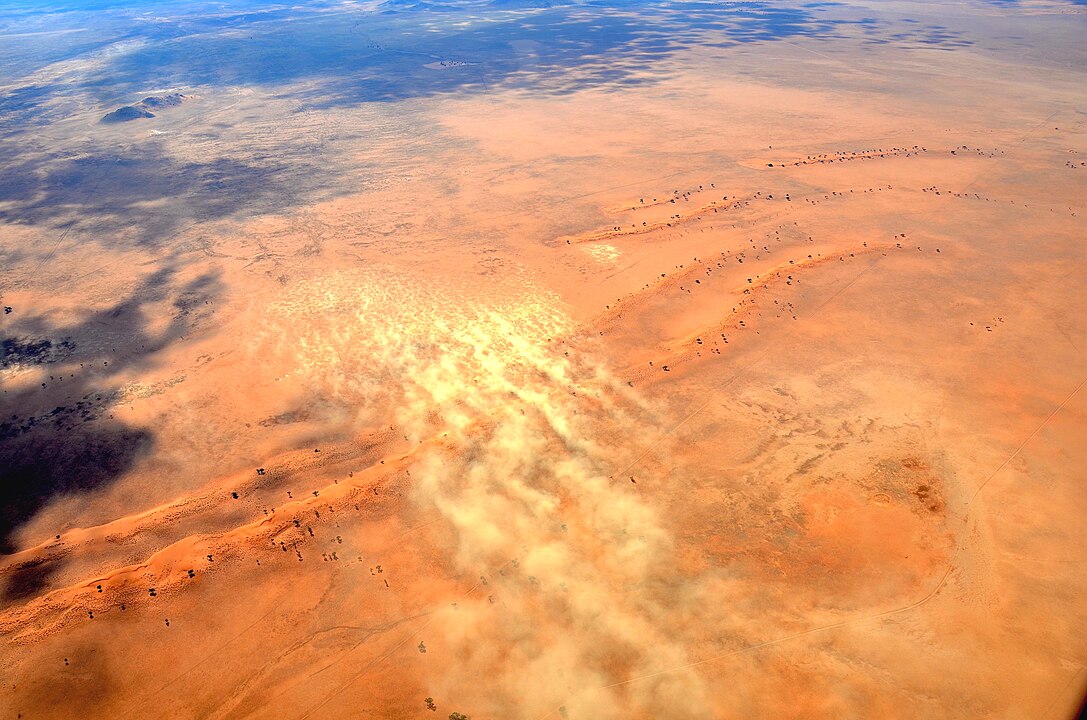
The dust storm that hit Ukraine yesterday brought sand all the way from the Sahara. on 31 March, sand and dust covered the western regions of the country and reached Kyiv, and today, according to forecasters, the storm is expected to cover the whole of Ukraine. Komersant ukrainskyi  has made a short selection of the most powerful dust storms that vividly illustrate the majesty and terrifying nature of this weather phenomenon.
What is a dust storm?
A duststorm is an atmospheric phenomenon of wind transporting large amounts of dust, sand, soil particles, etc. A dust storm can be several metres to several kilometres high, and line of sight at its epicentre can be reduced to several tens of metres. If a dust storm is formed over sandy soils, it is called a sandstorm
A dust storm is formed when winds of 10 m/s or more blow over dry and sparsely vegetated soil. It lifts soil particles into the air and carries them over long distances. Such storms are most common in deserts and semi-deserts, arable steppes, etc. On the planet, they are common in the regions of North Africa, the Middle East, Central Asia and China.
Sometimes dust storms can cover thousands of kilometres, as in our case, as there are about 4,000 kilometres between Kyiv and the Sahara.
Since the 1950s, the frequency of dust storms has increased 10-fold. There are regions that suffer from this phenomenon more than others. For example, in the 1960s, Mauritania had two such storms a year, but since 2007, there have been about 80 per year.
How dust storms affect health
Dust storms are quite a health hazard. Dust particles kicked up into the air penetrate the lungs and eyes, causing at least unpleasant and painful sensations, and sometimes serious illnesses.
For example, people with asthma and respiratory problems experience a significant increase in symptoms and deterioration of lung function. Prolonged and unprotected dust exposure during dust storms can cause silicosis, which is a physical change in the lungs that makes breathing difficult, causing shortness of breath and coughing. Silicosis is considered an incurable and serious disease that can lead to cancer. One of the consequences of silicosis can be asphyxia, which is a lack of oxygen and excess carbon dioxide in the blood and body tissues. As a result, a person simply suffocates.
If dust microparticles get into the eyes, there is a chance of getting dry keratoconjunctivitis or dry eye syndrome. If left untreated and not removed, it can lead to blindness.
There is some research that suggests a link between sandstorms in the Sahara and increased mortality from anthropogenic factors (such as air pollution) in surrounding cities. According to the hypothesis, sand particles can enter the bloodstream through breathing, just like particles of ordinary atmospheric pollution in cities.
What to do during a dust storm
During a dust storm, you should avoid direct contact with the environment, close windows and vents at home, and try not to let air from the street into your room. If you find yourself in the area of a very intense dust storm, you should immediately find any tall object such as a wall and lie down next to it on the leeward side. You should breathe through a cloth bandage and have water with you.
“Black Sunday”
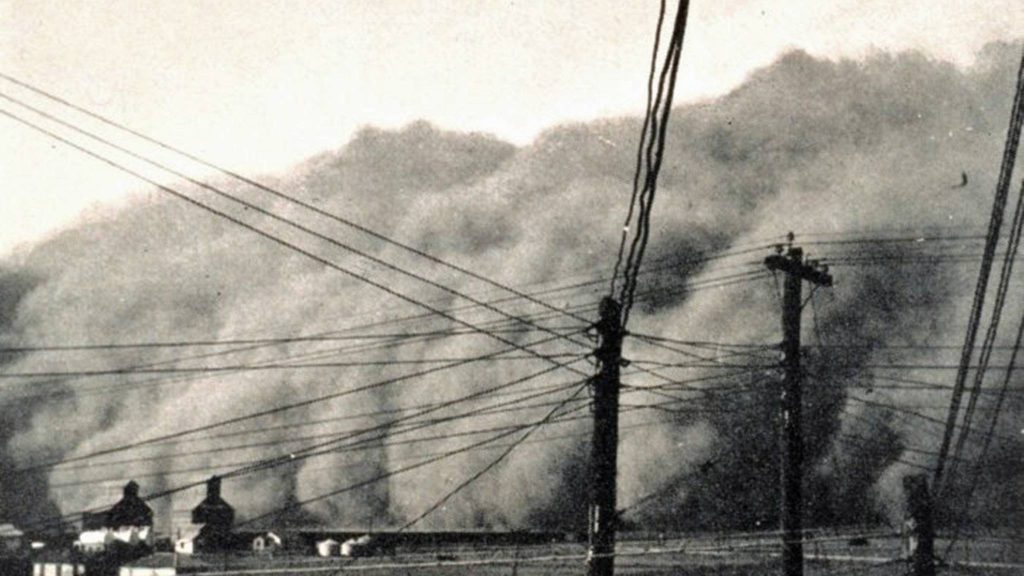
“Black Sunday was the name given to a dust storm on 14 April 1935 in the US states of Oklahoma and Texas. According to researchers, the wind blew 300,000 tonnes of topsoil from the American prairie. This atmospheric phenomenon killed several people, and hundreds of thousands more, mostly from Oklahoma, moved to California.
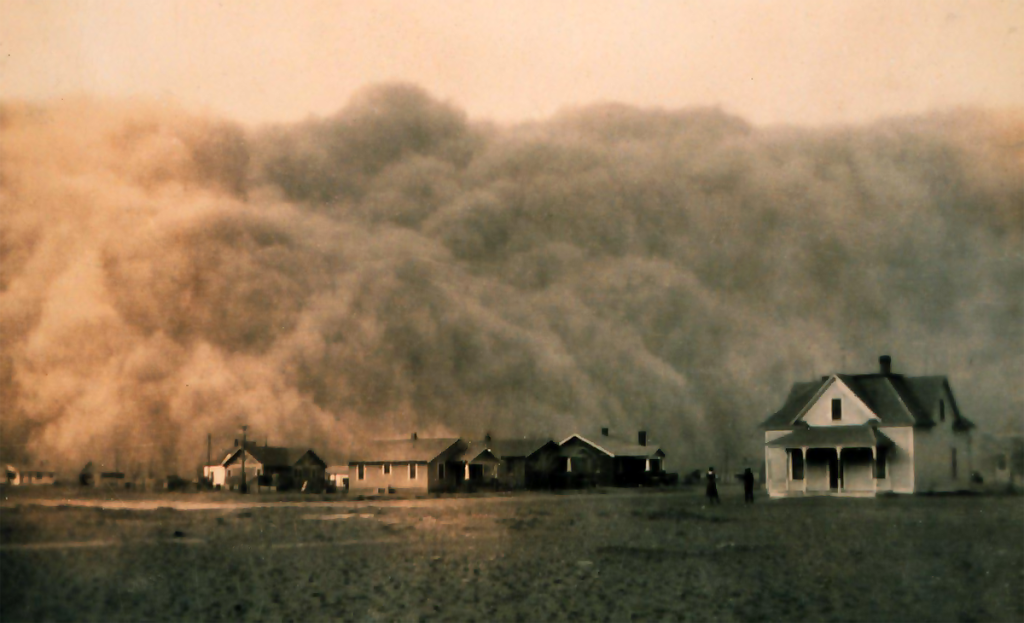
“Black Sunday was part of the Dust Bowl, a series of dust storms in the United States in the 1930s. They are considered to be a good example of the fact that such storms are partly caused by anthropogenic factors. For example, cattle and sheep farming left much of the American West without natural grass and shrubs to anchor the soil, and overcultivation and poor soil care led to soil dehydration and loss of organic matter. Already in 1936, the US Congress passed the Soil Conservation Act, which created the Soil Conservation Service (SCS). The US also launched a nationwide campaign to plant windbreaks.
The Great Bakersfield Dust Storm of 1977
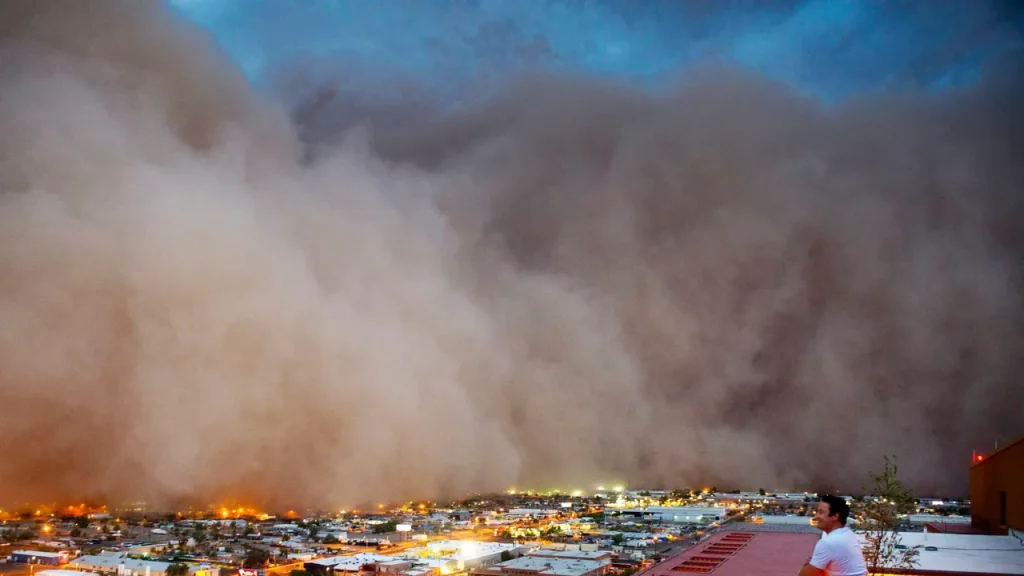
A dust storm that occurred in the San Joaquin Valley in California. It began late in the evening on 19 December 1977 and ended in the afternoon on 21 December. It resulted in 5 deaths and $40 million in damage, not including further agricultural losses. It was characterised by very fast winds that reached over 300 km/h. The sky was black with dust. The storm displaced entire agricultural clusters in California.
Dust storm in Melbourne, 1983
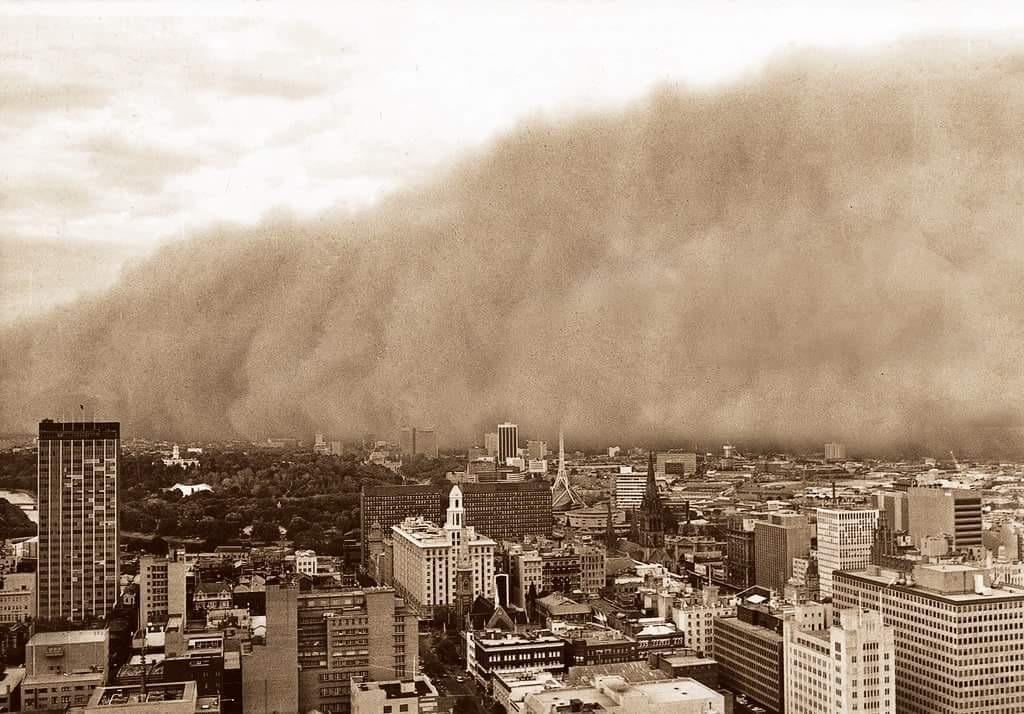
Red soil, dust and sand from Central and Southeast Australia were swept by strong winds and moved southeast across Victoria. The dust storm was one of the most dramatic effects of the 1982-1983 drought, at the time the worst in Australian history, and is now seen as a precursor to the Ash Wednesday bushfires that occurred eight days later.
Dust storm on Interstate 5, 1991
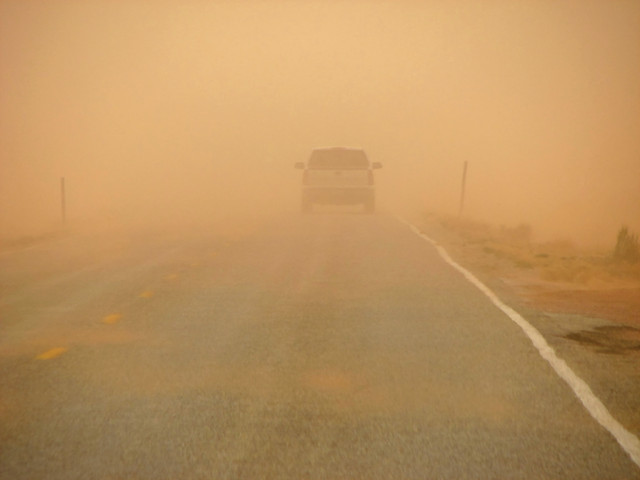
The dust storm that occurred on 29 November 1991 along Interstate 5 north of the city of Coalinga in California. The storm caused 104 cars to collide on the motorway, killing 17 people and injuring 150.
Australian dust storm of 2009

Also known as the East Australian dust storm. It passed through the Australian states of New South Wales and Queensland from 22 to 24 September 2009. The length of the storm from north to south was almost 3.5 thousand kilometres. At the epicentre of the storm, everything around was red and orange, like on Mars or in Hollywood films about Armageddon.
Drought and dust storms in China in 2010

A series of severe droughts in the spring of 2010 affected a number of Chinese provinces. The drought was called the worst in a century in southwestern China. Chinese provinces faced water shortages. Wells that had been providing water for hundreds of years have dried up. The production of some goods (tea and coffee, fruits, wheat, rubber, etc.) has halved. The Chinese government deployed army units to the affected provinces, fearing popular uprisings. Dust storms came from the Gobi Desert in late March 2010. Air pollution levels in Hong Kong were 15 times higher than normal.
Dust storm in Tehran, 2014
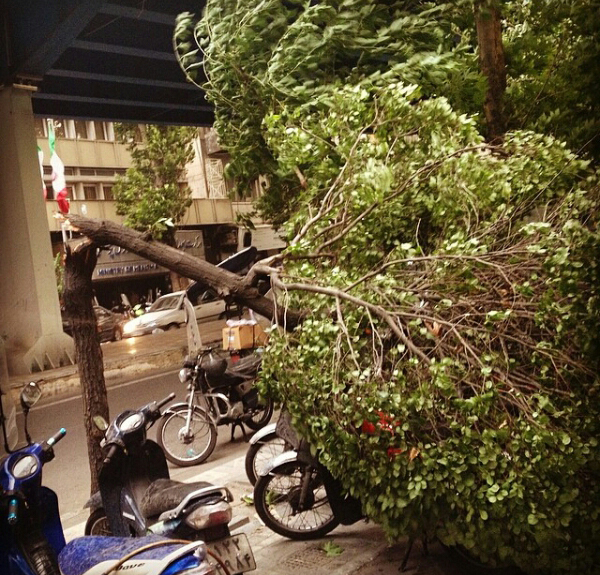
Occurred on 2 June 2014 in the Iranian capital Tehran and its environs. The peculiarity of this storm is that it was combined with rain and hail. Within an hour of the storm, the wind, which reached speeds of up to 120 km/h, broke trees and power lines, destroyed buildings and cars. The storm resulted in 5 deaths and $16 million in damage. THE STORM CAUSED 5 DEATHS AND $16 MILLION IN DAMAGE.
Indian dust storms of 2018

These storms swept across northern India on 2-3 May and resulted in 125 deaths. However, most of the damage and deaths were caused by strong winds, not dust.
East Asian sandstorm 2021

A major storm that hit Mongolia, China, and both Koreas in March 2021. It formed, as is often the case in the region, in the Gobi Desert. In general, it is believed that the increase in dust storms in this region is a direct consequence of ploughing, deforestation, soil erosion and other attributes of human activity.
Dust storms in Iraq in 2022
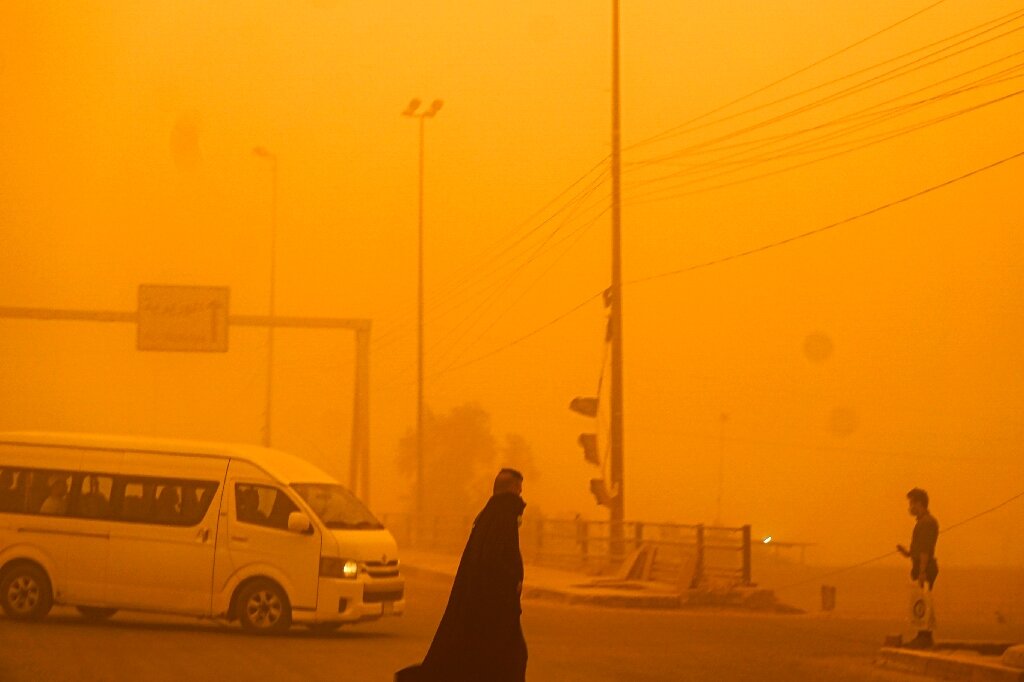
A series of dust storms, including the largest one on 23 May, engulfed Iraq, Iran and Syria. Scientists say that the region is expecting more and more such events due to drought, desertification and reduced rainfall.