Russia’s most expensive missile: expert explains why Zircon is dangerous and how many the enemy has
23 February 07:15 ANALYSIS FROM
Russia launched four Zircon hypersonic missiles at Ukraine in one week, two of which were fired during a massive attack on the Kyiv region on the night of February 22. Despite the Kremlin’s loud statements about “uninterceptable” weapons, Ukrainian air defense forces are already shooting down these missiles. What is known about Zircon and does it really pose an extraordinary threat?
History and origin of Zircon
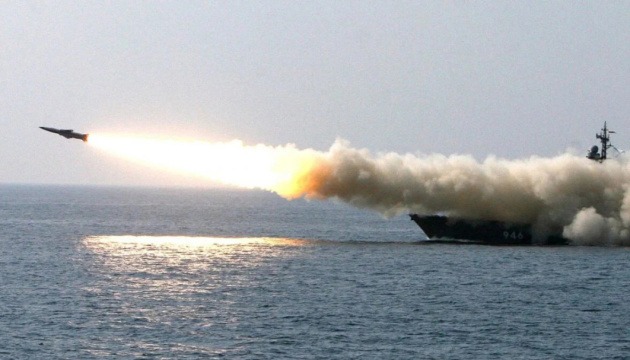
The predecessors of the Zircon were the Soviet Kh-22 missiles, which were called “aircraft carrier killers,” but of different generations. Its physical predecessor is most likely the Onyx-M or Onyx missile. Konstantin Kryvolap, an aviation expert, explains in an exclusive comment for
“After the Kh-22 came the Kh-32, which had improved accuracy. The first Kh-22s were designed for nuclear warheads, so accuracy was not critical at the time. Zircon is the next step, but not everything that is said about it in Russia is true,” says Kryvolap.
According to him, the first versions of Zircon had powder engines and did not reach full hypersonic speed.
“When experts saw the first tests, they said there was no hypersonic speed. The maximum speed claimed by Russia — 11,000 kilometers per hour — would simply burn up the rocket at real altitudes,” explains Kryvolap.
Design and combat characteristics
Zircon is an anti-ship missile capable of hitting ground targets while flying low above the surface.
- Warhead: about 150 kg (not 400 kg, as is sometimes claimed). (The first models weighed 150 kg, now they weigh 300 kg).
- Maneuverability: equipped with altitude control systems that allow it to rise above fields and gardens.
- Guidance: the terminal phase is carried out using infrared radiation, with the missile “grabbing” metal objects on the target.
“This missile flies, carries a warhead, and can hit targets. But due to the limited number of units produced, it is difficult to talk about a strategic advantage,” adds Kryvolap.
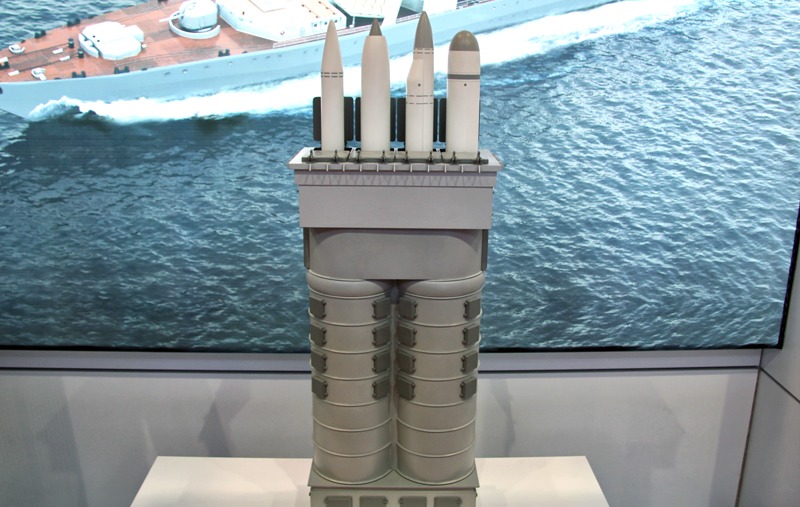
Kryvolap notes that Russia uses universal 3S14 launch complexes capable of launching several types of missiles:
- Zircon
- “Kalibr”
- Onyx-M
“Russia planned to equip up to 12 frigates with such systems, but in reality, only two have been installed. Now they sail the Black Sea, leaving from Novorossiysk or Gelendzhik and launching either Kalibrs or Zircons,” explains Kryvolap.
Why Zircon is a cause for concern
- Simultaneous launches of Zircons from the south and X-22s from the north put a strain on Ukrainian air defense.
- Zircon, older Onyx-M anti-ship missiles, and X-22 missiles are difficult to intercept due to their supersonic speed and low flight altitude.
However, the aviation expert also noted the price of the missile — about $10–15 million per unit. This limits the enemy in terms of production and quantity.
“If such a missile is launched, it is one of the most expensive Russian missiles. And their number is very limited — no more than two are produced per month,” Kryvolap clarified.
Previous strikes and effectiveness
The Zircon has been on combat duty since 2023. The first two strikes on Ukraine were recorded in 2024, when one missile was intercepted by the Patriot system. The expert notes that such strikes indicate the depletion of Russia’s resources.
“They would like to destroy Ukraine’s energy sector, but even with Zircon, they cannot do so. The lack of missiles prevents them from carrying out massive attacks,” says Kostyantyn Kryvolap.
So, Zircon is a technologically complex but still experimental missile with limited stock and non-massive use. It has high speed and maneuverability, but its warhead is relatively small, and modern air defense systems are capable of posing serious challenges to it. Therefore, despite Russia’s loud statements about its “uninterceptability” and absolute hypersonic superiority, the real combat capabilities of this missile are much more modest than what is presented in propaganda reports.