The most powerful in 20 years: what is known about the solar radiation storm and why the northern lights were seen in Ukraine
20 January 06:59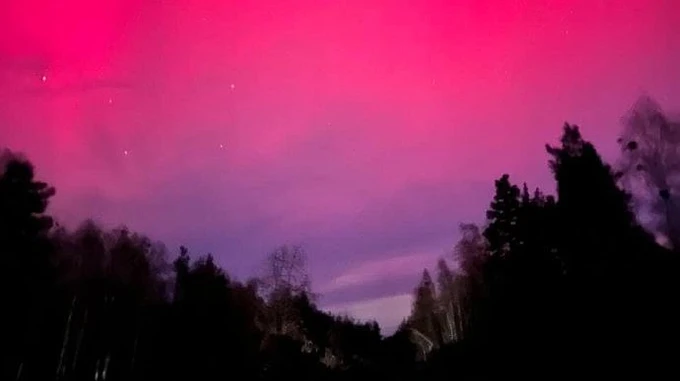
The northern lights, a rare atmospheric phenomenon for our latitudes, were observed over Ukraine. The cause was unprecedented solar activity: scientists report the largest solar radiation storm since 2003. It was this storm that “painted” the night sky and attracted the attention of astronomers around the world. CNN reports on the event, citing data from space weather researchers, according to "Komersant Ukrainian".
How strong is the storm?
On a five-point intensity scale, the current storm has been assigned a level 4 rating, the most powerful in two decades. Similar activity was last recorded during the famous storm of 2003.
Why the aurora is visible in Ukraine
During peaks of solar activity, charged particles reach the upper layers of the Earth’s atmosphere. The magnetosphere “directs” them to the poles, but during extremely powerful storms, the zone of visibility of the aurora expands — all the way to the middle latitudes of Europe, including Ukraine.
Possible consequences for technology
Strong solar storms can cause:
- satellite navigation and GPS failures;
- interference with radio communications;
- risks to power grids.
A historical example is 2003, when power outages were recorded in Sweden and transformers failed in South Africa.
Is there a threat now?
Currently, according to experts, no serious damage has been reported. The main risks relate to:
- increased radiation exposure for astronauts on the International Space Station;
- passengers on flights near the poles.
Space and aviation services have already received warnings and are adjusting routes and operating modes.
What’s next
Experts continue to monitor solar activity. If the intensity persists, the auroras may recur, and services will be able to respond quickly to possible disruptions.
Conclusion: The current storm is a rare natural phenomenon with impressive visual effects and controllable technological risks. For observers, it is a chance to see the aurora, and for infrastructure, it is a test of resilience.