The most important election of the year in Europe: Hungary is holding parliamentary elections today
12 April 09:15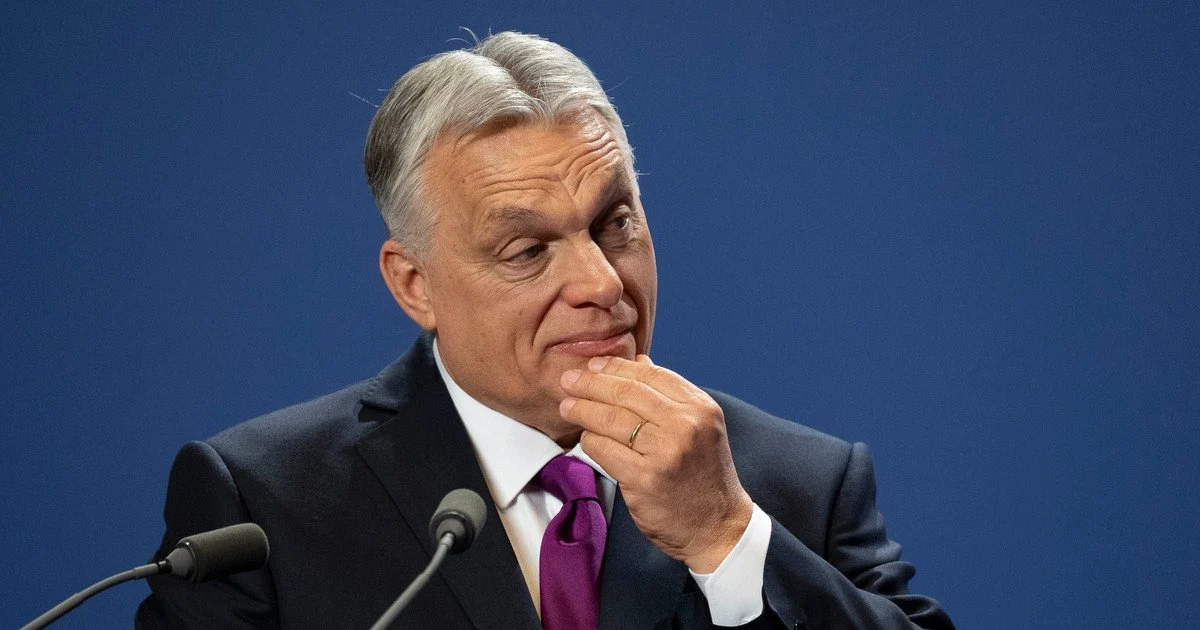
Parliamentary elections will be held in Hungary today, April 12. They will determine the future of Viktor Orbán following 16 years of his uninterrupted autocratic rule as the country’s prime minister.
This is reported by "Komersant Ukrainian" with reference to NV.
Hungarians are set to elect 199 members of the National Assembly—Hungary’s unicameral parliament. Its members are elected for four-year terms. The party that secures a parliamentary majority or wins the election and forms a coalition will have the opportunity to form the government. A record voter turnout is expected, potentially exceeding 80%.
Voting takes place under a mixed electoral system: 106 deputies are elected in single-member districts, and another 93—from nationwide party lists. However, this system is designed to benefit the ruling Fidesz party. Over the past decade and a half in power, Orbán has pushed through corresponding changes to the electoral system: the number of seats in parliament has been significantly reduced, and the boundaries of electoral districts have been redrawn. Regions traditionally inclined to vote for Fidesz were fragmented (so that more pro-government candidates could be elected from these districts), while in Budapest and other opposition-leaning areas, the number of districts was reduced. Orbán also simplified voting for ethnic Hungarians abroad who live in neighboring countries and predominantly support Fidesz.
The core of the ruling party remains older voters and those in rural regions, while the Hungarian opposition is largely supported by younger voters under the age of 40, residents of Budapest, and other major cities. In the days leading up to the election, tens of thousands of Hungarians took to the streets in central Budapest for mass protests against Orbán, chanting “Russians, go home!”—a famous slogan from the 1956 Hungarian Revolution, which was brutally suppressed by the Soviet Union.
Orbán risks losing this election— despite manipulation of the electoral system, as well as significant influence over the courts and media in Hungary, where the government controls up to 80% of the media landscape.
According to averaged poll results, the opposition party Tisa, led by Péter Magyar— Orbán’s former ally and now his main rival—has 49–50% voter support, while the ruling Fidesz party has 39%. One pre-election poll showed an even wider gap: 56% for Tisa and 37% for Fidesz among voters who had already decided whom to vote for. At the same time, a significant number of voters (up to 25%) had not yet decided whom to support at the time of these polls. Combined with the complexity of Hungary’s electoral system, this could have a significant impact on the final result.
International analysts warn that Tisza will need to gain at least 6 percentage points more than Fidesz. Only then will Péter Magyar’s political force have a chance to form a parliamentary majority, and thus Orbán’s 16-year reign could come to an end. Much will also depend on whether Tisa manages to secure a constitutional majority (133 seats) rather than a simple majority in parliament—because only then will Magyar have the opportunity to dismantle the system built by Orbán and amend legislation. Reuters published a summary forecast suggesting that Tisza could indeed win between 138 and 142 seats in parliament, i.e., a constitutional majority.
In an attempt to avoid defeat, Orbán built his election campaign on stoking anti-Ukrainian hysteria. “He tried to frame the vote as a choice between war and peace, telling voters that they could preserve Hungary as an ‘island of safety and tranquility’ by electing him, or drag the country into chaos and war by electing Magyar, whom he portrays as an agent of Brussels and Kyiv,” The Guardian summarized the “classic populism” of Orbán’s campaign. Its components included blackmailing Ukraine by shutting down the Druzhba oil pipeline, detaining Ukrainian cash collectors in Budapest, attempting to accuse Ukraine of trying to sabotage the Turkish Stream pipeline, and scandalous, manipulative campaign ads criticizing Ukraine and Volodymyr Zelenskyy.