The NBU has kept its key policy rate at 15%: what’s behind the regulator’s decision
19 March 15:56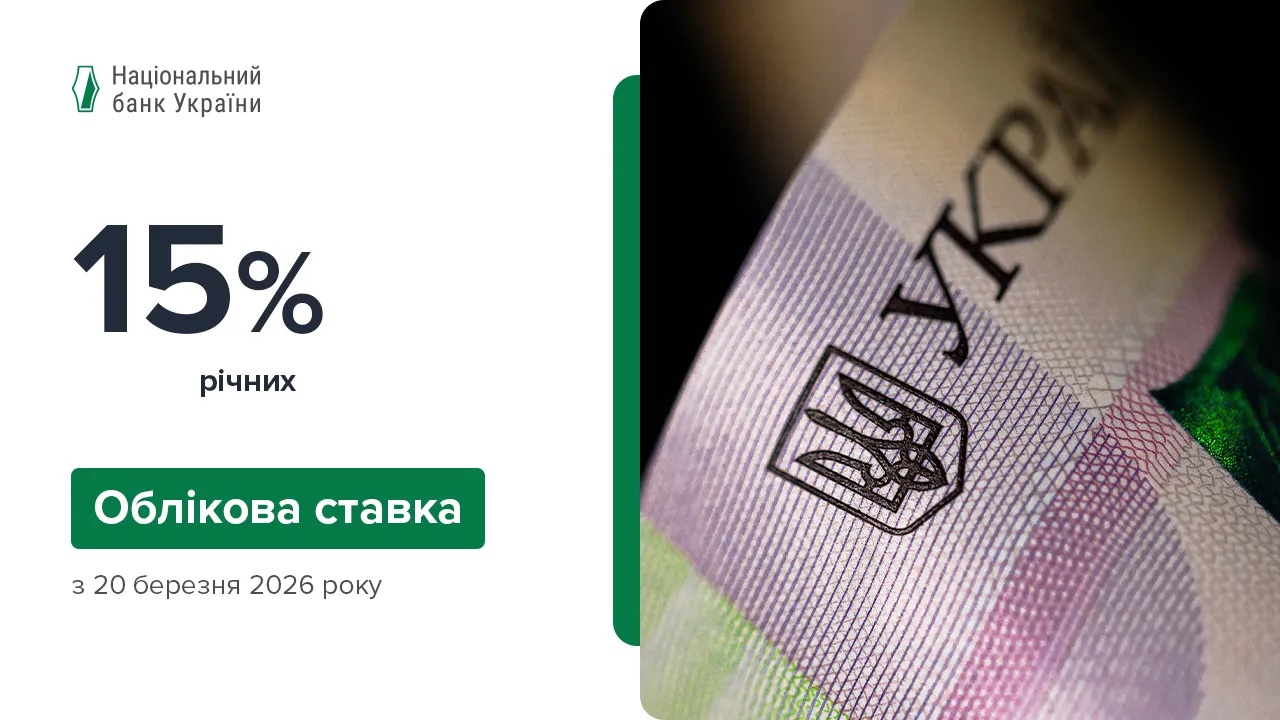
The Board of the National Bank of Ukraine has decided to keep the key policy rate at 15%, according to "Komersant Ukrainian".
The regulator cites rising inflation risks and worsening public inflation expectations as the reasons for this decision. The NBU is postponing further monetary easing to maintain currency market stability and control over prices.
Why the NBU is not lowering the rate
The National Bank notes that maintaining the rate should support:
- the attractiveness of hryvnia-denominated financial instruments;
- currency market stability;
- control over inflation expectations.
The regulator’s ultimate goal is to keep inflation moderate this year and return it to the 5% target in the medium term.
At the same time, the NBU warns that if inflationary risks intensify, the rate may even be raised.
What’s happening with inflation
At the beginning of the year, inflation was generally in line with the regulator’s forecasts.
- In February, annual inflation accelerated to 7.6%
- Core inflation remained at 7%
Prices rose faster for:
- fuel;
- services;
- raw food products.
In contrast, processed food prices rose more slowly than expected.
Why have public expectations worsened?
The NBU notes a deterioration in households’ inflation expectations.
Possible reasons:
- the difficult situation in the energy sector at the beginning of the year;
- rising fuel prices;
- rising prices for everyday consumer goods.
At the same time, expectations among businesses and the financial sector remain relatively stable.
A new risk factor—the war in the Middle East
The regulator warns that inflation may be higher than forecast.
One of the reasons is the rise in energy prices due to the war in the Middle East, which has driven up prices for:
- oil;
- gas;
- petroleum products.
This has already begun to affect domestic prices in Ukraine, particularly fuel prices.
The currency market and international aid
The stability of the financial system is largely supported by international financing.
According to the NBU:
- since the beginning of the year, Ukraine has received $5.5 billion in foreign aid;
- international reserves amount to approximately $55 billion.
This level of reserves allows the regulator to curb fluctuations in the currency market.
At the same time, on global markets in recent weeks, the dollar has strengthened against most currencies, including the hryvnia, amid geopolitical tensions.
Key risks to the economy
The NBU emphasizes that Russia’s war against Ukraine remains the key risk.
Additional threats to inflation:
- rising energy prices due to global conflicts;
- possible delays in international financial aid;
- additional budget expenditures on defense and reconstruction.
At the same time, the regulator acknowledges positive scenarios—specifically, increased support for Ukraine from its partners and progress toward achieving a just peace.
What the NBU will do next
The regulator states that it is ready to respond flexibly to the situation.
Possible scenarios:
- the rate will remain at the current level if inflation risks persist;
- the rate may be raised if inflationary pressures intensify.
Details of the Monetary Policy Committee’s discussion will be released on March 30, 2026, and the NBU plans to make its next rate decision on April 30, 2026.