Not according to plan: how new excise taxes and old fines are dictating the Ukrainian fuel market
15 January 14:02 ANALYSIS FROM
The Ukrainian fuel market welcomed the new year with an increase in excise taxes and the reinstatement of fines for gasoline without bioethanol. Komersant investigated whether Ukrainian car owners will feel the impact of these changes.
The increase in fuel excise taxes from January 1 was planned. In order to bring Ukrainian tax legislation into line with EU legislation, back in September 2024, Ukrainian excise tax on fuel began to rise towards the minimum level set in the European Union. This gradual convergence will continue until 2028 inclusive. Car owners will feel the price impact of this factor. But not only that.
Price balances and imbalances
This year, the excise tax on gasoline has already been set at €300.8, on diesel at €253.8, and on gas at €198. Compared to last year, the excise tax on gasoline has increased by €29.1 per thousand liters, on diesel fuel by €38.1, and on liquefied gas by €25. If we calculate the additional tax burden per liter, it is plus 1.73 UAH for gasoline, 2.26 UAH for diesel fuel, and 1.49 UAH for gas. It is easy to predict that all these “pluses” will be reflected in prices at gas stations. Another question is when exactly this will happen. According to Serhiy Kuyun, director of the A95 consulting group, there was no noticeable price increase in the first two weeks of the year.
“There is a slight movement in liquefied gas, although, in fact, it is not so noticeable. For example, on December 30, 95th gasoline was 58.30 UAH, on January 12 it became 58.37 UAH per liter, diesel was 58.29, became 58.32 UAH. And liquefied gas was 37.62 on December 30 and 37.95 on January 12. In some “expensive” chains, the price of autogas did indeed rise, but the rest of the market did not follow suit,” the expert notes.
Perhaps it was precisely these locally increased gas prices, which, at least in two large gas station chains at the beginning of this week, rose to 39.9 UAH per liter, that triggered a wave of reports about record price increases for this fuel. Although, for example, on January 12, it was possible to find gas stations where gas was 5 hryvnia cheaper.
The explanation for the record headlines can also be found in the fact that gasoline and diesel prices have fluctuated at virtually the same level over the past four weeks. In contrast, autogas prices showed truly record growth: from 36.6 hryvnia per liter in mid-December to 37.9 hryvnia per liter on January 12. And while prices remained stable during the week before New Year’s Eve and the week after, last week saw a resumption of growth. This can be explained not only by the rise in the euro, but also by the increase in excise tax.
Why are gasoline and diesel prices remaining stable, while autogas prices have resumed their upward trend? Alexander Sirenko, an analyst at the consulting company Naftorink, explains .
“Gasoline and diesel did not rise in price in the first two weeks of the year, which can be explained by the fact that fuel sellers already earned excess profits on these two commodity items in November and December. And so far, the margin earned by retail operators allows them to smooth out this price transition somewhat and not include the tax in the price of fuel. However, in the retail trade of LPG, or propane-butane, we historically have the smallest margin per liter. And therefore, already in the second week after the excise tax increase, autogas at gas stations began to make its first moves toward price increases,” the expert notes.
He also drew attention to other factors affecting prices. Oleksandr Sirenko continues.
“Since the Ukrainian market is dependent on the external market for petroleum products, everyone takes into account oil prices, which determine gasoline and diesel prices in Europe. We see what military and political events are taking place in the world. However, the Venezuela factor, in particular, had a restraining effect on the market. And the forecasts so far are that oil will become cheaper due to the availability of additional volumes on the market. This is holding back further movements in wholesale prices for petroleum products. As for the exchange rate, there is less positive news here. It is quite possible that due to exchange rate changes, the additional margin obtained by sellers on gasoline and diesel will quickly disappear, and we will see how the increase in excise duty will affect prices,” the expert explains.
A fine that exists and does not exist
Since January 1 of this year, Ukrainian fuel sellers have been under threat of fines for the absence of bioethanol in gasoline. De jure, but… not de facto.
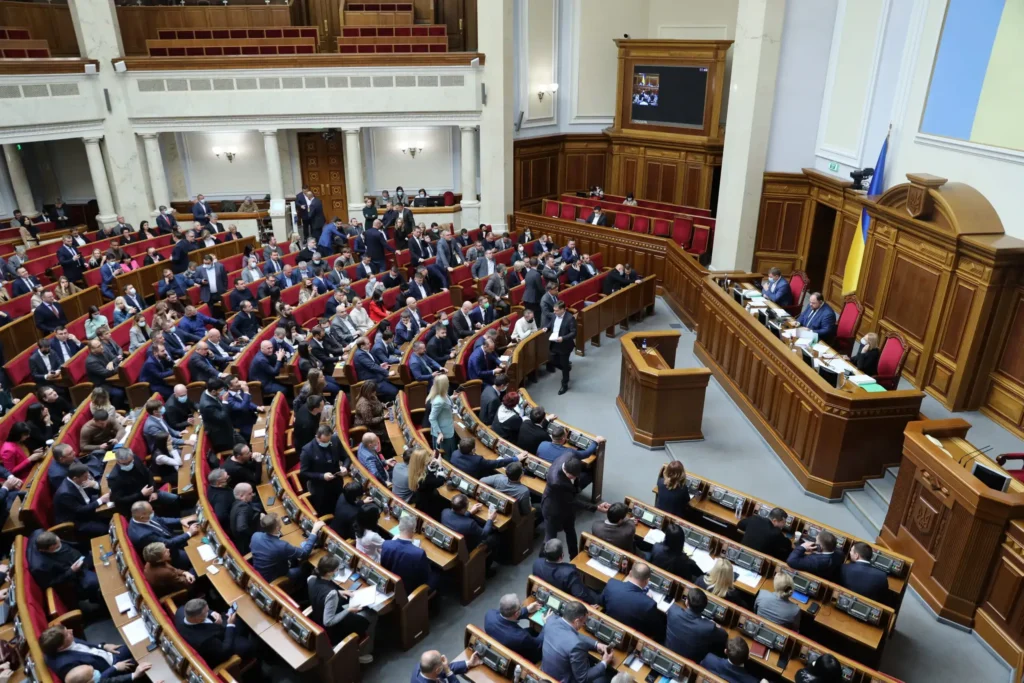
In fact, there is a lot that is strange about this story. And this strangeness is not limited to the unsuccessful attempt by deputies to postpone for another six months the introduction of fines for non-compliance with the norm of at least 5% bioethanol content in automotive gasoline. The relevant provision, which postponed the introduction of fines from January 1 to July 1, 2026, and increased the bioethanol content requirement to at least 7%, was included in a law that was not entirely relevant, which was intended to stimulate the development of renewable energy. It was this law that was “rejected” two weeks before the new year. The document, together with the aforementioned provision, was sent for a second reading, but with a shorter preparation period.
The history of the issue and the reasons for the latest postponement of penalties were explained in a comment by
“In fact, in December and November, fuel suppliers actively worked with the government, explaining that it is very difficult to supply the country with such fuel in conditions where the enemy is striking domestic bioethanol gasoline production facilities. The government agreed, but the Verkhovna Rada votes,” the expert notes.
There is another strange point—procedural—which confirms that there is no need to worry about fines for fuel sellers yet. As it turns out, the State Environmental Inspection of Ukraine still cannot apply the aforementioned fines to fuel market operators. As explained by the State Environmental Inspection in response to an information request from enkorr, state market supervision of gasoline is carried out exclusively within the framework of the technical regulations approved by Cabinet of Ministers Resolution No. 927. At the same time, this document does not contain requirements for a mandatory minimum share of bioethanol and, accordingly, “control of this indicator and the application of sanctions within the framework of market surveillance are impossible.” The State Environmental Inspection also reported that the technical regulations allow the sale of automotive gasoline with zero bioethanol content in Ukraine, and control of fuel compliance with legal requirements is possible only if the relevant standard is explicitly stipulated in the technical regulations.
Surprisingly, perhaps, the law stipulating the mandatory content of bioethanol in gasoline is being implemented right now, in the midst of war. Sergey Kuyun, director of the A95 consulting group, explains.
“This law was 15 years in the making and was introduced at a far from ideal moment. Why was this law passed? To replace some of the imported fuel with our domestic production. And to stimulate our agricultural sector, i.e., distilleries and those who grow, for example, the same corn that is processed into alcohol. But excuse me… How can we produce gasoline with bioethanol content when the enemy is constantly attacking oil depots? That is why everyone imports fuel so as not to create any production, reserves, etc. at oil depots. But when we import, we stimulate not Ukrainian producers, but European alcohol producers,” the expert emphasizes.
For now, everyone is waiting for parliament to implement what already exists de facto into law. An updated bill with a provision postponing the introduction of penalties for non-compliance with bioethanol content standards in automotive gasoline until July 1, 2026, is already ready for consideration in the session hall.
Author: Serhiy Vasilevych