Weapon of fear or a signal of impotence: what the “Oreshnik” strike on the Lviv region showed
9 January 13:33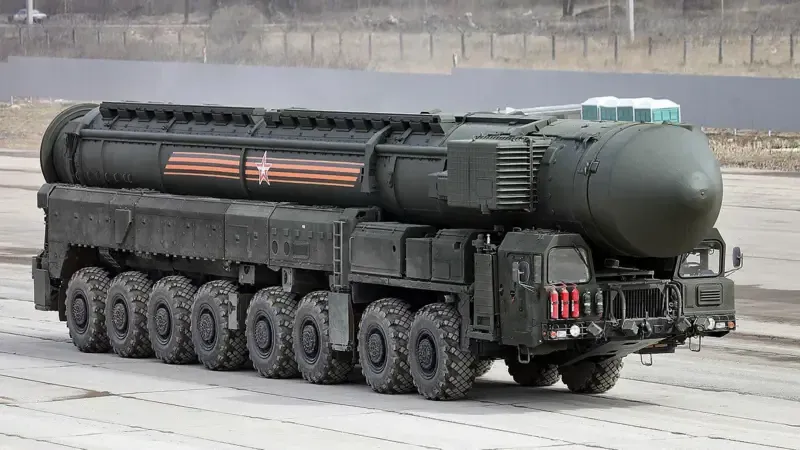 ANALYSIS FROM
Russia’s missile strike on the Lviv region was yet another reminder that the war the Kremlin is waging against Ukraine has long ceased to be exclusively a Ukrainian problem. The use of Oreshnik missiles near the borders of the European Union and NATO turns the conflict into a direct threat to the security of the entire European continent. That is why Kyiv is responding not only militarily and diplomatically, but also politically — by initiating an emergency meeting of the UN Security Council and consultations with key international partners. At the same time, military experts call Russia’s “terrible missiles” a symbol of weakness rather than strength, and strikes on civilians a sign of the Kremlin’s strategic impotence. The Oreshnik strike on Lviv region was not only a military event but also a political signal.
Is Russia really trying to intimidate Europe? And most importantly, will the West dare to move from a slow “awakening” to concrete decisions: strengthening air defense, transferring aviation, and putting tougher pressure on Moscow?
Ukraine is urgently convening a meeting of the United Nations Security Council in response to Russia’s Oreshnik missile strike on the Lviv region. This was announced on Friday, January 9, by Ukrainian Foreign Minister Andriy Sybiga.
According to him, this is not just another act of aggression against Ukraine, but a direct threat to the security of all of Europe.
“We will initiate international action — an urgent meeting of the UN Security Council, a meeting of the Ukraine-NATO Council, as well as appropriate steps within the European Union, the Council of Europe, and the OSCE,” Andriy Sibiga said.
The head of the diplomatic department stressed that the use of such a missile near the borders of the EU and NATO is a serious challenge for the entire transatlantic community.
“Oreshnik” as a symbol of the weakness of the Russian military-industrial complex
Despite its grandiose name and propaganda effect, the Oreshnik missile is not something fundamentally new for Ukraine. Grigory Tamar, a reserve officer of the Israel Defense Forces (IDF), commented on the situation exclusively for "Komersant Ukrainian".
“Ukraine has already experienced an attack with a missile of this class. Nothing extraordinary happened. Unfortunately, during this time, the Ukrainian people have experienced practically the entire arsenal of Russian missiles,” Tamar said.
According to Grigory Tamar, the use of such missiles is not so much a sign of strength as it is a sign of Russia’s technological and strategic weakness.
“In recent months, pro-Western countries have repeatedly demonstrated the helplessness of Russian and Chinese military equipment in the face of modern Western technologies,” Tamar said.
The expert recalled that this was evident both during the Israeli-Iranian confrontation and in US actions in other regions of the world.
Will the West respond to the “Oreshnik” strike?
Russian missile strikes on Ukraine are increasingly demonstrating the Kremlin’s true tactics — instead of confrontation on the battlefield, Moscow is deliberately attacking the civilian population. At the same time, the scale and consequences of these attacks directly depend on the level of military support for Ukraine from Western partners.
“Russia is mocking us as much as it can. It is not striking the Ukrainian army — it is striking the civilian population. This is where Russia demonstrates all its so-called ‘heroism’. If the West provided Ukraine with sufficient missile and air defence systems, as well as aircraft, such strikes would be simply impossible. But, unfortunately, the West is slowly but surely waking up,” said Hryhoriy Tamar.
A message that cannot be ignored: the US has warned Putin
Donald Trump is not a naive or weak politician, and his strategy is to wait and observe before making tough decisions. Tamar draws attention to the signal that Trump sent to Putin.
“A message appeared on the official White House website: don’t think Trump is a fool. Don’t laugh at him. He waits a long time, watches, tries to negotiate, seeks compromises, but when he realizes that this is impossible, he begins to act harshly,” said Grigory Tamar.
The expert draws particular attention not only to the content, but also to the form in which this signal was presented.
“There is one very telling detail. This article was published in Russian. It was not published in any other language. Only in Russian — and specifically on the official White House website,” Tamar emphasized.
In his opinion, this was a deliberate and well-calculated move aimed directly at the Russian political elite and Vladimir Putin personally.
The reserve IDF officer is convinced that this format of publication can be interpreted as a direct warning to the Kremlin — without the traditional diplomatic euphemisms and veiled wording.
“This is a very interesting point, you must agree. If I were Putin, I would still be nervous,” Tamar noted ironically.
He added that even if the Russian president tries to distance himself from the information space, it is becoming increasingly difficult to ignore such signals.
The Oreshnik strike, Ukraine’s urgent appeal to the UN Security Council, and public signals from Washington all add up to one logical conclusion: the West’s patience is gradually running out. Russia is increasingly demonstrating not its military might, but its willingness to wage war against civilians — and this is what makes its actions dangerous not only for Ukraine, but for all of Europe.
The only question is how many more missiles will fall before the West’s “slow awakening” turns into decisive action. And will “Oreshnik” be the Kremlin’s last argument — or just another proof of its strategic dead end?