Non-social arithmetic: why the official subsistence minimum in Ukraine does not correspond to the real one
2 October 2025 16:30 ANALYSIS FROM
Ukrainian government officials are once again promising to restore the subsistence minimum to its essence as a basic social standard, and most importantly, to modernize it to the actual level of consumption. Will it be possible to do this and how quickly – found out
The Ukrainian government declares its desire to do something that has been causing not only reasoned criticism for many years, but also a whole range of emotions, including disappointment, surprise, and irritation, given the extent to which the official subsistence level differs from the actual one.
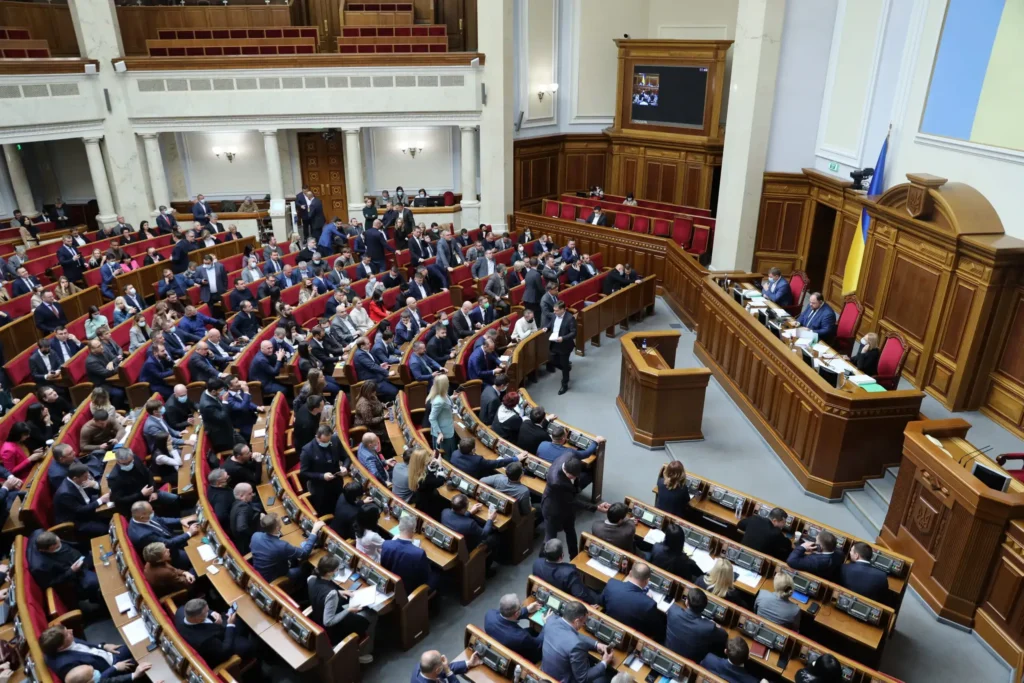
So the government promises to finally make the subsistence level a sufficient and understandable indicator that will actually reflect the standard of living. The logic of implementing such intentions was outlined last Friday in the Parliament during the “Hour of Questions to the Government” by the Minister of Social Policy Denys Uliutin.
“The Verkhovna Rada is considering a draft law that will allow us to set the subsistence minimum at the level of the actual one. The fact is that the subsistence minimum is currently “tied” to a large number of payments that are not inherent in the subsistence minimum. As soon as we manage to untie it, we will be able to set the subsistence minimum clearly. Before that, we cannot do it, as it puts a high pressure on the budgets of other social funds and any other budgets,” the Minister explained.
Another thing is that “decoupling” the subsistence minimum from non-subsistence payments is only part of the solution. How and at what expense the subsistence minimum will be brought closer to the actual level of consumption remains unclear.
Cost of living imbalance
Starting January 1, 2025, the subsistence minimum per person per month is set at UAH 2,920, and for able-bodied persons – UAH 3,028.
It is interesting that the Budget Declaration for 2025-2027, adopted last year, established a de facto moratorium on raising the subsistence minimum and fixed it at UAH 3,028 for able-bodied persons.
Instead, the “fresh” Budget Declaration for 2026-2028 already provides for changes: according to it, the subsistence minimum per person in 2026 will be UAH 3,171, in 2027 – UAH 3,358, in 2028 – UAH 3,536, for able-bodied persons – UAH 3,288, UAH 3,482, and UAH 3,667, respectively.
Article 7 of the draft budget for the next year provides for the establishment of a subsistence minimum per person per month in the amount of UAH 3,209 starting January 1, 2026, and UAH 3,328 for able-bodied persons. That is, there is even an increase of several tens of hryvnias. But it is obvious that these amounts are still very far from the actual level of the subsistence minimum. The relevant government institutions are in no hurry to officially publish such actual benchmarks. The gap is filled by less official estimates.
Danylo Hetmantsev, Chairman of the Verkhovna Rada Committee on Finance, Taxation, and Customs Policy, for example, pointed out that according to the Ministry of Social Policy, the real cost of food alone as of June 2025 was higher than the subsistence level proposed by the government and compared the subsistence level figures from the draft budget for 2026 with the amount that everyone spends on food. For example, the subsistence minimum for able-bodied people is UAH 3,328, and the cost of food is UAH 4,794.
“I propose to work with the government to provide in the budget a schedule for the growth of the subsistence minimum and relevant social benefits during 2026, starting with UAH 4700 as the starting amount of the subsistence minimum next year,” emphasized Danylo Hetmantsev.
More ambitious, more realistic benchmarks are also voiced. One of the “network” messages, which contains a reference to the Ministry of Social Policy, however, is not confirmed in any way, and is based on the prices of June 2025, for example, indicates that the actual amount of the subsistence minimum per person per month is UAH 8421.94, and taking into account mandatory payments – UAH 9932.81.
There are sufficient grounds to believe that this data is correct. As a reminder, since 2015, the Ministry of Social Policy has indeed been calculating the “actual size of the subsistence minimum” on a monthly basis. However, the calculations starting from February 2022 are not publicly available. Instead, based on January 2022 prices, the actual subsistence level per person was already UAH 4666.04, and taking into account mandatory payments, it was UAH 5343.57.
By the way, the “legitimization” of this gap between the official subsistence rate and the actual one has its own history. According to Pavlo Rozenko, former Minister of Social Policy, the gap between the real subsistence minimum and the one fixed in the budget appeared in 2006-2007.
“That was the first time the Yanukovych government under President Yushchenko used this story. That is, the real subsistence level in stores is this, and we will make a subsistence level that they thought the state could afford. And then, for the first time, there was a gap of 80-100 hryvnias between the subsistence level that is laid down in the state budget and the one calculated by the scientific method according to real prices,” the expert notes.
It is clear that this gap has only increased in the future.
Step one: how to “free” the subsistence minimum
For many years now, the subsistence minimum has been used as a calculated value for various payments: official salaries, salaries of various categories of employees and other payments, as well as fines and fees. Accordingly, each upward revision of the subsistence minimum entails an increase in these payments and increased pressure on state and social budgets. But where did this linkage come from? With this question
“The term subsistence minimum itself is enshrined in the Constitution of Ukraine, and it says that social standards, salaries, and pensions in Ukraine cannot be lower than the subsistence minimum. In principle, a completely European, normal norm was laid down. That is, in order not to invent any parameters of social payments – and there are more than 80 of them in Ukraine – there is a basic estimated value of the subsistence minimum, and with price changes, the subsistence minimum changes, this is reflected in the state budget and social payments are automatically recalculated,” the expert explains.
It would seem that the most obvious option is to slightly adjust Article 46 of the Constitution, which provides that “pensions, other types of social payments and benefits that are the main source of subsistence should ensure a standard of living not lower than the subsistence level established by law.” This way, the subsistence minimum is untied from various payments. But not everything that is obvious is the simplest. Pavlo Rozenko continues.
“Ideally, we should either remove from the Constitution the provision that social standards, salaries, and pensions in Ukraine cannot be lower than the subsistence level. But I think this is impossible to do today. Or we can decouple the subsistence minimum from basic social standards,” the expert emphasizes.
In fact, government officials and MPs have begun implementing the second option. Draft laws 13466-13469 have already been worked out and prepared for consideration in the Parliament.
According to them, the subsistence minimum as a social standard is separated from its use for financial and calculation purposes to calculate the salaries of judges, customs officers, employees of certain public sector industries, local governments, and civil servants. It is also envisaged to abandon the use of the subsistence minimum as a basic calculation value for fines and fees. Instead of the subsistence minimum, the basic (salary) value will be used to determine the size of official salaries, and a new principle is introduced to determine the size of fines and fees – the use of a penalty rate and an administrative fee rate. Both the base salary and the rates of fines and fees will be set in the state budget for the respective year upon the submission of the Cabinet of Ministers.
Step Two: How to Calculate the Real Living Wage
The government officials do not elaborate on the topic of determining the real subsistence minimum and limit themselves to general words about “returning the subsistence minimum to its social nature” and “restoring the qualitative ability of the subsistence minimum to ensure the function of the state social standard enshrined in the legislation.”
As a reminder, the subsistence minimum, as defined in the relevant law “On the Subsistence Minimum,” is a value sufficient to ensure the normal functioning of the human body, preserve its health, a set of food products, as well as a minimum set of non-food products and a minimum set of services. These sets are formed by the relevant executive authorities. The subsistence minimum itself is set by the Cabinet of Ministers after a scientific and public examination, based on the sets of food, non-food products and services, and is approved annually by the Verkhovna Rada in the state budget law. This is the way it is. But should it remain so. There is a question here.
According to economist Borys Kushniruk, the main thing is that no one has set out to simply calculate the subsistence minimum correctly.
“You cannot manage the economy if you do not have real information. First of all, there must be a correct indicator of the subsistence minimum. To do this, we need to form an expert advisory council that will represent independent institutions – trade unions, academic economists, government officials, and the NBU. And they should determine the methodology by which the State Statistics Service should calculate this minimum. And first of all, we should be interested in the poor, those who are at the level of the subsistence minimum. This is math. The policy appears after it turns out that the figure is much higher than declared by the authorities. But first we need to do the math correctly,” the expert emphasizes.
It is not difficult to imagine that correctly calculated indicators will not be very consistent with the financial capabilities of the state. What to do in this case? Borys Kushniruk’s point of view.
“It will undoubtedly turn out that we have a lot of people living below the subsistence level. Then you have to say: dear community, this is the real figure, we honestly tell you that we will not raise it in one or two years, but we commit ourselves that every year we will bring this value closer, for example, by 30%. And this is a question of resource allocation – what you should spend money on. And the government should not be responsible for all segments of the population. But it should help the least protected category. You can’t say, “We know that people live below the subsistence level, especially those who are the least socially protected, and instead we will spend money on all sorts of nonsense. Some one-time payments, some cashbacks, and so on. That is, if you have made a commitment that you will bring this indicator to the real one within three years, you should then make all your budget calculations based on this,” the expert notes.
Borys Kushniruk also believes that the calculation should be made not for an individual, but for a household: take the total household income, see how much income is available, and then think about how to reach the subsistence level.
“There are tools to do this. For example, you can introduce a system of social cards. Let’s say the subsistence level is 8 thousand per person. Two people make up 16 thousand. Of this, we understand that about 50% is spent on food. And we tell you that for this 50%, or 4 thousand, if we take one person, we will give you the opportunity to buy food, and the VAT will be 7% instead of 20%. And this will be realized with the help of this social card. That is, it is a form of targeted assistance that will go to specific people. Or, if a household’s income is below the subsistence level, they will not be charged personal income tax. With the help of such mechanisms, it is possible to reach the subsistence level,” the expert emphasizes.
In the meantime, the government fixes the subsistence level, which is detached from real life, and declares its intention to modernize it and set it at the level of actual consumption. Of course, if you wish, the current rather large gap between what the government has proposed in the budget and the actual levels of the subsistence minimum in 2025 and even 2022 can be perceived as evidence of “real” intentions to change something or simply populism. Or it can be recognized as officials realizing that a few months will not be enough to implement the announced plans. Although both government officials and MPs should definitely be in time for the next elections.
Author: Serhiy Vasylovych