New generation: where new energy islands and islets have appeared in Ukraine
17 January 11:17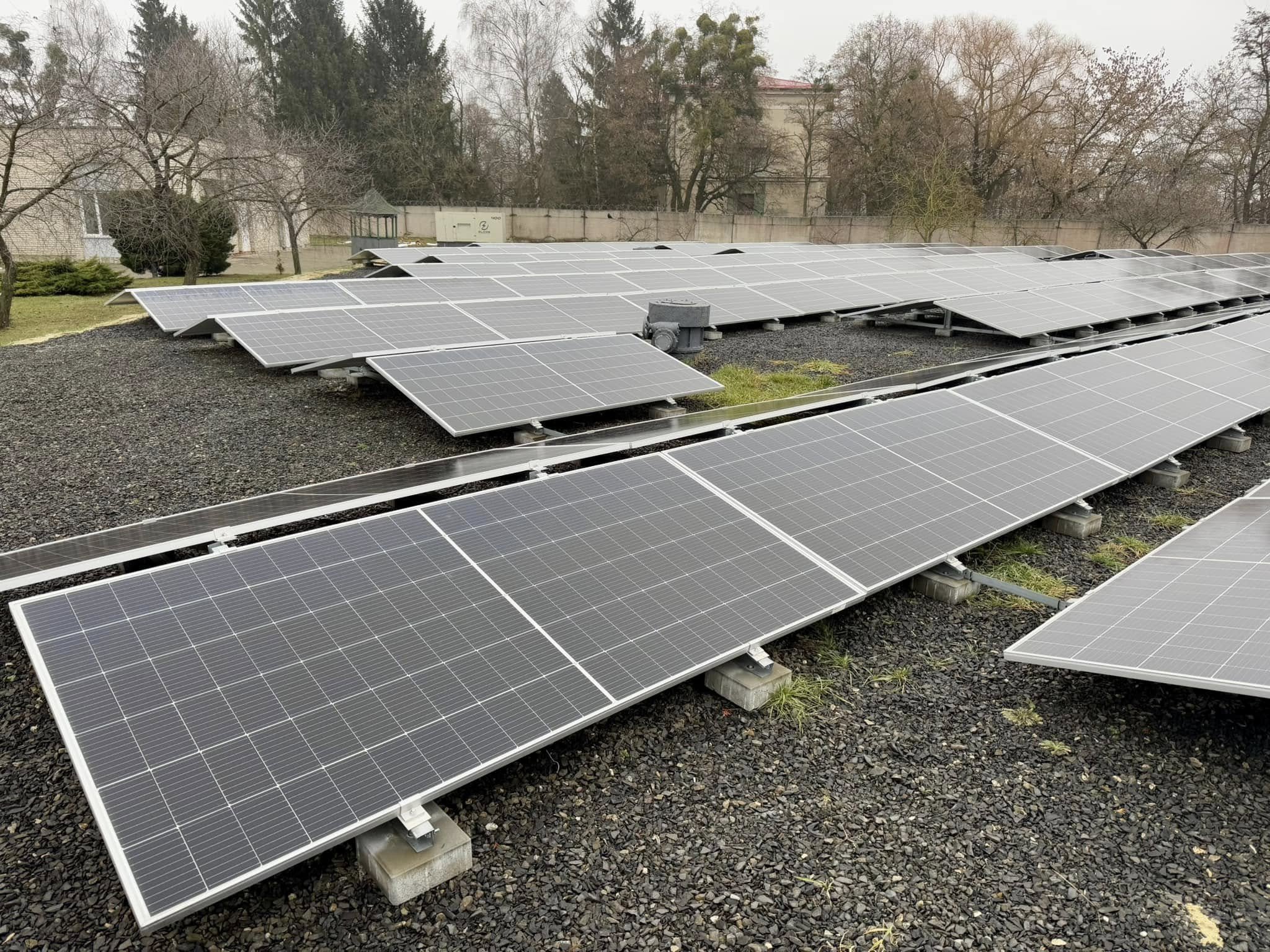 ANALYSIS FROM
Insidious enemy shelling and severe frosts are, unfortunately, taking their toll. Power cuts are becoming longer, and the batteries in Ukrainian apartments are becoming less and less warm. But this is not the case in all Ukrainian cities and towns. There are places where power outages are shorter and homes are warmer. Komersant investigated where exactly and why.
It is slightly more comfortable for city dwellers to spend the winter, first of all, in places where the authorities and businesses were able to take timely action and stock up on solar and wind power stations, various cogeneration plants, mini-CHP plants, and energy storage facilities, i.e., what is now called distributed generation. It is these facilities, installed in many cities and towns of Ukraine, that provide them with a certain degree of heat and energy independence in particularly difficult periods and help local residents to cope.
Where is it brighter and warmer in Ukraine?
In 2024, almost 945 MW of distributed generation capacity was installed in Ukraine. In 2025, there were even more such facilities: over 1,862 MW of distributed generation capacity strengthened the country’s energy potential last year. Together, this is almost equivalent to two nuclear power units. Among the leading regions in 2025 are Lviv Oblast with 396.4 MW of additional generation, Kyiv Oblast with 389.6 MW, and Kharkiv Oblast with 243.6 MW. Of course, all these megawatts of distributed generation cannot replace centralized heating and energy supply, but they can mitigate, and sometimes even save, the situation with heat and electricity supply. This is especially true when the country is facing an energy emergency and, as they say, every megawatt counts.
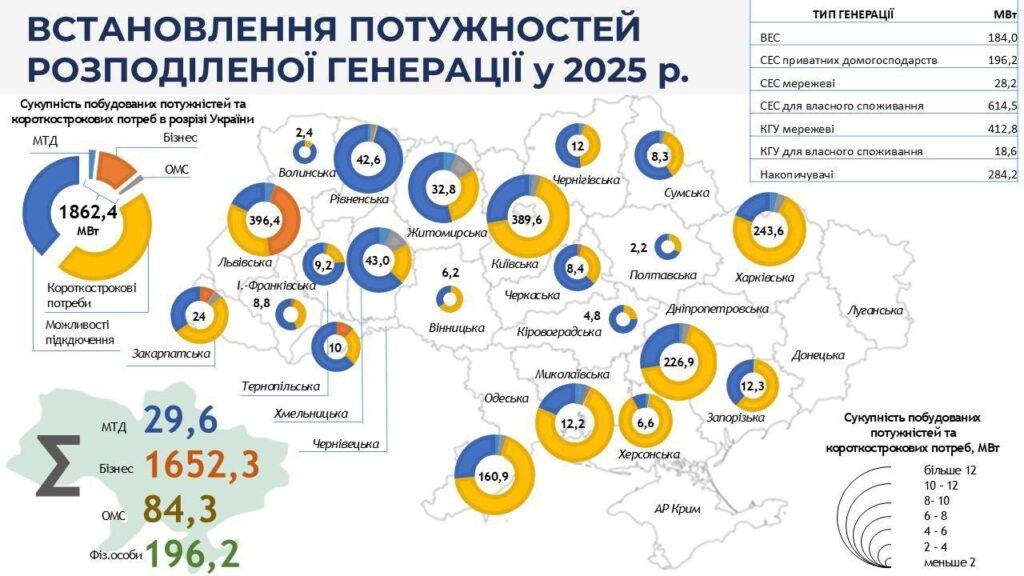
The above data was collected, analyzed, and summarized by Stanislav Ignatiev, Doctor of Technical Sciences and expert at the Ukrainian Institute of the Future. In an interview with
– Mr. Stanislav, referring to your research, which region should be mentioned as an example to follow?
“The most interesting case is what has been done in the Lviv region. Many enterprises from my native Kharkiv and the Kharkiv region are relocating to Lviv. This raises the question: why not to Khmelnytskyi or Ternopil? The answer is simple: because Lviv and the Lviv region have their own power generation, they have created a cluster that combines gas piston generation and electrical energy storage for balancing the power system, and a large wind power generation facility is currently being developed between the cities of Yavoriv, Sambir, and Stryi, with new wind farms being built on the ridge. Accordingly, businesses that are relocating are looking for a stable power supply. Plus, there are good roads. In short, Lviv region is currently the first energy-sufficient region at the regional level.
If we talk about another level — I call it a “housing and utilities paradise” — then Zhytomyr and Khmelnytskyi are worth mentioning first. These cities have adopted municipal programs for the transition to renewable energy and backup power supply. For example, Mr. Serhiy Sukhomlyn, who was the mayor of Zhytomyr for a long time and is now the head of the Agency for Reconstruction, participated in the development of the Ukrainian president’s “Great Thermal Modernization” program, and pilot projects under this program were implemented in Zhytomyr. In particular, with the help of international funding, a municipal thermal power plant was built there, which uses wood chips as fuel. It is a municipal enterprise and provides the city with electricity. In total, they received several grants from international technical assistance programs. In this sense, the city is unique. They even have solar power plants. Therefore, it is not surprising that in these difficult times, they have the fewest power outages because they have their own power generation.
-But did Zhytomyr have any special, exclusive conditions for implementing these projects?
No. It was just a desire. Look, there are a lot of international grants available now. We are not using the full amount available in Ukraine. Even before the full-scale invasion of Ukraine, there were so many opportunities to obtain grants. But we are only using 20 percent of the opportunities available to us.
Here’s another example. The city of Khmelnytskyi. They started working on energy security there even before the full-scale invasion began. An interesting project is the installation of gas piston cogeneration units in municipal boiler rooms. First, this provides additional heat to the network. And second, it provides a pump group. Khmelnytskyi will never freeze because they have their own power generation. But they have also taken an interesting path. It is the first city in Ukraine, a regional center, to build its own electricity network, independent of the regional power company. They are building their own power lines from large, powerful boiler rooms with gas piston units to smaller facilities.
Small towns also have interesting experiences. For example, Chortkiv, in the Ternopil region, has built solar stations at water utility facilities, heating and power plants, hospitals, and schools. In other words, the city has a social infrastructure that is completely energy efficient. And right now, I know for sure that they are in negotiations to install a wind turbine with the help of international partners.
More generation means fewer blackouts?
Mr. Stanislav, you mentioned Zhytomyr and the fact that there were fewer power outages in the city because they have their own power generation. This topic sparked a heated discussion online not long ago: is the explanation really the availability of additional power generation? Other versions include: favorable location and proximity to a nuclear power plant, the size of the city, and the number and scale of enemy attacks. At least, Kyiv experienced a lot of them. So, how much does the availability of own generation facilities affect the situation with power outages, and how accurate are comparisons between different cities?
This impact was significant at the level of urban communities until October last year. Since then, the situation with shelling has changed. Let me explain. For example, Kyiv’s main power generation is provided by the Rivne Nuclear Power Plant. Earlier this week, we read on Telegram channels that rockets or drones were flying towards Makariv. But energy experts are well aware that nearby, in that area, there is the Kyivska-750 substation, which is essentially a lifeline to Kyiv from the Rivne Nuclear Power Plant, which provides 80% of the capital’s electricity supply. And here the enemy is striking at it, and a paradox arises: we can generate electricity, for example, from nuclear power, which will cover most of our needs, but we cannot deliver it to the end consumer because the enemy is striking at the substations.
Or Odessa. The Odessa region has already been in blackout mode seven times. Because there is a specific situation there: there are three large Ukrenergo substations around the city of Odessa. They are mostly dead-end, because the Black Sea cuts them off, and the enemy constantly attacks these substations. So, when the Odesa region becomes so energy-isolated, the large number of solar power plants and wind farms there allow Odesa and the Odesa region to hold out with some kind of electricity supply schedule. Even though the region is cut off from external networks.
-The size of the city probably also matters: is it easier to provide a small town with its own power generation?
-Yes, definitely. That is why there are such interesting cases in Chortkiv and Kalush. Where the population is small, even small steps can have a significant impact. For example, we built a solar thermal power plant in Chortkiv, which supplies the water utility, and there are no problems with water supply at all, as there are few subscribers.
Large cities require more ambitious projects. But if we compare the scale of Chortkiv with its own budget and that of Kyiv, the capital, which has a number of foreign embassies on its territory, has greater opportunities. And, accordingly, communication with them by the capital’s authorities will be more effective than that of the mayor of a small town, who has to travel to the capital to meet with ambassadors and obtain funding for the town he heads.
Does politics always matter?
Let’s add a political component to our conversation. Recently, we witnessed another correspondence between the President of Ukraine and the Mayor of Kyiv. Volodymyr Zelensky criticized the capital’s authorities for doing little in terms of energy security. Vitali Klitschko responded as best he could. What am I getting at? There is a view that there are mayors, for example, in Kyiv, who do not enjoy the political support of the authorities, and therefore find it difficult to implement their own plans, including those related to energy supply in their cities. What is your opinion on this?
I can give you an example. For a long time, I worked in Kupiansk as deputy head of the district state administration. At that time, Viktor Yushchenko was president, and the mayor was from the Party of Regions. But the city actively received grants and developed its municipal infrastructure with international technical assistance. It was one of the first cities to have its own development strategy back in the early 2000s. Therefore, I believe that the central government has no influence on what is being implemented. City mayors do not ask the central government for money. They have their own budgets and are self-sufficient. Secondly, they have the opportunity to apply for technical assistance programs, and in Brussels, European commissioners do not care whether you are friends with Zelensky or in opposition to the president. The main thing there is the quality of the project application and the ability of a particular community to implement it.
Let’s mention the capital. They say that Kyiv is such a big city, with so many people and so many new buildings, that it is difficult for local authorities to develop energy generation.
-Let’s look at the numbers. Take Kharkiv, for example. Kharkivvodokanal alone held tenders worth 2.2 billion hryvnia last year. This information is publicly available. Thanks to these successful tenders, gas piston units were installed for the water canal’s pumping group so that every house would have water. At the same time, Kharkiv’s housing stock is almost half that of Kyiv. In the capital, slightly more tenders were held — for 2.4 billion hryvnia. But if you look closely, it was often not the Kyiv City Council that held the tenders, but companies registered in Kyiv, in particular from the Naftogaz group. And this equipment did not remain in Kyiv, but was then sent to the industrial sites of this state-owned enterprise. In other words, there is a social component, but not in the city of Kyiv.
-By the way, Volodymyr Zelensky noted the work of the Kharkiv authorities – in contrast to Kyiv. In his opinion, much has been done in Kharkiv in terms of heat and energy supply. In fact, it has long been known about the Kharkiv “energy island,” which can, when necessary, sustain itself on its own generation. But what about Dnipro and Odesa? What do they have?
Something has gone wrong there. I have great respect for both the mayor of Dnipro and Mr. Trukhanov, whom I know personally. But it seems that, first of all, there is no desire, and secondly, even if there is a leader in the form of the mayor, and he wants to do something, but apparently he does not have a team — to use military terminology — of logisticians, that is, people who are ready to develop these programs, implement them, and bring them to a logical conclusion. That is, for example, it worked in Chortkiv, but not in Dnipro or Odesa.
To sum up, the recipe for success from Stanislav Ignatiev, Doctor of Technical Sciences, is quite simple: the main thing is to have the desire to make your city more energy independent. It is also important to have specialists nearby who are capable of implementing the relevant energy programs. In other words, everything is in the hands of the community leader and his professional team.
Author: Serhiy Vasilevych