Xi Jinping and Putin’s New World Order: How They See It
2 September 2025 09:49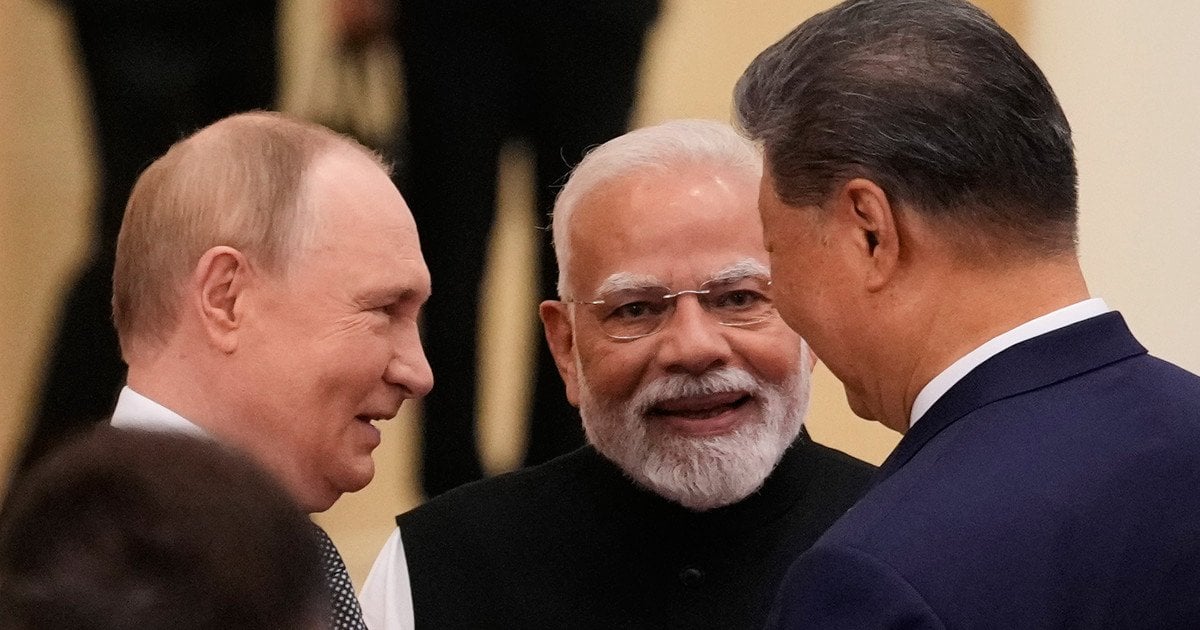
The two-day summit of the Shanghai Cooperation Organization (SCO) has ended in the Chinese port city of Tianjin, where Chinese leader Xi Jinping hosted more than 20 non-Western leaders. Most attention was drawn to the presence of Russian President Vladimir Putin and Indian Prime Minister Narendra Modi, "Komersant Ukrainian" reports citing Reuters.
The organizers took care of a symbolic picture of solidarity: Putin and Modi held hands as they walked cheerfully toward Xi Jinping before the summit opened. The three men then stood side by side, laughing, surrounded by interpreters.
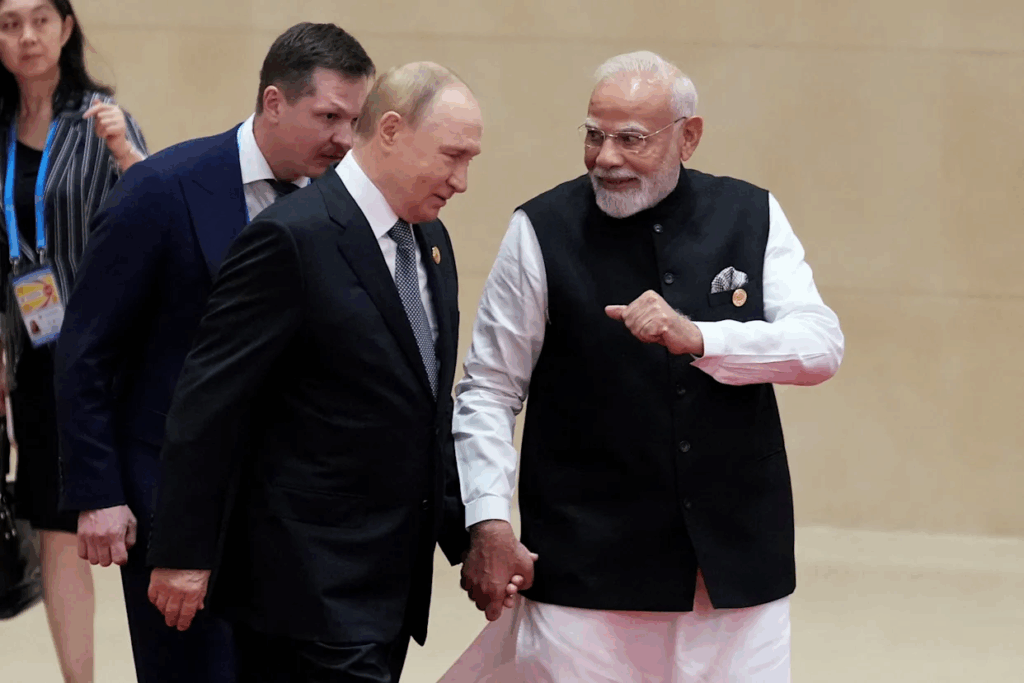
As Eric Olander, editor-in-chief of The China-Global South Project, noted:
“It’s hard to tell if this scene was choreographed or improvised, but it doesn’t really matter.”
Modi also rode with Putin in his armored limousine on the way to their bilateral meeting. During the meeting, Putin addressed Modi in Russian as “dear Mr. Prime Minister, dear friend.”
Beijing also used the summit as an opportunity to repair relations with New Delhi. Modi, visiting China for the first time in seven years, and Xi on Sunday agreed that their countries are development partners, not rivals, and discussed ways to improve trade.
The SCO, a little-known organization outside the region headquartered in Beijing, was formed more than two decades ago as a regional security bloc. China, Russia, as well as Kazakhstan, Kyrgyzstan, Tajikistan and Uzbekistan are the founding members of the organization. India joined in 2017.
Дивіться нас у YouTube: важливі теми – без цензури
Chinese and Russian visions of the new world order
Xi Jinping used the summit to promote his vision of a new global security and economic order that prioritizes the “Global South” in direct challenge to the United States.
“We must continue to take a clear stand against hegemony and power politics and practice true multilateralism [multilateralism – ed,]
– xi said in a veiled attack on the United States and President Donald Trump‘s tariff policy.
The Chinese leader emphasized:
“Global governance has reached a new crossroads.”
He proposed what he called his “Global Governance Initiative,” Beijing’s latest initiative to promote China’s leadership. This can be seen as a challenge to the US-dominated international organizations that have emerged since World War II.
Xi advocated for what he described as more inclusive economic globalization amid the turmoil caused by Trump’s tariff policy, touting the SCO’s “mega-scale market” and economic opportunities. He called for the creation of a new SCO development bank, which would be an important step toward the bloc’s long-held dream of developing an alternative payment system that bypasses the US dollar and the power of US sanctions.
China’s specific proposals include providing 2 billion yuan ($280 million) in free aid to member states this year and another 10 billion yuan in loans to a SCO banking consortium. China will also build an artificial intelligence cooperation center for SCO countries, which are also invited to participate in a Chinese lunar research station.
Putin, whose country has forged even closer economic and security ties with China during the full-scale war with Ukraine, said that the SCO has already restored “true multilateralism.” As an example, he cited payments in national currencies, which are increasingly used in trade between Russia and China.
“This, in turn, lays the political and socio-economic foundations for the formation of a new system of stability and security in Eurasia,” Putin said,
– putin said.
The Russian leader emphasized the key difference between their vision and the system that existed before 2022:
“This security system, unlike the Eurocentric and Euro-Atlantic models, would truly take into account the interests of a wide range of countries, would be truly balanced and would not allow one country to ensure its own security at the expense of others.”
India’s messages were less prominent against this backdrop, but its main message seemed to be that it refuses to give in to Trump’s pressure. US tariffs of 50% on Indian goods did not force India to give up Russian oil. Instead, Modi has demonstrated a willingness to engage more deeply with Russia and China.
Читайте нас у Telegram: головні новини коротко