Low wages and an aging workforce: why there is a shortage of caregivers
30 March 14:50
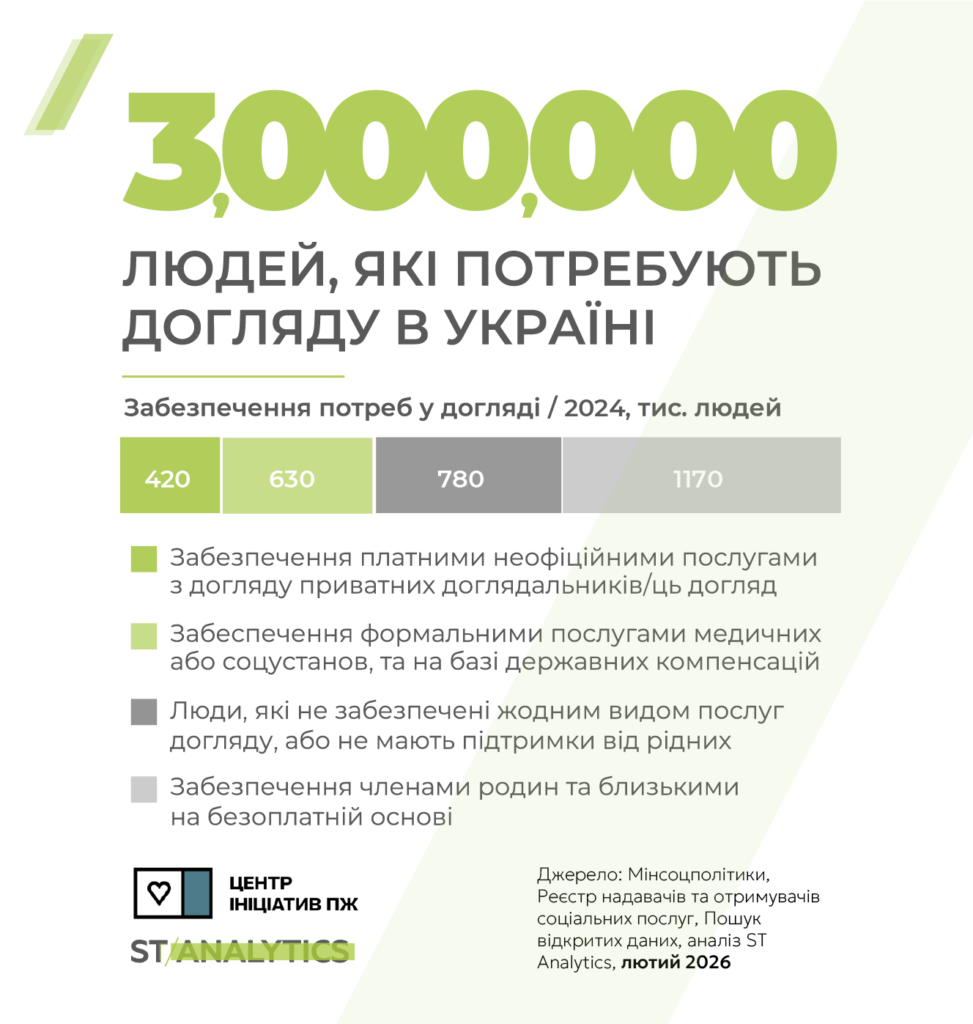
In Ukraine, more than 3 million people require regular professional care due to age, disability, or health conditions. At the same time, the public system covers only about one-fifth of this need.
This is stated in the study “When the System Is People: How Care for Severely Wounded Veterans Works (or Doesn’t),” conducted by the analytical company Saturday Team Analytics in collaboration with the “Come Back Alive” Initiative Center, reports "Komersant Ukrainian".
How many people receive assistance
According to the study’s findings, the long-term care system in Ukraine operates in a fragmented manner.
The breakdown is as follows:
- 21% of needs are covered by the state;
- 39% of care is provided by families;
- 14% of services are provided informally;
- 26% of people do not receive the necessary assistance at all.
Analysts note that a significant portion of the burden actually falls on families.
The war has sharply increased the need for care
Full-scale war has significantly altered the structure of needs.
According to the study:
- since 2022, the number of people with war-related disabilities has increased by 26%;
- a significant portion of them are male and female veterans who were wounded;
- many people require daily support, rehabilitation, and assistance in regaining independence.
However, the system for tracking such individuals remains incomplete.
State registries use only the category “people with war-related disabilities,” which makes it difficult to accurately assess veterans’ needs.
Scattered patient data
An additional problem is the lack of a unified system for tracking care needs.
Information is distributed among several government agencies:
- Ministry of Health of Ukraine
- Ministry of Social Policy of Ukraine
- National Health Service of Ukraine
Due to limited data sharing, people may receive assistance in one system while remaining “invisible” to another, which complicates service planning.
Staffing Crisis in the Care Sector
Research indicates a severe shortage of professionals capable of providing professional care.
Among the reasons:
- the lack of an official profession for personal care assistants;
- blurred roles across multiple specialties;
- low wages in the public sector.
Specifically:
- junior nurses in public institutions earn 7–8 thousand UAH;
- in the private or informal sector, pay can exceed 20,000 UAH.
In the labor market, there are 2.6 job openings for every junior nurse’s resume, indicating a staff shortage.
Education is not keeping pace with demand
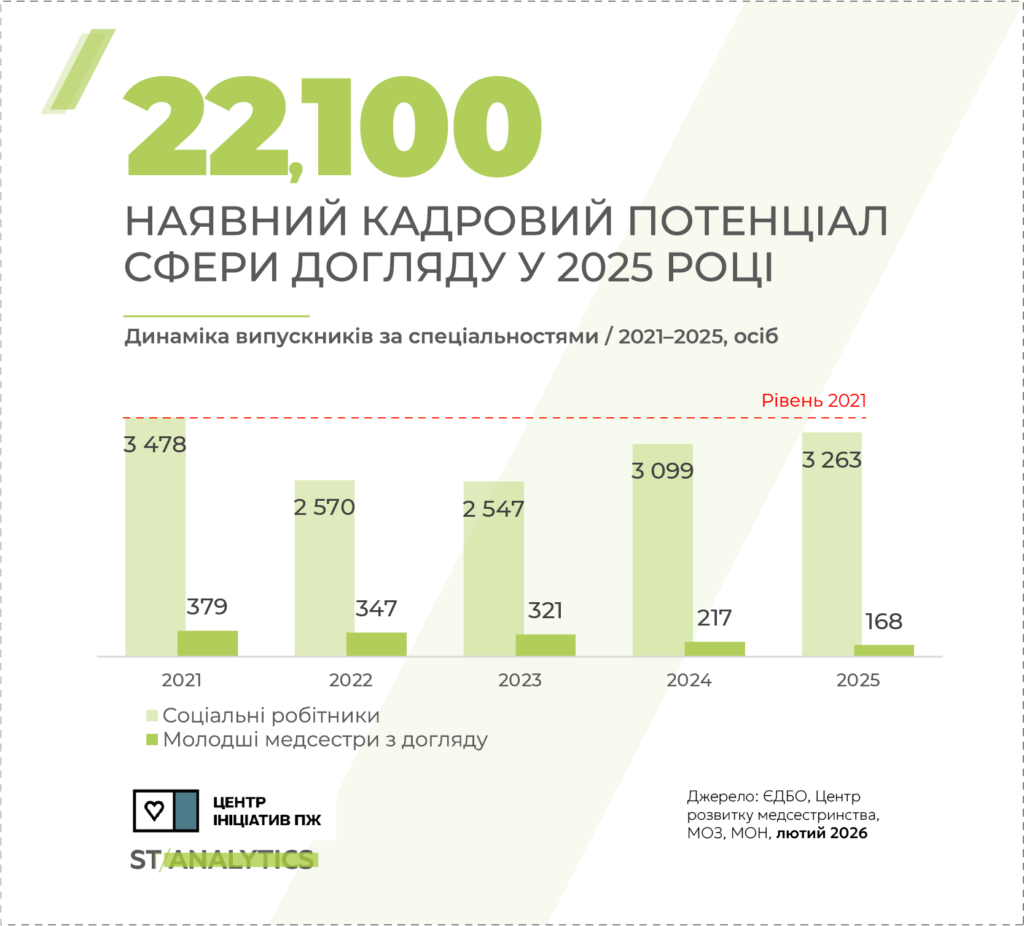
The education system also fails to provide adequate training for personnel.
According to the study:
- between 2022 and 2025, the number of nursing graduates decreased by 19%;
- in 2025, the number of graduates in social work decreased by 6%;
- the number of nursing assistants graduating fell by 56% compared to 2021.
Among the initiatives attempting to address the problem is the “Our People [Care]” educational program for training personal care assistants.
An aging workforce
Another problem is the age imbalance in the profession.
According to the study:
- the average age of workers in the sector is 55;
- 62% of caregivers are over 55 years old;
- 90% of workers are women;
- young people rarely enter the profession—the share of people aged 18–25 is only 1.4%.
Unequal access to services
Access to care varies by region.
Many communities lack:
- hospitals;
- rehabilitation centers;
- specialized care services.
As a result, people are forced to travel to other cities, and additional barriers include:
- high cost of services;
- lack of accessible transportation;
- insufficient awareness of available services.
How the research was conducted
The study was conducted from October 2025 to February 2026.
Analysts used:
- open government data;
- statistics on educational programs;
- interviews with healthcare professionals;
- an analysis of healthcare and social protection systems.
According to analyst Hanna Samchuk, the issue of long-term care remains outside the focus of government policy, even though its importance is growing due to the war.