A slump of nearly 22% in industry and 50% in construction: the Ministry of Economy has revealed the actual figures for economic losses
18 March 15:49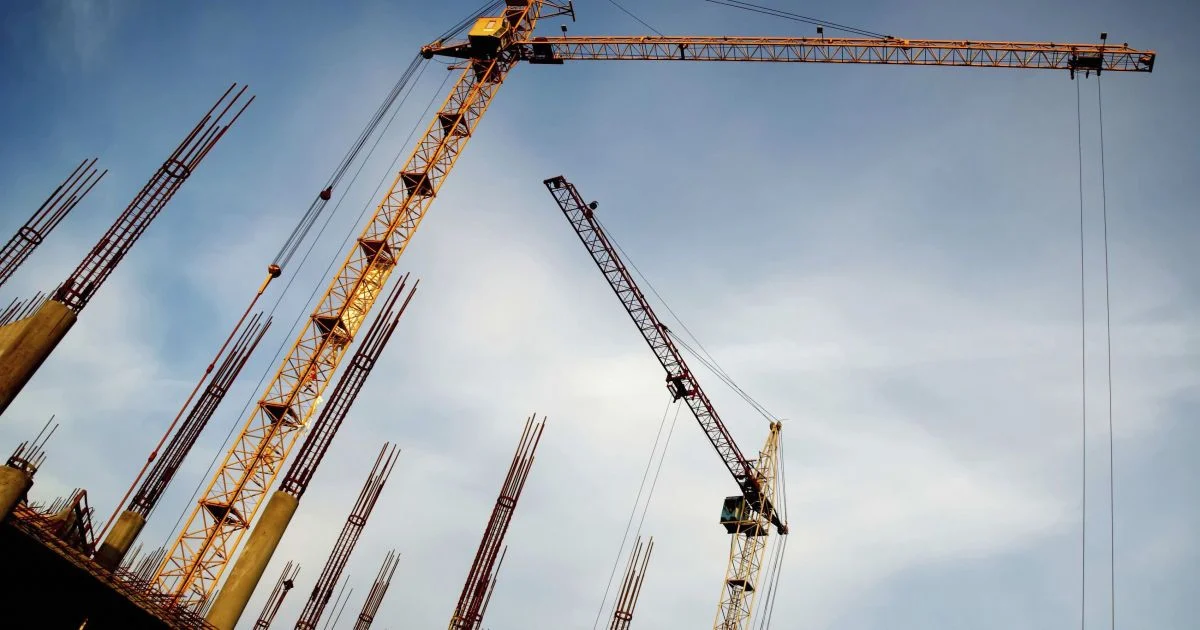 EXCLUSIVE
Russia’s full-scale war against Ukraine continues to destroy not only the country’s infrastructure but also its economic foundation. Nearly 2,000 businesses have been forced to flee the war. The unemployment rate remains impossible to calculate with precision, and economic losses have already exceeded $195 billion. And these are only the direct losses. In response to an information request from [Komersant], Daria Marchak, Deputy Minister of Economy, Environment, and Agriculture of Ukraine, shared the latest data and explained what is happening with the country’s economy right now.
Business Relocation: From Mass Exodus to Slowdown
After the start of full-scale war, one of the key decisions was to relocate enterprises from combat zones. This allowed for the preservation of production and jobs.
According to Deputy Minister of Economy Daria Marchak, the government has established a separate system to manage this process:
“The relocation of enterprises from various sectors of the economy from territories adjacent to or located within the combat zone to safer regions of Ukraine is carried out in accordance with a resolution of the Cabinet of Ministers of Ukraine… “To manage the relocation process, in April 2022, the Ministry of Economy, in collaboration with the joint-stock company ‘Prozorro.Sales,’ created a unified online platform,” says Marchak
The scale of the process was significant. In total, 1,956 applications were submitted by businesses through the online platform . However , the relocation has now lost momentum. Since the beginning of 2025, the platform has effectively been suspended:
“As of January 1, 2025, the operation of the online platform has been suspended due to a system update… However, this does not imply the termination of the relocation program,” says Daria Marchak
In fact, businesses are no longer leaving en masse but are trying to establish themselves where they have managed to survive.
At the same time, the question of the presence of international companies remains open. Specifically, how many of them have left the Russian market but continue to operate in Ukraine. The Ministry’s response is brief and telling. The Ministry of Economy, Environment, and Agriculture of Ukraine does not possess the requested information.
Labor Market: Life Without Exact Numbers
The unemployment situation is one of the most uncertain. Due to the war, the state does not have complete statistics.
“Since 2022, during the period of martial law in Ukraine, the State Statistics Service of Ukraine has not conducted labor force surveys and has not published relevant statistical data on the unemployment rate,” explains Marchak.
Instead, alternative sources are used. To analyze the labor market situation, administrative data from the State Employment Center and the Pension Fund of Ukraine are used, as well as research results from academic institutions and materials from international organizations. At the same time, these sources do not ensure a fully representative assessment.
“According to macroeconomic forecasts, the unemployment rate is projected to decline to 12.6 percent in 2026,” says Daria Marchak.
However, even this does not provide a complete picture—the economy operates under conditions of partial uncertainty.
The biggest losses: which sectors have suffered the most
The war has hit all sectors of the economy, but unevenly. Some sectors have effectively collapsed.
“All sectors of the economy suffered losses during the full-scale military invasion. The sharpest declines were recorded in: construction—where gross value added… amounted to 49.8% of the 2021 level; electricity supply… – 65.4%, mining – 68.6%, manufacturing – 70%, transportation – 71%, domestic trade – 74%, and agriculture – 79.9%,” – Daria Marchak.
Certain segments were hit even harder.
“The sharpest decline in production volumes… was seen in the production of coke and petroleum products—down to 21.9% of the 2021 level.”
This signifies the actual collapse of entire industrial sectors.
The picture of losses is confirmed by international estimates. This is not just a crisis—it is a massive destruction of the economy.
“As of December 31, 2025, Ukraine’s direct losses had already reached $195.1 billion, and reconstruction and recovery needs are estimated at $587.7 billion,” – Daria Marchak.
The sectors most affected and now in need of funds for reconstruction are:
- the transportation sector – $96.3 billion
- energy and extractive industries – $90.6 billion
- the housing sector – $89.8 billion
- trade and industry – $63.3 billion
- agriculture – $55.3 billion
Energy Under Attack — and Business Adaptation
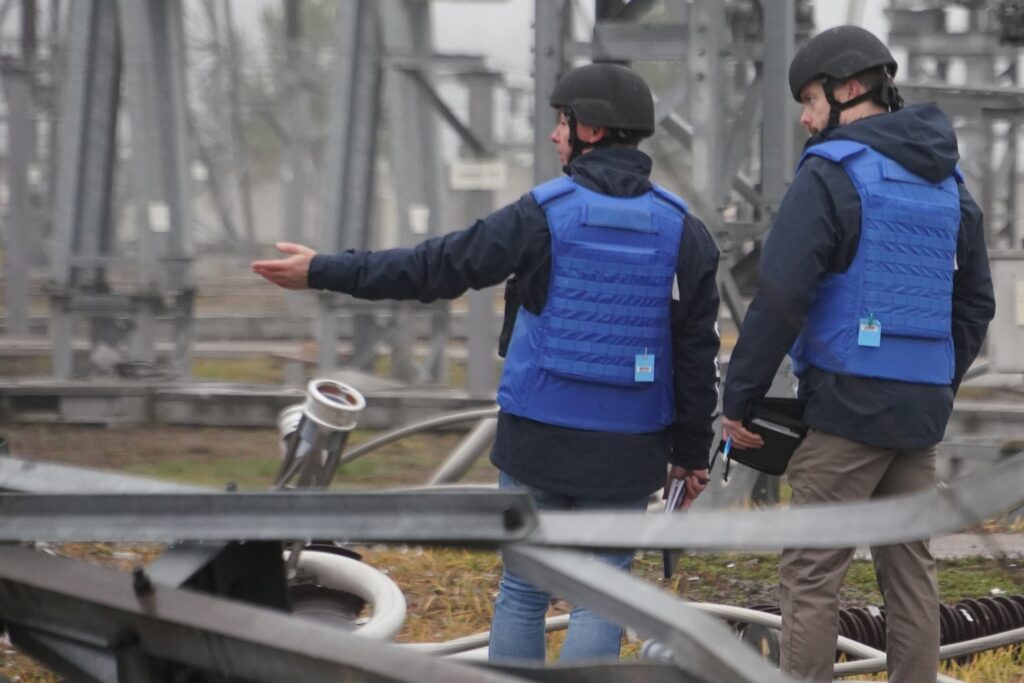
A separate area of pressure is the energy sector. Russia’s massive attacks have become one of the main challenges. Targeted, massive Russian attacks on the energy sector are one of the toughest challenges to our economic resilience, the ministry explains. However, businesses are gradually adapting.
“Currently, industrial enterprises have largely adapted. Thanks to autonomous power sources and the ability to directly import electricity from the EU… they continue to operate,” says Daria Marchak.
This means that even under critical conditions, the economy is finding points of support. The Ukrainian economy today is a balance between losses and resilience. Businesses are no longer fleeing en masse, but they have not yet recovered.
The labor market exists without precise statistics. Key industries have lost a significant portion of their potential.
And although the losses are measured in hundreds of billions, the system is functioning. Because even under the constant pressure of war, the economy does not stop. It changes, contracts, adapts—but continues to sustain the country.