Expectations of collapse and harsh reality: what is really happening in Iran
15 January 16:26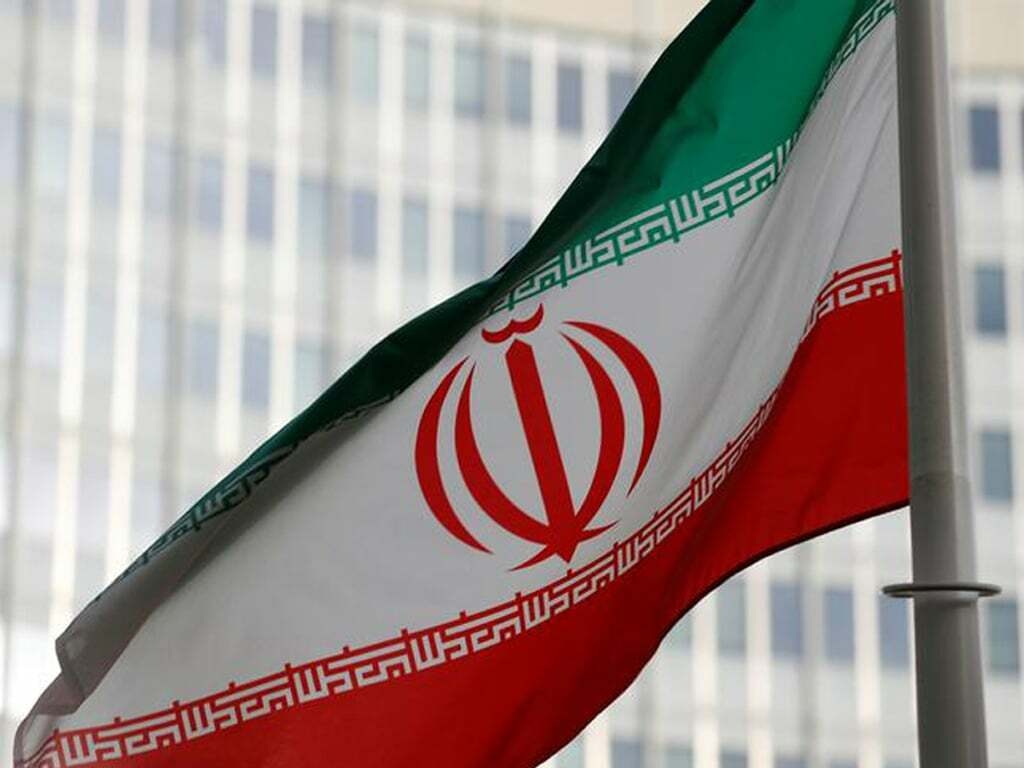
The protest movement in Iran and its supporters outside the country expected that the Islamic authorities in Tehran had already reached a critical point. However, events suggest the opposite: even if the regime is weakened, its decline is gradual, without any sudden breaks.
The unrest that has continued for the past two weeks has become a serious challenge for the Iranian system of power. Mass protests have broken out in the country before, but the current wave has a fundamentally different background — it is unfolding after a series of military strikes on Iranian territory carried out by Israel and the United States over the past two years.
For most Iranians, who are increasingly struggling to survive, the economic consequences of international sanctions have been a key factor in their outrage. In September, the Iranian economy suffered another blow: the United Kingdom, Germany, and France reinstated sanctions restrictions provided for by UN resolutions and previously lifted under the 2015 nuclear agreement — an agreement that is now effectively defunct.
In 2025, food prices rose by more than 70%, and the Iranian rial reached a historic low in December.
Despite the unprecedented pressure on the Iranian government, the facts do not suggest that it will collapse anytime soon. The decisive factor remains that the regime continues to rely on the loyalty of the security forces. Since the Islamic Revolution of 1979, the state has consistently built a large-scale apparatus of control, coercion, and repression.
Over the past two weeks, security forces have carried out orders to use firearms against their own citizens on the streets. As a result, protest activity has been suppressed — at least as far as can be assessed under the conditions of strict information isolation maintained by the regime.
Analysts have already described the protests in Iran, which have been going on for the third week in a row, as some of the largest in nearly half a century — since the Islamic Revolution that ended the monarchy of Shah Mohammad Reza Pahlavi and brought the theocratic regime of the ayatollahs to power. Over the decades, Iran has transformed into a harsh authoritarian state that the international community associates with support for terrorist groups. The Islamic Republic has been cooperating with Hamas and Hezbollah for years, participating in attacks against Israel. In 2020, Iranian air defense forces shot down a Boeing aircraft belonging to Ukraine International Airlines, and after Russia launched a full-scale invasion of Ukraine, Tehran transferred Shahed strike drones and the technology to manufacture them to Moscow.
Killing of protesters: what next
According to CNN, despite massive restrictions on internet and mobile communications access last weekend, numerous videos appeared on social media, mostly distributed via Starlink. In these images, Iranians try to identify their dead relatives and acquaintances among dozens of bodies wrapped in black bags in a makeshift morgue at the Kahrizak forensic medical center south of Tehran. Mass killings and violent repression have become key tools for the authorities in their attempt to stop the protests, which still lack clear leadership.
Journalists from Iran working in exile claim that Crown Prince Reza Pahlavi, son of the last shah, is trying to become the symbolic face of the protest movement. However, other opposition forces do not support him. In addition, experts emphasize that there are currently no signs of internal divisions among the Shiite clergy, the army, or the security forces. The Ayatollah regime continues to rely on the Islamic Revolutionary Guard Corps and the paramilitary formations under its control, which influence not only security but also Iranian oil exports. So far, there are no signs of a split within the IRGC.
Trump’s threats: is a US strike on Iran possible?
On Monday, January 12, White House spokeswoman Caroline Levitt said that President Donald Trump is considering a wide range of options for action against Iran — including air strikes — in response to the brutal crackdown on protests. On the same day, Trump announced his intention to impose 25% import tariffs on goods from countries that continue to trade with Iran. Tehran’s key trading partners remain China, India, Turkey, the United Arab Emirates, and Iraq.
Also on Monday, the US State Department urged American citizens in Iran to leave the country immediately. Earlier, Trump said that the initiative to resume negotiations on the nuclear program allegedly came from Iran itself. Islamic Republic Foreign Minister Abbas Araghchi, speaking to foreign diplomats in Tehran, confirmed his readiness for dialogue with Washington, while warning that the country was also preparing for a possible military scenario.
And on Tuesday, January 13, German Chancellor Friedrich Merz was the first Western leader to predict the fall of the Ayatollah regime, which, according to him, is living its last days.
Is the fall of the regime in Iran possible: what experts say
Events in Iran remain unpredictable, and the scenarios for the development of the situation are open. Even world leaders and leading analysts are reluctant to make accurate predictions about the future of the Islamic regime in Tehran.
This was stated by political scientist Volodymyr Fesenko in an exclusive comment for "Komersant Ukrainian".
“No one knows for sure what will happen in Iran. Neither Merz, nor Trump, nor the vast majority of experts. The situation remains uncertain,” he stressed.
According to Fesenko, the regime’s fall is only possible if two critical conditions are met.
“The first option is if a significant part of the Iranian elite sides with the protesters. The transition of at least part of the security forces will be particularly decisive. Not all of them, but even a part — this may be enough for the protests to succeed,” the expert explained.
He cites external military intervention as the second factor.
“The protesters could be helped by a strike by the US — possibly together with Israel — against the Islamic Revolutionary Guard Corps. Pinpoint strikes that demoralize or paralyze the repressive apparatus would give the protests an extra chance,” Fesenko said.
In his opinion, only a combination of these two factors could radically change the situation.
“If this does not happen, unfortunately, the protesters will not win,” he concluded.
The political scientist also stressed that the possible fall of the Iranian regime would be a serious geopolitical blow to Moscow. However, the expert warns that radical changes in Russia’s war against Ukraine should not be expected.
“Unfortunately, the direct impact on Russia’s war against Ukraine would not be very obvious or noticeable,” he added.
The role of China, the US, and the oil factor
Taras Zagorodniy, managing partner of the National Anti-Crisis Group and political strategist, draws attention to the external support for the Iranian regime, primarily from China and Russia.
“China is definitely helping the regime. We saw the story with the shutdown of Starlink in Iran — that’s part of the technological support. I think that weapons are also coming in, and Russia is also helping with weapons to suppress the uprisings,” Zagorodniy said.
At the same time, he doubts that these countries are ready to openly defend Iran by force.
“Are they ready to use weapons to really defend Iran? No. But the US is ready,” the expert stressed.
The collapse of the Iranian regime would be a disaster for Russia
According to Zagorodniy, the loss of Iran as an ally would be a strategic blow to the Kremlin.
“For Russia, it will be a geopolitical disaster. They will lose their influence in the Middle East. Their business model of the last 70 years is collapsing,” he explained.
The expert recalls that Moscow has been using instability in the region for decades to raise oil prices.
“Previously, they created chaos in the Middle East — oil prices rose, and Russia thrived on this. Now this is no longer the case,” Zagorodniy noted.
According to him, even strikes on oil infrastructure are not having the desired effect.
Why Iran was a key ally of the Kremlin
Zagorodniy emphasizes that Iran remained a tool for Russia to exert pressure on the region.
“The only way to influence the oil market was through Iran. Blocking the Persian Gulf, strikes on Saudi Arabia, the UAE, Qatar, or Kuwait — these are levers that may no longer be available,” the expert explained.
According to him, if the regime falls, Tehran will lose its strategic importance for Moscow.
“Then Russia will become useless in the Middle East. The Americans are already there, and they set the rules of the game,” Zagorodniy concluded.
Thus, the mass protests in Iran have demonstrated the depth of the country’s social, economic, and political exhaustion, but at the same time, they have exposed the main strength of the Islamic regime — its ability to maintain the loyalty of the security forces.
Despite record inflation, the collapse of the national currency, tough sanctions, and international pressure, the system built after the 1979 Islamic Revolution has not yet cracked at key points. The lack of unified leadership in the protest movement and the complete consolidation of the security forces around the regime have allowed the authorities to resort to mass repression and temporarily suppress street activity.
Under the current conditions, it is not so much a question of the regime’s rapid collapse as its slow erosion, the consequences of which may become apparent much later.