“One hand stops, the other lets it through” – political scientist on the scenario of arms supplies from the United States
5 March 2025 09:07 OPINION
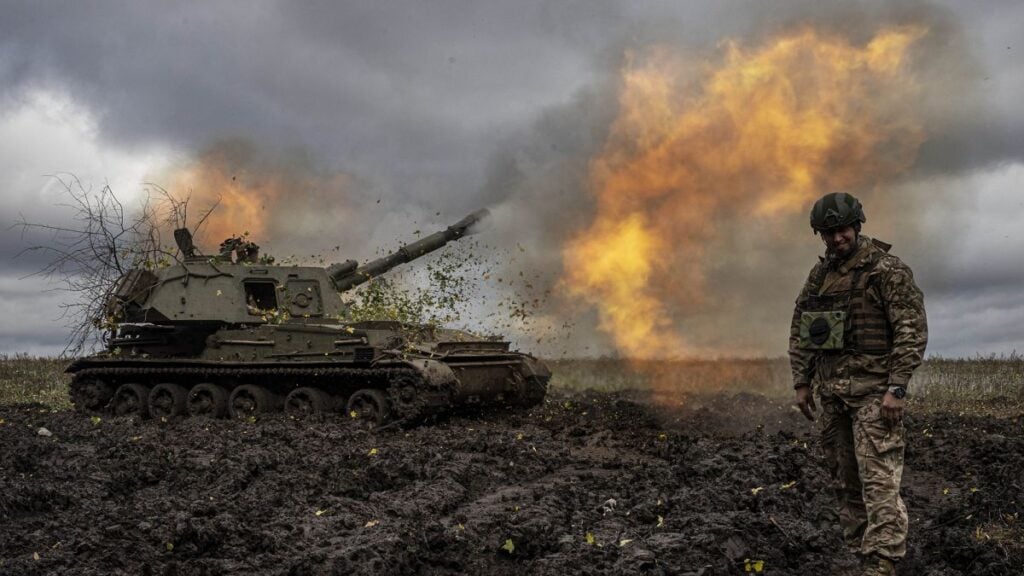
The United States has suspended military aid to Ukraine, but this does not mean a complete cessation of arms supplies. This is the subject of an exclusive commentary for Kommersant Ukrainian
As reported, the US not only stopped new arms supplies to Ukraine, but also ordered to stop supplies that were already in process. For example, Poland confirmed that the country has stopped the movement of American weapons to Ukraine.
However, the political expert believes that the likelihood of a long-term halt in the supply of American weapons is quite low.
“As for, for example, the supply of American weapons to Ukraine, there may be restrictions. But I hope that the likelihood of this is almost zero, because this is a “mess”, to put it another way,”
– says the political scientist exclusively for
He adds that, in the end, such a scenario would be disadvantageous to Donald Trump himself. After all, it is known that the current American president sees everything through the prism of business, and from this point of view, weapons for Ukraine can be used to “make money.”
“If the Europeans, for example, invest $20 billion in arms purchases from America, he will turn a blind eye to where they will go next. Therefore, I think that in this context there will be a game of “both yours and ours”. We stop it with one hand, we don’t prohibit it with the other hand, but everything is under control,”
– the expert believes.
As for the maintenance of the equipment already delivered, there should be no problems at all, he notes.
“The same equipment that is already in Ukraine is formally Ukrainian. And, accordingly, its maintenance is carried out under some separate contracts that do not involve the United States of America, as a rule,” he adds,
– adds Ihor Reuterovych.
Trump’s position on Ukraine
During the election campaign, Donald Trump repeatedly said that he would stop the war in Ukraine within 24 hours of taking office. This deadline has already passed.
Also during the election, the media spread the so-called “Trump Plan”. The plan was that the United States would use its influence to stop the war, taking into account the status quo. To do this, Trump would force Putin and Zelenskyy to sit down at the negotiating table. If Putin does not agree to negotiate, the United States will give Ukraine all the weapons it needs to win on the battlefield. If Zelenskyy refuses to negotiate, the United States will completely stop helping Ukraine.
This plan, in its various variations, included a provision that Russia would retain the territories it temporarily occupied and that Ukraine would not join NATO.
However, later Trump seemed to “forget” about this plan. In particular, he voiced scenarios in which he would force Russia to capitulate due to the decline in world oil prices.
After Trump was elected President of the United States, one of his advisors, Brian Lanza, said that Ukraine should forget about Crimea. Trump’s entourage, however, was quick to deny this statement and said that Lanza could not speak on his behalf.
Currently, the US Special Representative for Russia and Ukraine, Keith Kellogg, is talking about 100 days within which he wants to reach some kind of agreement. Of these, 44 days have already passed. During this time, the US Presidential Administration has established contact with the Kremlin, an American envoy has traveled to Moscow, and top-level negotiators have met in Saudi Arabia and Istanbul. Ukraine was not present at these meetings.
Meanwhile, in exchange for military support, US President Donald Trump demanded $500 billion worth of rare earth metals from Ukraine. He said that the US should have access to Ukraine’s natural resources, regardless of whether Kyiv manages to reach a peace agreement with Russia. Ukrainian President Volodymyr Zelenskyy emphasizes that in exchange for this agreement, the Ukrainian side is not given any security guarantees.
Читайте нас у Telegram: головні новини коротко
Negotiations in Riyadh and Istanbul
on February 18, Russian Foreign Minister Sergei Lavrov and Russian Assistant Prime Minister Yuri Ushakov meet in Saudi Arabia with an American delegation represented by Secretary of State Marco Rubio, National Security Advisor Mike Volz, and Special Envoy for the Middle East Steve Witkoff.
After the talks, the US State Department reported that the delegations agreed to “eliminate irritants” in bilateral relations and continue to work on preparing talks on Russia’s war against Ukraine.
The two sides also agreed to appoint high-level groups for further talks on Ukraine.
Jackie Heinrich, a Fox News correspondent at the White House, reported that the United States and Russia are discussing a three-stage peace plan for Ukraine, which consists of the following stages
- A ceasefire.
- Holding elections in Ukraine.
- Conclusion of a peace agreement.
on February 27, negotiations between the Americans and Russians continued in Istanbul. According to the Russian side, they discussed the normalization of diplomatic relations. The Kremlin also allegedly demanded the return of 6 properties that were seized from Russians in the United States during 2016-2018, and also proposed to resume air travel.
Trump’s proposals to Putin
According to inaccurate information from former US Ambassador to Russia Michael McFaul(he used the word “allegedly”), Trump offered Putin (McFaul’s wording is retained)
- ukrainian territory;
- ukraine’s non-membership in NATO;
- no American soldiers in Ukraine;
- withdrawal of American soldiers from Europe, including from frontline countries;
- easing of sanctions.
According to McFaul, Putin has not offered anything yet.
Draft agreement between Ukraine and the United States: what is known
In February 2025, the United States and Ukraine reached a preliminary agreement aimed at jointly developing and managing Ukraine’s mineral resources. The agreement, known as the Bilateral Agreement Establishing Conditions for the Reconstruction Investment Fund, provides for the establishment of a joint investment fund to rebuild Ukraine’s war-ravaged economy. The main goal of the fund is to attract and reinvest revenues from Ukraine’s substantial mineral wealth to promote its recovery and long-term stability.
During President Zelenskyy’s unsuccessful visit to Washington, the signing of the agreement was disrupted. According to the Ukrainian president, the United States refused to provide any security guarantees in exchange for signing the agreement. Instead, American media report that Trump is now seeking a “bigger and better deal.”
The Ukrainian side emphasizes its readiness to sign the agreement.
Main provisions of the draft agreement
Establishment of the Reconstruction Investment Fund. According to the text of the agreement, published by The Kyiv Independent, the fund will be jointly owned and managed by the governments of the United States and Ukraine. The ownership and financial interests of each party will be defined in a subsequent agreement on the fund. The fund will be managed by representatives of both governments, and more detailed terms will be set out in a subsequent agreement.
Ukraine’s contribution. Ukraine commits to allocate 50% of its future revenues from the monetization of its natural resources, including minerals, hydrocarbons, oil, natural gas and other extractive infrastructure, to the Reconstruction Investment Fund. These contributions will continue until the amount reaches USD 500 billion. It is important to note that current sources of revenue that are already included in the general budget of Ukraine are not covered by this agreement.
The role of the United States. The U.S. government is committed to maintaining a long-term financial commitment aimed at developing a stable and economically prosperous Ukraine. This includes investments, financial instruments, and other tangible and intangible assets critical to Ukraine’s recovery. However, the agreement does not include specific security guarantees or continued arms transfers to Ukraine; these issues will be negotiated separately.