Best case scenario: how possible is it to export Ukrainian oil to the Czech Republic?
25 November 2025 17:03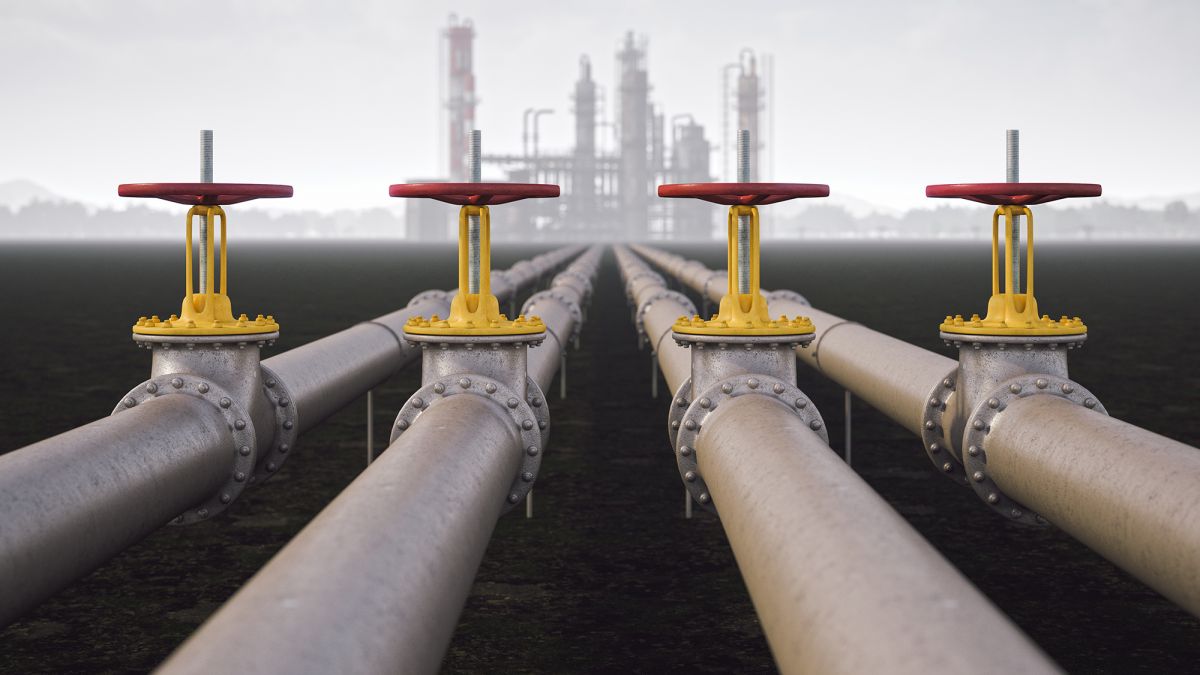 ANALYSIS FROM
Ukrainian oil may appear at Czech refineries as early as this year. Both the Ukrainian and Czech sides are interested in this and need it. Komersant found out how realistic this project is.
A few days ago, the Czech media outlets Radiožurnál and iROZHLAS.cz reported that the Czech Republic may soon start importing Ukrainian oil. According to the sources of these publications, the proposal was initiated by Ukraine. This is understandable, as the Russians have effectively destroyed Ukrainian oil refining with their strikes, making the question of what to do with the oil produced in Ukraine the most pressing. The main partner in the Czech project could be the Polish oil company Orlen, which owns Czech refineries and actively cooperates on gas contracts with Ukraine’s Naftogaz.
According to Czech publications, Orlen Unipetrol RPA, which is part of the ORLEN Group and the owner of the Czech part of the Druzhba pipeline, the Czech state-owned pipeline company Mero, and the Slovak pipeline company Transpetrol, which is the administrator of the Slovak part of Druzhba, are directly involved in the implementation of the Ukrainian oil export project. It is worth explaining that Ukrainian oil can be delivered to the Czech Republic through the Druzhba pipeline and its Slovakian section.
Ukrainian interests and opportunities
The volume of oil supplies from Ukraine, at least according to Czech publications, can be quite significant: about 75-100 thousand tons per month. This would cover almost 15 percent of the Czech Republic’s annual oil consumption. And this yearly export volume is almost comparable to the estimated annual oil production in Ukraine.
Mykhailo Honchar, President of the Center for Global Studies “Strategy XXI”, continues.
“If we take it by analogy with last year, it is about 1.4 million tons per year of production. And this is what used to go to Kremenchuk for processing, and now we have problems with it,” states Mykhailo Honchar.
According to him, a delegation of the Czech pipeline company Mero visited Ukraine in August and held relevant negotiations.
“It should be understood that this issue has not been actualized today, but practically when the Kremenchuk refinery was finally finished in June, the question arose of where to put the oil. Therefore, negotiations were held,” the expert notes.
While the issue of exporting Ukrainian oil is being resolved, the possibility of stopping its production is not being considered. Firstly, as experts explain, because oil production is technically linked to natural gas production, which Ukraine needs so much for the functioning of industrial facilities and for heating Ukrainian homes. And secondly, stopping production means mothballing the wells. And this is also not an option for Ukraine.
Mykhailo Honchar continues.
“If you stop oil production, you have to plug the wells. And these are wells that have been producing oil for a long time, and then it will probably cost more to restore them than to drill new ones. Our fields are depleted. Plus, Kolomoisky and his comrades finished them off when they took over Ukrnafta,” the expert notes.
Mykhailo Gonchar recalls that in the mid-noughties Ukrnafta produced about 4.5 million tons of oil a year, including gas condensate, at the maximum rate, and now it is more than three times less.
“Last year it was about 1.4 million tons. And these figures have already gone up over the past 2-3 years after Ukrnafta was freed from the influence of Kolomoisky and his partners. Because they started drilling new wells, repairing old ones, and it went up a little bit. And this makes the situation even more concrete: we have been investing in increasing production, and now we will start to shut it all down,” says Mykhailo Honchar.
This realization also actualizes the task of finding a market for Ukrainian oil.
Czech option for Ukrainian oil
Mykhailo Honchar, President of the Center for Global Studies “Strategy XXI”, considers the supply of Ukrainian oil to the Czech Republic to be “the only option for selling Ukrainian oil to good hands”. If, of course, we are talking about pipeline exports, and not transportation, say, in tank cars by rail. “Into good hands,” that is, to those who have supported and are supporting Ukraine in its resistance to Russian aggression. Moreover, as it turns out, there are other buyers for Ukrainian oil.
The Slovak pipeline company Transpetrol told the Czech publications Radiožurnalu and iROZHLAS.cz that it was first approached by Orlen Unipetrol RPA, and later by Slovak Slovnaft, with a request to transport Ukrainian oil. And the Slovaks have allegedly signed the necessary contracts and, according to Transpetrol, the first deliveries have already taken place. But the Czech side is still negotiating.
There is an explanation for this delay. As it turns out, since Russian oil is still flowing to Slovakia through the Druzhba pipeline thanks to the exemption from European anti-Russian sanctions, imports of Ukrainian oil with a similar composition through the same system are not a problem. In the case of supplies to the Czech Republic, purely Ukrainian oil should be separated from Russian oil in the pipeline.
“Given that the technological content of the Slovak Druzhba oil pipeline system consists of Russian export mixtures, due to the ban related to EU sanctions, the Czech side needs to resolve this issue technically and administratively, which will subsequently allow Transpetrol to transport Ukrainian domestic oil through the territory of the Slovak Republic and deliver it to the Czech transporter for Orlen Unipetrol RPA,” the Slovak pipeline company Transpetrol said, adding that expert groups are working on finding technical solutions to separate Ukrainian oil from Russian oil.
According to Mykhailo Gonchar, president of the Center for Global Studies “Strategy XXI”, the problems with the export of Ukrainian oil to the Czech Republic can be solved.
“The Druzhba pipeline is underutilized, as only one pipeline out of the two available is actually used there. Therefore, it is technologically possible to launch it. Let’s say, using the method of separate pumping,” the expert said.
Mykhailo Gonchar explained what separate transportation means and how it can be used to supply oil to the Czech Republic.
“Oil does not flow in a continuous stream from morning to evening, from evening to morning, seven days a week, 365 days a year. That is, certain batches are pumped. Therefore, when a batch of oil of one grade has passed through, a certain separator can be installed, a ball-shaped structure that corresponds to the internal diameter of the pipe, and another batch is pumped in. So there is nothing original about this technology. And our Central European partners, companies like our Ukrtransnafta, oil transportation system operators, and especially the Czech pipeline company Mero, are very experienced in working with different types of oil simultaneously,” the expert notes.
Mykhailo Honchar also emphasizes that such separate transportation will help preserve the quality of Ukrainian oil, as it is better than Russian Urals.
“I remember in 2004 when we analyzed Ukrainian oil, because no one outside Ukraine knew it. It was carried out in a special certified laboratory of the famous Italian oil company AGIP. They made this analysis, which showed that Ukrainian oil, conditionally, Ukrainian Light, is almost identical in characteristics to Azerbaijani oil of the Azeri Light brand. Why is this important? Because it is traded at a higher price. And so the question arises: if this is just a simple addition of Ukrainian oil to the flow of Russian Urals, then we will simply improve the quality of Urals, but this will only benefit those who still receive Russian oil at the other end of the pipe. And we ourselves, roughly speaking, will receive the same price as for Urals,” the expert emphasizes.
It should also be important for Ukrainians that the Czech Republic has faithfully fulfilled its obligation to abandon Russian oil from 2025. Mykhailo Honchar continues.
“What did they have before? The Kralupy refinery switched to non-Russian oil long ago, in 1995. The Czechs built an oil pipeline from Germany, a specially designed pipeline to at least diversify supplies, to partially abandon Russian oil. And they switched this refinery to light oil, which they received from the Mediterranean market. And the plant in Litvinov continued to operate on Urals, which was supplied by Druzhba. And since 2025, the Czechs have refused to use Russian Urals,” the expert emphasizes.
Ukrainian oil could just load the capacity of the Litvinov refinery. Other parties involved in the project have their own benefits. For the Polish Orlen Group, according to Czech journalists, the purchase of Ukrainian oil is both a form of assistance to Ukraine and, last but not least, a good business opportunity due to the allegedly lower price. For the Mero pipeline company, this is a chance to launch the Czech section of the Druzhba pipeline, which has not been used since the refusal of Russian oil. Moreover, as Mykhailo Honchar reminds us, this route is generally more profitable for the Czech side.
“The direct route through the Druzhba pipeline is a shorter and more direct transportation arm. Moreover, it is no longer about supplies from Russia. Therefore, supplies of Ukrainian oil are beneficial for both them and us. The question here is absolutely obvious. And then, it is better for us to sell it to the Czech Republic, a country that supports us, than to feed those who are essentially our enemy,” the expert believes.
According to him, it is also very important how everything will be organized on the Ukrainian side, so that no one is tempted to create another special gasket company that will take care of organizing the export of Ukrainian oil. Ukraine’s European partners are very wary of such “scheming,” and against the backdrop of recent corruption scandals, this topic is particularly sensitive.
Author: Sergiy Vasilevich