The last streets of Vuhledar under Ukrainian control: what’s next?
1 October 2024 18:30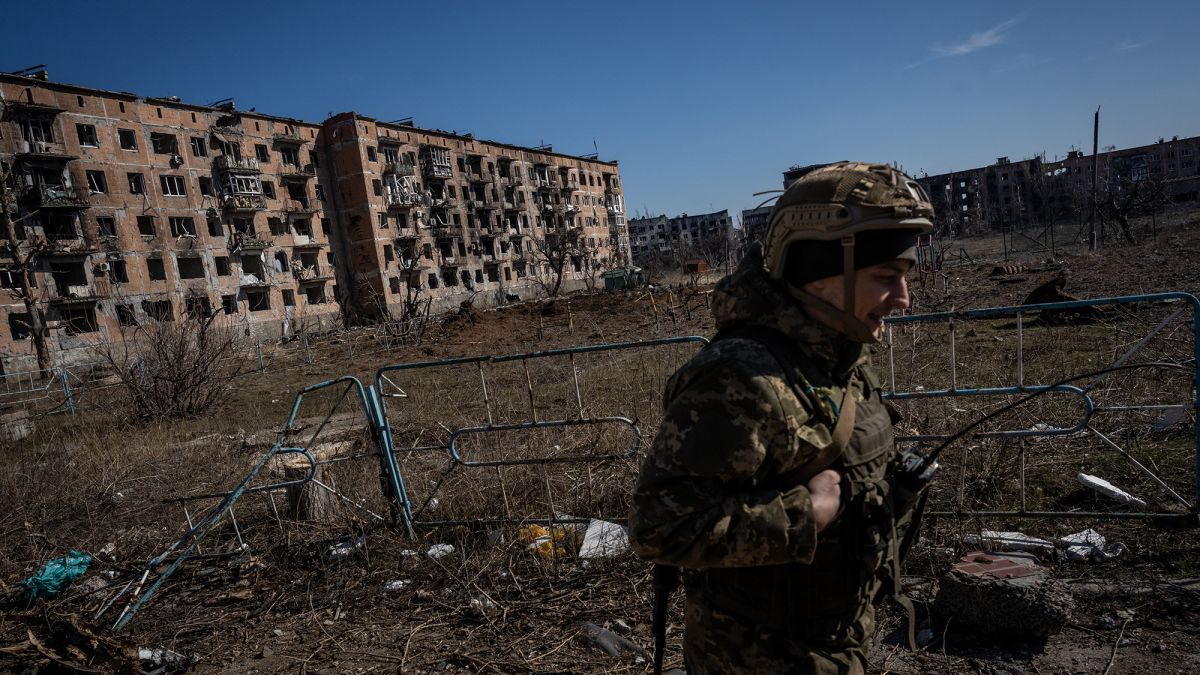 ANALYSIS FROM
on 1 October, a video was posted online showing Russians raising their rag over the building of the Vuhledar City Council. Although there was no official confirmation of the withdrawal of Ukrainian forces on that day, Telegram channels and analysts reported that Russian troops had actually taken Vuhledar. According to the propaganda media, the east, centre and south of the city are fully occupied by the Russian army. Is the last street outside the main part of the city really under the control of the Ukrainian army? What does the loss of the settlement mean for Ukraine and what opportunities does it open up for the enemy? "Komersant Ukrainian" investigated.
Back on 30 August, Bild’s OSINT analyst Julian Röpke noted that the Ukrainian Armed Forces could defend Vuhledar if they held the supply route to the north of the town. However, the next day it became clear that things in Vuhledar were not good. This is confirmed in an exclusive commentary for by military observer Vasyl Pehnyo.
“Vuhledar will be lost in the course of the current fighting anyway. This is an obvious situation, because with the Russians’ current advance, it is at least naive to expect that the city can somehow resist,” Vasyl Pehnyo
What does the loss of Vuhledar mean for Ukraine?
First of all, it means the loss of a large fortified area that has been holding back the occupiers for almost two years of the war, Vasyl Pehnyo said. Since the Russians moved from Mariupol through Volnovakha and on to Vuhledar, the occupiers have stopped in the south of Donbas.
“For three years, in fact, it [Vuhledar – ed.] held the defence due to its height in the middle of the southern Donbas steppe. This really allowed us to build a real fortress where we could control any approach from all sides, from where the occupiers were coming. It was because of the advantageous position of the settlement with its appropriate shelters, logistics, everything that is available in a fairly large settlement, such as Vuhledar, that we held on,” Vasyl Pehnyo
It was because of the favourable position of our troops in Vuhledar that two marine brigades, the 155th and 40th Brigades of the Pacific Fleet, were actually destroyed at the turn of 2022-2023, Pehnyo adds. Vuhledar held out for a long time and even exceeded its objectives to some extent, the military observer concludes.
What caused the enemy’s advance
Unfortunately, the Ukrainian army is currently facing a number of problems, Vasyl Pehnyo notes. In particular, there is a shortage of personnel in the brigades defending Vulgedar, for example, in the 72nd Separate Mechanised Brigade.
“Management problems and the long delay of US aid have a long-term impact on the defence capabilities of our troops. We have lost a lot while waiting for help: we have lost people, opportunities, and even moral strength and energy,” Vasyl Pehnyo
As a result, the Russians did not attack Vuhledar head-on, but from the flanks, where the defence had sagged, Pehnyo adds.
Where can the Russians go from here?
The capture of Vuhledar will mean that the Russians may continue to advance, following the example of Avdiivka, says military observer Vasyl Pehnyo. He explains that any large enough settlement has the appropriate logistics and infrastructure to defend it. These include hospitals, railways, roads, houses with shelters where personnel can be stationed, where they can take cover, etc. Such points along the entire contact line at the beginning of the Great War were Maryinka, Vuhledar, Avdiivka, Toretsk, Bakhmut, Lysychansk, Siverskodonets, etc.
“Our defence in Donbas is tied to large key points. When such towns fall, the next frontier where we can stop the enemy should be some other fairly large settlement with the appropriate infrastructure and logistics. In the case of Vuhledar, it is either Velyka Novosilka to the west or Kurakhove to the northwest,” Vasyl Pehnyo
Further advancement of the Russians will depend on whether they have enough troops to continue advancing at the same pace, Pehnyo adds. At the same time, the military observer predicts a further active Russian offensive next year.
“The enemy will probably not advance this year, because now it will be more difficult to advance in those fields due to changes in weather conditions, although if you do it exclusively with infantry, you probably shouldn’t expect such difficulties,” Vasyl Pehnyo said
Russians can unblock the railway line to Zaporizhzhia and Crimea
Another negative aspect of the occupation of Vuhledar is the unloading of the Donetsk-Volnovakha railway line to Zaporizhzhia and Crimea, analyses Vasyl Pehnyo.
“There was a railway line that was close to the front line, about 8 kilometres away, if we talk about the situation about a year ago. The Russians even barricaded this railway line with a so-called “tsar-train”, fastening several hundred wagons together, which became a potential defence line for the fortification. Now, as our troops withdraw from this railway line, it will have a chance to be unblocked. This means Donetsk, Olenivka, Volnovakha and further to Zaporizhzhia and Crimea,” Vasyl Pekhnyo
As a result, the enemy may get a certain improvement in logistics, which is not in favour of the Ukrainian Armed Forces, Pehnyo summarises.
Author – Anastasia Fedor