“Assessment of the role and impact of supervisory boards in state-owned companies – absent”: Government ignores parliamentarians
16 February 16:40
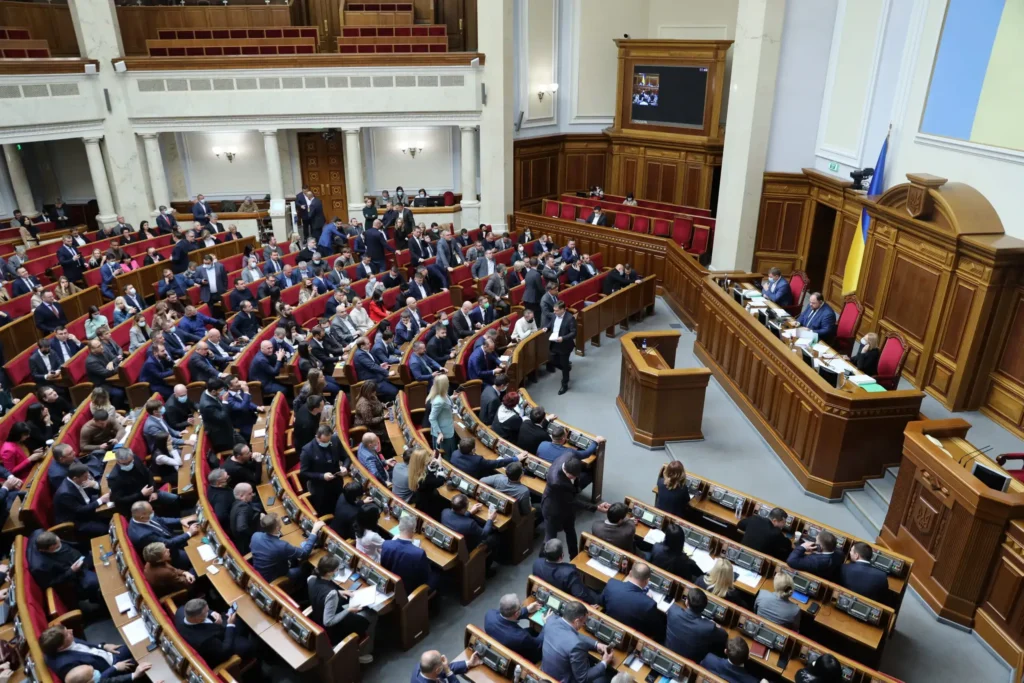
The initiative of the Verkhovna Rada deputies to introduce a substantive assessment of the effectiveness of supervisory boards of state-owned companies has not yet received any response from the Cabinet of Ministers. After this issue was raised in parliament, there has been no systematic communication with the government. This was reported in a comment by
According to the MP, about a month and a half has passed since the issue of adequate assessment of the effectiveness of supervisory boards of state-owned enterprises was raised in the session hall, but there have been no responses or further contacts from the government.
“There has been no response yet. Only a month and a half has passed. Maybe they are working on something, but there has been no further communication on this from the government. I am not yet aware of any measures that the Cabinet of Ministers would take. As I said, there has been no further communication from the Cabinet of Ministers, either with me personally or with the committee,” the politician noted.
The current assessment of supervisory boards is “purely formal”
The government has already approved the criteria for evaluating the activities of supervisory boards of state-owned companies, but they do not give an idea of the real impact of these bodies on the results of enterprises, explains Andriy Zhupanin.
“As of today, the Cabinet of Ministers has approved the criteria for evaluating supervisory boards, but they are purely formal. Auditors have already assessed the activities of the supervisory board at Naftogaz according to these criteria, but it is a purely technical assessment, with no substance. Therefore, as of now, there is essentially no adequate assessment of the role and effect of supervisory boards in state-owned companies,” he says.
Despite the lack of a substantive methodology, the government still has several tools to influence supervisory boards, in particular through ministries, financial plans, and personnel decisions.
“Regarding the government’s influence on the work of supervisory boards, there are options for influence. First, there is direct communication between ministries and supervisory boards. Take a look at how the Minister of Energy recently held a meeting with the supervisory board of OGTSU. Second, the government approves financial plans and reports on their implementation — these documents are approved by the supervisory boards. If the government does not like them, it does not approve them or makes changes. Finally, the state can dismiss supervisory boards. An example of this is the decision made after the scandals at Energoatom. But this is not what I was talking about in parliament. To date, there is no adequate methodology to assess how supervisory boards influence the performance of the companies themselves,” Andriy Zhupanin emphasized.
KPIs should be linked to company results
According to the deputy, the effectiveness of supervisory boards should be assessed based on specific financial and strategic performance indicators of state-owned enterprises.
“The effectiveness criteria for each parameter that is important for the company’s work. For example, a reduction in both accounts payable and accounts receivable will indicate the company’s financial recovery. Or an increase in revenue will indicate better sales. An increase in net profit, etc. These are financial indicators. Or the implementation of certain projects that are strategic for the state. If clear tasks are set for the supervisory board in this regard, they will be forced to work with management on a daily basis to achieve these indicators,” he explains.
There should also be accountability for SB members in the form of “warnings, bonus forfeiture, dismissal.”
The Ukrainian model has no international analogues
The deputy emphasizes that there are virtually no international examples of a similar model for evaluating state-owned companies, since in Ukraine, independent members constitute the majority of supervisory boards.
“There are no examples from other countries. Why? Because there are no companies anywhere that are managed by independent members of the supervisory board (in Ukraine, they essentially constitute the majority in every supervisory board). They may be present (in other countries, ed.), but they do not have a majority of votes.”
What preceded
The high-profile Midas case, which shook both society and the authorities, exposed a critical gap in the corporate governance system. At the government level, it turned out that there are no tools for monitoring and controlling the work of the supervisory boards of the largest state-owned companies,including Energoatom, Ukrenergo, Naftogaz, Ukrzaliznytsia, Ukroboronprom, and Ukrposhta. This was pointed out by MPs during a session of the Verkhovna Rada on November 19, which was attended by Deputy Prime Minister Taras Kachka.
“Please develop a normal procedure at the government level for evaluating the work of supervisory boards of state-owned companies. I read Ernst & Young’s report on the evaluation of the work of Naftogaz’s supervisory board. The report is purely formal—it answers the questions of whether there is a supervisory board, how many members it has, whether they meet the requirements of the supervisory board—and that’s it. There is no analytics, no analysis, no understanding of how the work of the supervisory board affects the company’s efficiency. It is the government’s job to provide the right parameters for evaluating the work of supervisory boards. The second question is, why is the government taking a selective approach to reforming the supervisory boards of energy companies?” emphasized MP Andriy Zhupanin at the time.
In response, Deputy Prime Minister Taras Kachka acknowledged that there is indeed no systematic control over the work of supervisory boards .
“That’s a good question. As you know, the government approved a comprehensive ownership policy quite recently. We presented it last fall and want to stick to it. Because creating a supervisory board is just a tool. It needs to be filled and managed properly. We must provide very clear instructions, guidelines, and performance evaluations. Everything you are talking about is our priority today,” Kachka said.
As
READ ON THE TOPIC: Svyrydenko changes approach to managing state-owned companies: supervisory boards must be accountable for financial results