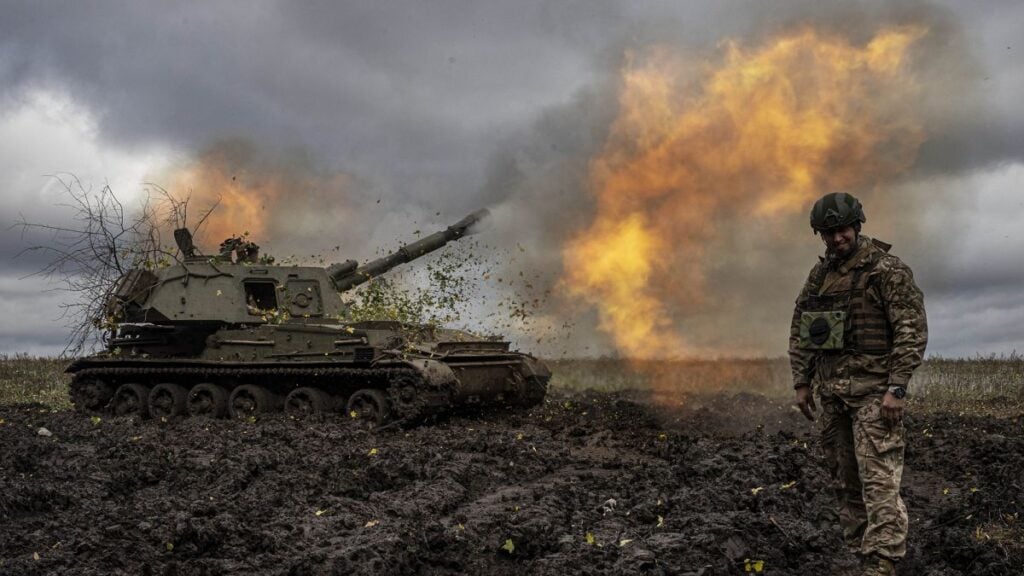
The fall of giants: the war in Ukraine, logistical collapse, and energy crisis are driving billion-dollar businesses into bankruptcy
16 January 10:14
In Ukraine, there has been an increase in the number of bankruptcies among large companies with a turnover of UAH 3-7.7 billion. According to the Supreme Court, 780 companies, or about 10% of the total, began bankruptcy proceedings in 2025. Komersant examined the seriousness of the situation in the country’s business sector and which companies are resorting to bankruptcy.
Last year, 8,191 companies went through the process of closing or changing their business. Of these, 84% were LLCs that went bankrupt. Only in 48 cases are bankrupt companies trying to stay afloat: to restore their solvency and continue operating through a reorganization process. However, this is less than 1% of cases, according to OpenDataBot.
Most often, the bankruptcy procedure is chosen by companies:
- Wholesale trade – 266 companies.
- Agriculture – 71 companies.
- Real estate – 53 companies.
- Construction – 48 companies.
- Retail trade – 38 companies.
Kyiv leads in terms of bankruptcies – 140 companies (18%). Almost as many are in the frontline Zaporizhzhia region – 138 companies (17.7%). They are followed by Kyiv region – 86 companies (11%), Dnipropetrovsk region – 85 (10.9%) and Odesa region – 53 companies (6.8%).
However, the owners of some companies are opting for preventive restructuring: eight cases involving six companies were opened in 2025. These are cases where businesses begin restructuring before becoming insolvent in an attempt to avoid bankruptcy.
Others come to replace the bankrupt ones
In fact, there is nothing surprising in the fact that even LLCs declare themselves bankrupt. And the number is not critical, because others are coming to replace them, notes economic expert Oleg Pendzin.
“The trend is more or less understandable given what is happening in the country. We are not in a rosy economic situation right now. Businesses are trying to survive through trade operations, and the purchasing power of the population is not improving. Even though the inflation rate is only 8%. Believe me, last year, no fewer businesses opened than closed,” he notes in a comment
Oleg Pendzin [Komersant]
He emphasizes that sometimes large companies go bankrupt but then open small businesses. This is especially true in the retail sector.
Data from YouControl.Market shows that things are not so bad in trade. As of the end of 2025, more than 77,000 individual entrepreneurs and 3,173 legal entities (companies) were involved in online retail trade. This means that there are an average of 24–25 entrepreneurs per company — online retail remains predominantly a small business.
However, both categories are growing. The number of legal entities increased by approximately 200 (a net increase of 6%) over the year, and the number of sole proprietors increased by more than 13,000 (a net increase of 21%).
The year 2025 saw a real surge in the launch of new online businesses, especially among sole proprietors. In the first three quarters of 2025, 18,200 new entrepreneurs were registered in this NACE category, which is 62.3% more than in the same period of 2024.
The biggest jump occurred in the second quarter of 2025: during this time, 8,236 new sole proprietors appeared — more than in any quarter of previous years. For comparison, in 2024, an average of 3,500–4,500 sole proprietorships were registered per quarter, with the maximum (4,562) occurring in the third quarter of 2024.
The dynamics of legal entities were more restrained. During the first three quarters of 2025, 125 companies were registered, slightly less than in the same period last year (153). Moreover, data for the incomplete fourth quarter of 2025 indicate a new upturn, with 73 newly established companies in the autumn months. This may mean that the final quarter of 2025 is likely to be a record one in terms of the influx of new companies.
At the same time, 2024–2025 brought a significant increase in official closures (cessation of activities) of online businesses, especially among sole proprietors. While in 2024 a total of 5,784 entrepreneurs in this sector ceased their activities, in January–September 2025 the figure already reached 7,953.
Among legal entities, the absolute scale of closures is insignificant—only one company was officially liquidated in 2024 (in the fourth quarter). In 2025, there were more closures, but these were few and far between: three companies ceased operations in the first quarter, two in the second, none in the third, and three more in the incomplete fourth quarter.
Why businesses are “merging” in Ukraine
Investment analyst Vladislav Strizh believes that the increase in bankruptcies and company closures, for example, in wholesale trade and agriculture, is due to a complex of interrelated crisis factors. These industries are most vulnerable due to their dependence on logistics, resource imports, and external demand.
“Judge for yourself: traditional sea routes are closed, there is practically a blockade of Black Sea ports (with the exception of a corridor that is operating intermittently), but land bridges, for example, to Asia via Russia and Belarus, have also been destroyed. We have to reorient ourselves to expensive and less efficient routes through Romania, Poland, and the Baltic countries (“land bridge”). This has dramatically increased the cost and delivery time of goods. Adding to the trouble are strikes on warehouses, terminals, railway junctions, and highways near the front and throughout the country,” the expert notes in a conversation with
[Komersant]
Massive and prolonged power outages are paralyzing the work of enterprises. This is because refrigeration units (critical for the agro-industrial complex), conveyors, warehouses, offices, and accounting systems are not working. Added to this is the rising cost of energy for the production, processing, and storage of agricultural products and goods.
And disruptions in supply chains due to the shutdown of related industries, which are also without power. Added to this are a number of factors, such as the devaluation of the hryvnia, the risk of non-payment, and so on.
“And we should not forget about the increased attention of regulatory authorities (tax, customs) in the context of the need to mobilize budget funds. There are difficulties with maintaining documentation and reporting in wartime, which increases the risk of fines and blockages. And that’s not to mention the shortage of workers due to migration and mobilization,” the analyst notes.
The closures are not the result of a single factor, but a systemic crisis. The most successful business models in peacetime (large agricultural holdings, wholesalers with transit flows) have proved to be the most vulnerable in a full-scale war.
They suffer the greatest losses from the destruction of logistics, loss of assets, and disruption of global chains. Small and medium-sized businesses in these industries either adapt (by moving into local niches) or close down more quickly but less noticeably.
Author: Alla Dunina