The Ukrainian bureau was also affected by the cuts: The Washington Post is laying off more than 300 journalists.
5 February 13:05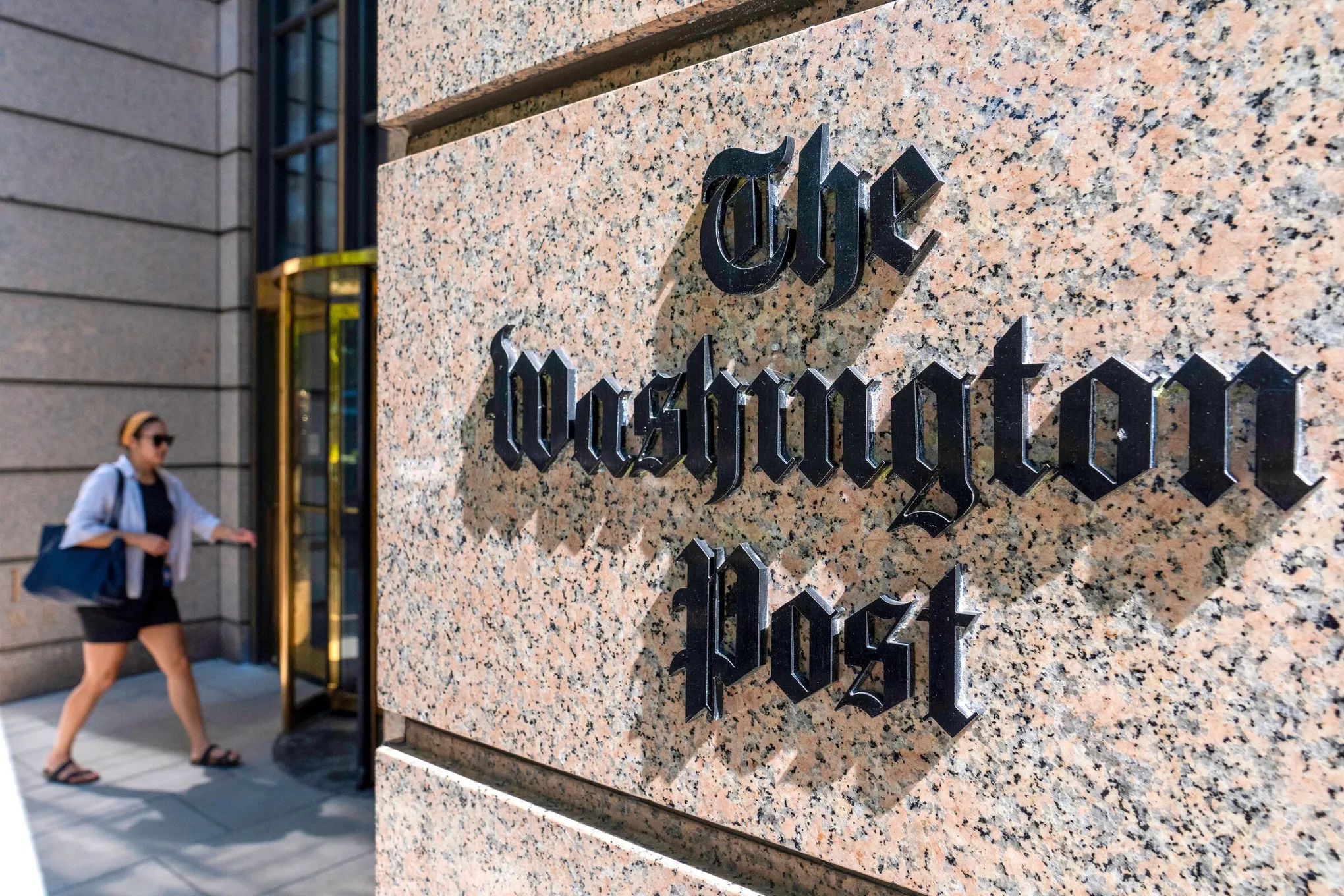
On Wednesday, February 4, The Washington Post, owned by billionaire Jeff Bezos, informed its employees of the start of a large-scale wave of layoffs affecting about 30% of the staff.
This was reported by The New York Times, according to "Komersant Ukrainian".
According to two NYT sources, the layoffs affect both commercial department employees and more than 300 of the approximately 800 journalists working in the editorial office. The cuts have affected almost all departments. The sports section will be closed, although some reporters will move to the feature section. The sections dedicated to city life and books will also be eliminated, and the WP podcast will be discontinued. Reporter Caroline O’Donovan, who covers Amazon, the company founded by Bezos, has also been laid off. WP’s international coverage will also be reduced, with reporters and editors in Ukraine, the Middle East, India, and Australia reportedly being laid off.
WP international editor Peter Finn asked to be laid off as well, as he did not want to participate in planning the layoffs, according to the NYT.
“The cuts show that Jeff Bezos, who became one of the richest people in the world by selling goods online, still doesn’t understand how to create and maintain a profitable online publication. In the first few years of his ownership, the newspaper expanded, but recently the company has been in decline,” writes the NYT.
According to the newspaper, WP editor-in-chief Matt Murray held a conference call with editorial staff on Wednesday, during which he said that the company “had been losing too much money for too long and was not meeting the needs of its readers.” He said the publication will now focus more on national news and politics, as well as business and health care, and much less on other areas.
In an email, Murray also said that WP is “too tied to another era, when we were the dominant local print publication,” and that online search activity, partly due to the development of generative AI, has nearly halved in the last three years, and the number of daily publications has halved in the last five years.
“Even when we produce a lot of great content, we too often write from a single point of view, for a single segment of our audience,” he said.
According to Politico, Murray said the WP has been struggling financially for some time and has cut costs and paid severance to employees several times. According to The Wall Street Journal, the newspaper lost about $100 million in 2024, putting pressure on management to cut costs.
Politico notes that the last year and a half has been difficult for WP. The newspaper has undergone significant changes in management and was shocked by the decision of Bezos and publisher Will Lewis to cancel a planned editorial supporting then-Vice President Kamala Harris ahead of the US presidential election. Lewis announced Bezos’ new policy, which ends the editorial board’s support for presidential candidates. The decision led to resignations in the opinion department, after which the department was reorganized — according to Bezos, to focus on “personal freedoms and the free market.”
According to AFP, 250,000 WP readers canceled their subscriptions in protest.
“This is one of the darkest days in the history of one of the world’s largest news organizations. The Washington Post’s ambitions will be sharply reduced, its talented and courageous staff will be further reduced, and the public will lose access to fact-based reporting from the scenes of events in our cities and around the world, which is now needed more than ever,” said Martin Baron, former editor-in-chief of WP.
“We are witnessing a murder,” wrote The Atlantic journalist Ashley Parker, who worked at The Washington Post for eight years.
Amid rumors of impending layoffs in recent weeks, WP journalists and editors have been circulating the hashtag #SaveThePost on social media, appealing to Bezos to save the newspaper.
“Hello, Jeff Bezos. We will never forget your support for our important work covering the war in Ukraine, which is still ongoing… We are risking our lives for the stories our readers demand. Please believe in us and #SaveThePost,” wrote Shivon O’Grady, head of the WP’s Ukrainian bureau.
The newspaper’s Ukrainian bureau, first opened in 2022 a few months after the start of the full-scale war, was also affected by the cuts. O’Grady wrote on X on February 4 that it had been a tremendous honor for her to serve as the Washington Post’s bureau chief in Ukraine.
WP Kyiv correspondent Lizzie Johnson said on X that she learned about the cuts “in the middle of a war zone.”
“I am speechless. I am devastated,” she wrote.
Journalist Anastasia Galushka thanked Shivon O’Grady for their work together over the past four years.
“Three and a half years ago, you held my hand while we hid under a tank from cluster bombings. We went through hell. Without you, this job loses its meaning,” she wrote.
Correspondent Mack William Bishop wrote that WP’s reporting from Ukraine was “exceptional, with regular exclusives and detailed coverage of events.”
“Some time ago, I returned to Dnipro after a difficult assignment in the Donetsk region. When I sat down at Brooks to have coffee, breakfast, and plan my next trip, Shivon O’Grady and her team were sitting next to me. They had just survived a rocket attack on the front line. Despite minor injuries, everyone on her team was ready to return immediately and continue their work, regardless of the risks,” he recalled.
AFP notes that the cuts at WP are taking place amid intense pressure on large traditional media outlets in the US from President Donald Trump, who regularly accuses journalists of “fake news” and has filed numerous lawsuits against the media. Bezos, who bought WP in 2013, became close to Trump during his second term. His company Amazon paid US First Lady Melania Trump $40 million for a documentary about her, as well as $35 million for marketing.
Media expert Tetyana Troshchynska commented on the situation on social media:
“Yesterday, The Washington Post laid off hundreds of employees, closing its bureau in Ukraine (12 bureaus in total). I belong to a generation of journalists who believe that journalism is a profession, not a way to become more visible in the battle for attention, so stories like this are personally important to me. The Washington Post is a whole story.
The newspaper has been around since 1887, and this date of foundation does not mean that nothing should change, but rather that it is possible to change along with American society, fulfill its mission, and maintain its reputation. But then Donald Trump appeared on the scene.
Now the publication’s management calls what is happening a “strategic reboot,” difficulties in attracting customers, and a “complex media landscape,” and this is a separate topic — how language is used to avoid telling the truth.
Therefore, the publication must now focus “on covering national news, domestic politics, science, medicine, technology, and business.”
Interestingly, among those laid off is Caroline O’Donovan, a journalist who covered Amazon, one of the main companies owned by Post owner Jeff Bezos.
Even more interesting is that previous reports on the publication’s activities showed growth (including during Bezos’s tenure). Until recently.
Until Jeff Bezos started acting like an Eastern European oligarch from the late 1990s.
Last week, Post employees recorded an appeal to Bezos, urging him to stop the planned cuts and explaining how important professional journalism is today. But Bezos did not respond. Instead, on Monday, he personally took Secretary of War Pete Hagseth on a tour of his other company, the space startup Blue Origin. I’m telling you, it all reminds me of the days of Kuchma’s stronghold. But I’m not the only one.
Many voices say that Bezos wants to win President Trump’s favor and is willing to destroy both The Washington Post brand and one of the largest and most respected American media institutions to do so.
The publication’s union is planning protests, so we’ll see what comes of it.
Guardian columnist Margaret Sullivan (who once worked at the Post) offers a wonderful metaphor: “If you inherited a rare Stradivarius violin, polished it for several years, and then decided to smash it with a hammer?”
Bezos is doing the unthinkable, she writes, and he is doing it at a time “when strong, fact-based journalism is extremely important in America and around the world.”
But the most interesting thing is something else.
Shortly before the election, Bezos banned The Washington Post from publishing an editorial supporting Kamala Harris for president. Unsurprisingly, hundreds of subscribers canceled their subscriptions at the time. They were outraged by the apparent attempt to please Donald Trump at the expense of editorial independence.
Then Bezos invested $1 million in Donald Trump’s inauguration, and just recently, $40 million in a film about Melania Trump, which is unsuccessfully filling empty theaters. He plans to spend several more tens of millions of dollars on promoting it. What a sad and instructive story about oligarchic businesses, autocracy, and sleepy institutions,” the post says.