Homeowners in the crosshairs: Mariupol’s occupying authorities have declared thousands of apartments “ownerless”
22 March 01:12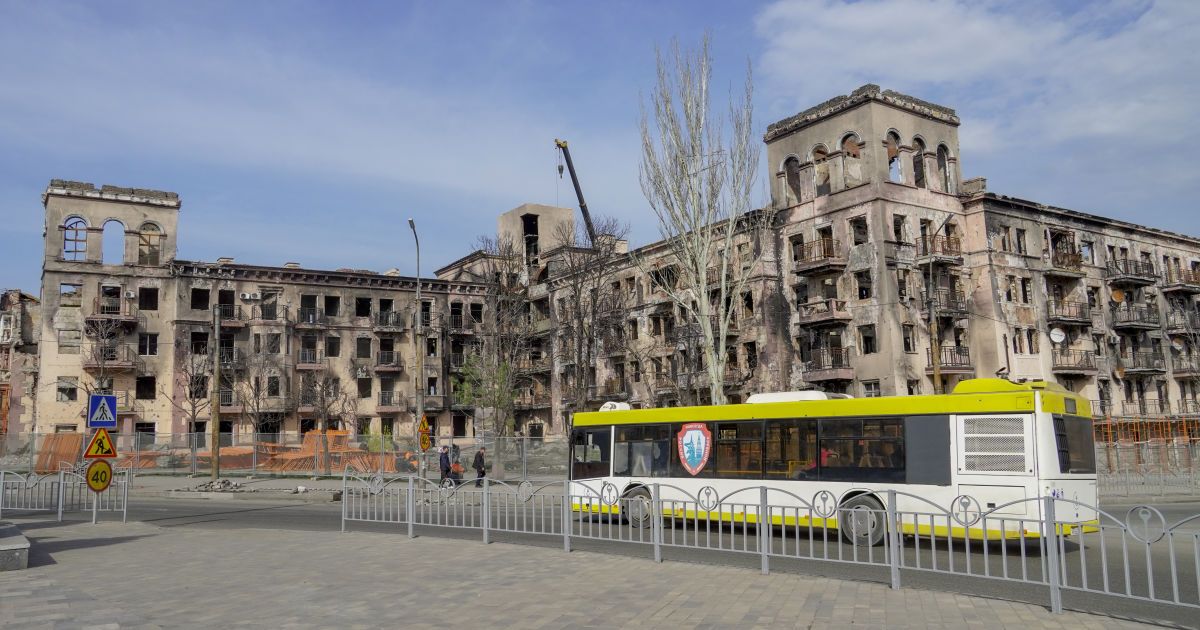
In Mariupol, Donetsk Oblast, Russian occupiers have declared nearly 13,000 apartments and houses “ownerless.”
The Mariupol City Council reported this on Telegram on March 21, according to "Komersant Ukrainian".
“The occupation administration has published a ‘consolidated list of residential properties showing signs of being ownerless as of March 17, 2026.’ It includes nearly 13,000 addresses of Mariupol residents: apartments, houses, and residential properties. Property owners must personally contact the local administration and prove their right to the property,” the Mariupol administration’s statement reads.
The city administration notes that, according to the occupiers, if this procedure is not carried out, the property will become “municipal.”
What is known about the housing situation in Russian-occupied Mariupol
Russian occupiers in Mariupol are demolishing Mariupol residents’ homes, changing the legal addresses of demolished buildings, and constructing mortgage housing. Over the four years of occupation, more than 360 apartment buildings have been demolished, according to data released by the Mariupol City Council on Telegram on February 14 of this year. As an example, the city council cites the address at 129 Myru Avenue, where, according to their data, construction of the new “Mirapolis” residential complex is underway. The city council noted that Mariupol has become a “leader” in the construction of mortgage housing in the temporarily occupied territories of Ukraine.
Russian occupiers are also nationalizing Mariupol residents’ homes; specifically, the city council reported that the occupying authorities have nationalized approximately 400 apartments on the city’s central Myru Avenue. Previously, the occupiers referred to such apartments as “ownerless.”
The Siege and Capture of Mariupol at the Start of the Full-Scale Invasion
Human Rights Watch, Truth Hounds, and SITU Research have reconstructed the chronology of events in the city.
According to data from the Mariupol City Council, as of January 1, 2020, over 400,000 people lived in the city. Two of Ukraine’s largest steel mills operated there: the Ilyich Mariupol Steel Works (MMK) and the Azovstal Steel Works.
On February 24, 2022, Russia launched a full-scale invasion of Ukraine. For nearly three months, the Russian Federation’s army and pro-Russian armed groups fought against the Armed Forces of Ukraine to capture Mariupol.
By March 2, Russian troops had the city under siege.
By early March, approximately 450,000 civilians were trapped in Mariupol. The fighting severely damaged critical infrastructure, including power grids, water supply systems, heating, and communications.
It was not until March 14 that the occupiers agreed to the evacuation of civilians, and the first residents of Mariupol were able to reach Zaporizhzhia in their own cars.
By April 13, the occupying army had captured most of the city, announcing the capture of Mariupol on April 21.
On April 30, the first official evacuation of civilians from Mariupol to territory controlled by Ukraine took place.
On May 16, Ukrainian troops remaining on the grounds of the Azovstal steel plant began surrendering.
According to a report by Human Rights Watch, Truth Hounds, and SITU Research, over 10,000 people were buried in Mariupol, Donetsk Oblast, during a year of full-scale war—from March 2022 to February 2023. At least 8,000 likely died from war-related causes: either from direct attacks or due to a lack of medical care or clean water. They noted that the total number of deaths could be significantly higher: some graves contained multiple bodies, and others may have died later from war-related causes, human rights activists suggest.