Tax increases: why and what are the consequences?
30 July 2024 21:19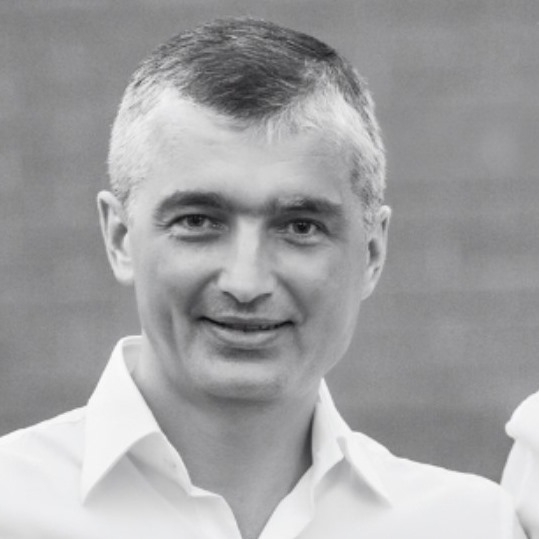
Vyacheslav Trunov – Honoured Lawyer of Ukraine, Expert Adviser on Business Protection at AMBER Law Firm
The summer of 2024 brought a number of tax increase initiatives that could significantly affect the financial situation in Ukraine this autumn. Parliament has adopted some of them, while others are still in the draft stage. All these initiatives, according to government officials, are aimed at raising additional funds for defence.
The increase in excise taxes on fuel has already caused concern, and the taxation of sweet water has even been mocked. But what will happen to the economy and people if the other tax changes are adopted? Are there any alternatives?
What is the motivation for the need to raise taxes?
At the beginning of the war, the government made concessions to business: it reduced VAT on scarce fuel, cancelled excise duties and allowed tax holidays for small businesses. This was necessary to support the economy in the face of uncertainty. However, now, in the third year of the war, the government is faced with the problem of uneven international aid and the need to finance defence spending exclusively from domestic resources.
How does the government plan to raise taxes?
The Verkhovna Rada has already approved an increase in fuel excise taxes starting in September, and other changes are being discussed, such as a 5% increase in the military tax for individuals, a 1% tax for legal entities, a 30% tax on the sale of jewellery and other measures. These measures are expected to bring additional UAH 341.9 billion to the budget.
Alternatives to tax increases: US recommendations
The United States encourages the government of Ukraine to increase revenues primarily by reforming customs and fighting grey markets. This was stated by US Special Representative for Ukraine’s Economic Recovery Penny Pritzker at a briefing in Kyiv, answering a question from an Ukrinform correspondent. She stressed that it is up to the Ukrainian government to decide where to raise revenue, but suggested focusing on customs reform and the fight against grey markets rather than raising taxes.
Global practice of tax increases and the Laffer effect
In global practice, tax increases often have the opposite effect. According to the Laffer effect, after a certain level of tax increase, tax revenues may start to decline due to a decrease in economic activity. For example, in European countries where tax rates are already high, further increases in VAT may lead to a decline in GDP. This suggests that caution in approaching tax policy is necessary.
Dialogue between government and business: hope for a balanced solution
Tomorrow, a special meeting of the Presidential Council for Supporting Entrepreneurship under Martial Law (Council 7) is scheduled to discuss issues related to tax increases. This dialogue is critical for jointly finding solutions that will help maintain the country’s economic stability in times of war. The participation of business representatives and economic experts in this dialogue raises hopes that a balanced solution will be found.
Opinions of economic experts and business representatives
Economic experts, such as Volodymyr Dubrovsky of the Centre for Social and Economic Studies CASE Ukraine, emphasise the risks of tax increases. He notes that an increase in the tax burden could contribute to the growth of the shadow economy. According to him, “tax increases may encourage businesses to hide income, which will ultimately reduce real tax revenues to the budget.”
Oleksandr Konotopskyi, founder of Ajax Systems, emphasises that “taxes cannot be raised. This is an architectural thing. Neither citizens nor businesses are ready for it.” He believes that it is necessary to reduce taxes and improve their administration to stimulate economic activity.
Oleg Gorokhovsky, co-founder of monobank, is also critical of raising taxes in times of war, stressing that it is necessary to first better administer existing taxes and fight corruption.
These opinions are also supported by think tanks that have appealed to the Cabinet of Ministers to revise draft law 11416.
They point out that an increase in the military fee and other taxes could lead to the shadowing of salaries and a reduction in the tax base. Analysts suggest alternative ways to increase revenues, such as improving the efficiency of controlling bodies and automating business processes.
Conclusion
Raising taxes is not just a matter of financial strategy, but also an ethical issue of economic survival in times of war. All possible alternatives, including a temporary VAT increase, should be discussed to avoid negative consequences such as the growth of the shadow sector. Dialogue between the government and business should be the basis for any decisions in this area.