Kyiv evacuation plan, mobile kitchens, and apocalypse scenarios: what should the capital really prepare for?
16 January 20:03
Instead of massive attacks across the country, the enemy has focused on isolating individual megacities. The focus is on Kyiv, Odesa, and Dnipro. The New York Times calls the Kremlin’s main goal to create a humanitarian crisis in the largest cities and force the Ukrainian authorities to make concessions in negotiations.
Inside the country, this has spread a wave of alarming predictions, rumors of evacuation of the capital, and public disputes between central and local authorities over preparedness for the worst-case scenarios.
Is Kyiv really facing a humanitarian catastrophe in the event of new massive strikes on the energy sector?
Is the capital prepared for a complete blackout, and does the population need to be briefed today?
Kyiv’s resources: how long will they last?
It is necessary to separate real risks from panic. This was noted by Taras Zagorodniy, managing partner of the National Anti-Crisis Group, in a comment to
According to him, the wave of fear intensified after the publication of The New York Times, although the fact that Russia is trying to make life in Kyiv unlivable is not news.
“Putin has been trying to make Kyiv uninhabitable for three years. There is nothing sensational about it,” Zagorodniy notes.
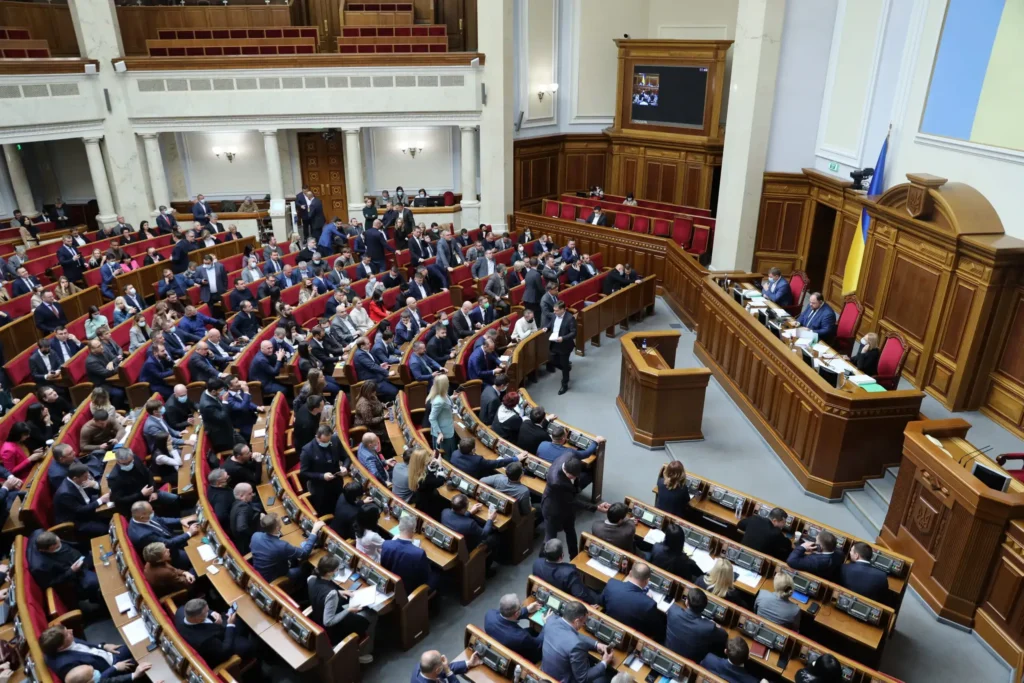
According to the expert, the key problem today is not the threat itself, but the lack of clear responsibility and coordination between central and local authorities. The capital is unable to cope with the large-scale consequences of the energy crisis on its own.
“The capital cannot manage either recovery or response with its own resources. A clear vertical chain of responsibility is needed,” Zagorodniy emphasizes.
Zagorodniy believes that a specific person should be designated at the state level — primarily the Minister of Energy, who should work closely with city authorities and crisis management teams.
I would add that Kyiv Mayor Vitali Klitschko responded to accusations of alleged inadequate preparation of the capital for winter and stated that there was a lack of coordination on the part of the government after the Russian Federation’s massive attack on energy infrastructure.
“There is a lot of manipulation and outright lies going around right now. Regarding whether Kyiv was prepared for winter. I would like to note that the day before the devastating massive attack, I had a meeting with the Prime Minister of Ukraine. […] I conveyed all the threats and risks that could result from severe damage to the capital’s critical infrastructure,” Vitali Klitschko
At the same time, Kyiv is preparing for the worst-case scenarios: 50 mobile kitchens with hot food will begin operating in problem areas on January 16, and 24 powerful electric generators have been connected to residential areas on the Left Bank, which have already ensured the operation of 17 transformer substations, Prime Minister Yulia Svyrydenko said.

Evacuation of the population: action plan
Separately, Taras Zagorodniy, managing partner of the National Anti-Crisis Group, focused on the topic of possible instructions for the population in the event of a complete blackout or evacuation. According to him, such instructions must be in place in advance, regardless of whether a critical moment has arrived.
“Instructions must always be in place. Not when things have already gotten worse. We just had to prepare for this. Obviously, we missed this somewhere,” Zagorodniy notes.
He emphasizes that honestly informing citizens is not panic-mongering, but an element of responsible policy, especially in conditions of war and predicted frosts.
According to the expert, massive attacks on the energy sector during low temperatures did not require “prophetic abilities.” That is why, according to Zagorodniy, the authorities should have scaled up ready-made solutions in advance and used the experience of other cities.
The experience of Kharkiv
As an example, Taras Zagorodniy cites Kharkiv, which, despite constant shelling, proved to be better prepared for crisis scenarios.
“Kharkiv is constantly under fire, but they were better prepared there. This experience must be taken, scaled up, and resources distributed,” Zagorodniy notes.
Zagorodniy emphasizes that, given Kyiv’s budget, many decisions could and should have been implemented earlier.

The lights are going out one by one: an apocalyptic forecast from a member of parliament
Currently, there are no grounds for evacuating the population of Kyiv. People’s Deputy Olena Shulyak refutes rumors about the worst-case scenario for the capital. According to her, energy and utility services are coping with the load, and there are no signs indicating the need for immediate evacuation.
Shulyak stressed that discussions of such scenarios are more like assumptions and political speculation than decisions based on the actual operational situation.
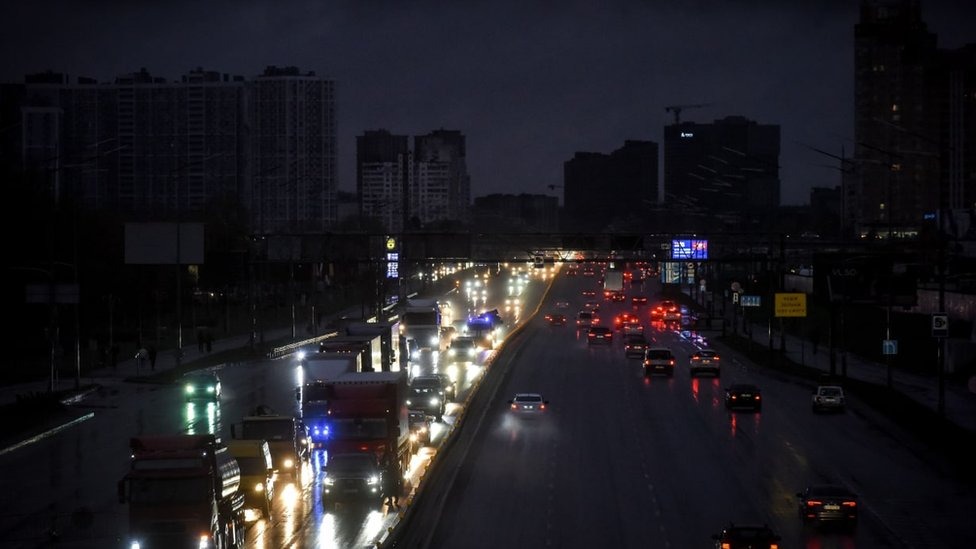
At the same time, her colleague, MP Oleksandr Fedienko, is stirring up panic and posting images of an apocalyptic cityscape generated by artificial intelligence on social media. He says that Ukraine has already entered the active phase of the process, when damage to one element of critical infrastructure leads to a chain reaction of failures in other systems.
“The city is still standing, but it is already breaking down in a chain reaction. The lack of electricity is slowly but surely bringing the entire city to a standstill,” Fedienko wrote.

In his post, he describes in detail a scenario of gradual collapse, based on a text from Mark Elsberg’s book. Power lines are down, accidents are happening, communication towers are silent, mobile signals are disappearing, shops and cash registers are shutting down, gas stations are operating on emergency power, ambulances are stuck in traffic, and hospitals are running on reserve power, but only temporarily.
Separately, the MP draws attention to the depletion of Ukraine’s air defense and the lack of external support.
“Defense of the sky, partners, sorry, we’ve been abandoned… so we’re on our own. Next is the cessation of these cascading effects, and the exit. This is also a difficult story that could lead to the destruction of the energy infrastructure,” said Oleksandr Fedienko.
The situation surrounding Kyiv’s energy security has exposed several systemic problems at once.
First, the threat of massive strikes on the energy sector during cold spells is real and predictable, not hypothetical.
Second, the key risk remains not the blackout scenario itself, but the lack of clear coordination, understandable responsibility, and unified communication between the central government and the capital.
Third, the public dissonance between the reassuring statements of some politicians and the apocalyptic predictions of others only increases anxiety in society. Honest conversation, pre-planned scenarios, and the use of the experience of frontline cities can be the safeguard that separates real preparedness from chaos and panic.