“Funeral march for the Russian economy”: Novak predicts the collapse of the Russian economy in 2026
24 February 16:18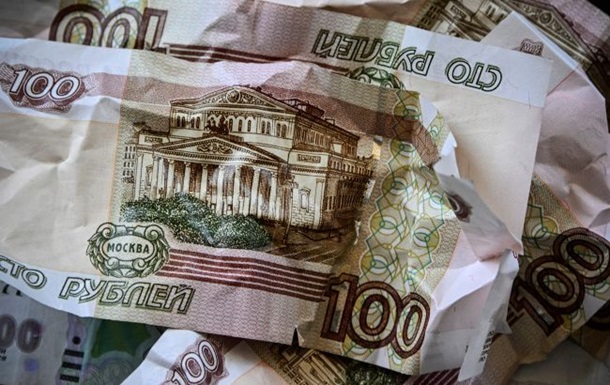
About 40% of Russia’s federal budget expenditures for 2026 are officially earmarked for the war. However, actual expenditures may be significantly higher due to classified items and falling revenues.
Against this backdrop, the aggressor country will face a choice: continue to finance military operations or fulfill its social obligations.
This was stated by Andriy Novak, chairman of the Committee of Economists of Ukraine, in an interview with the YouTube channel "Komersant Ukrainian".
Commenting on the ratio of military spending in the budgets of Ukraine and Russia, the expert emphasized:
“Official statistics say that they (Russia, ed.) spend 40% on the war. In reality, they spend much more. Especially recently, in recent years. It’s been 25 years, and in the 26th, this percentage will be much higher for them,” he adds.
According to Novak, even before the full-scale invasion, a quarter of the Russian budget was classified, and during the war, it was already a third. Therefore, even the published data does not reflect the real picture.
The economist points out that the problem is not only in spending but also in the rapid decline in Russia’s revenues.
“International sanctions are working, sanctions by the Armed Forces of Ukraine are working, and targeted strikes on Russian economic targets are very effective,” he adds.
He emphasizes that the Russian economy is critically dependent on energy exports, and revenues from them have significantly decreased. At the same time, war costs remain high and are even increasing.
“Revenues have decreased significantly, the revenue side has decreased significantly, and war costs are not decreasing,” he comments.
Novak reminds us that one of Russia’s reserve funds has already been completely depleted, while another is rapidly melting away. According to his estimates, in 2026, the Kremlin will face a shortage of resources to finance the war on its current scale.
“They will face a dilemma: either to wage war or to stop paying social benefits,” he added.
The economist emphasizes that the end of the war is directly linked to the economic ability to finance it.
“Because war requires money, a lot of money,” he says.
He believes that due to a combination of sanctions pressure, loss of markets, depletion of reserves, and internal economic imbalances, Russia will not be able to maintain its current level of military spending for long. This, in turn, could trigger internal processes that will determine the further development of events both for Russia itself and for the course of the war.