Political expert on the Peace Summit: Ukraine has to make difficult compromises
11 June 2024 10:43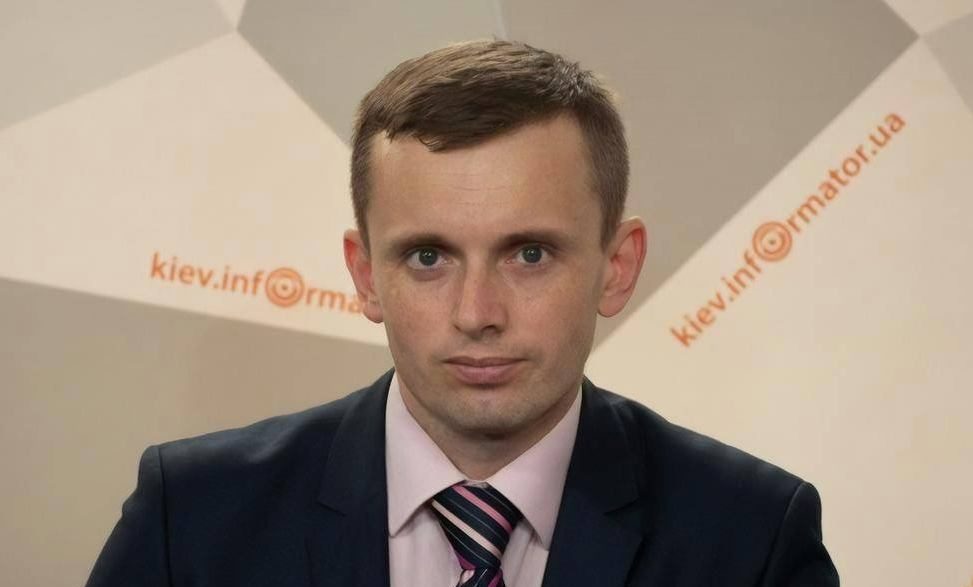 ЕКСКЛЮЗИВ
The Global Peace Summit to be held in Switzerland on 15-16 June is not intended to start negotiations with Russia to end the war, but to prepare for such talks in the future. This was stated by political analyst Ruslan Bortnik in an exclusive commentary to Kommersant Ukrainian  .
.
“The purpose of the summit is to create the preconditions for the formation of an international coalition around the Ukrainian approach to a peaceful settlement,”
– the expert explained.
He noted that President Zelenskyy’s 10-point “Peace Formula” has not yet been fully implemented. That is why only three points were put forward for the summit in Switzerland: nuclear and food security, prisoner exchange, and the return of children.
“But in general, the main task is to form an international coalition that will jointly offer something to Russia at the second peace summit in the future. We don’t want Ukraine to sit one-on-one with Russia, and all the others to be observers, but to have a large international coalition behind Ukraine,”
– the political scientist says.
According to Bortnik, another goal of the summit is to prevent the dispersion of Western peace initiatives after the elections, which would weaken Ukraine’s position. However, China has already taken such an initiative.
“Now the Ukrainian side has to make difficult compromises to ensure representation at this forum. Moreover, China plans to organise another conference in parallel, to which it will invite both Ukraine and Russia. And no less than 46 countries have already given their potential consent to it,”
– the political scientist added.
In addition, Ruslan Bortnik believes that the summit will actually confirm the legitimacy of Volodymyr Zelenskyy as President of Ukraine.

Global peace summit
The Peace Summit, to be held on 15-16 June in Switzerland, in the resort of Burgenstock near Lucerne, is intended to accelerate the coming of a just peace for Ukraine. Ukraine hopes that 80-100 countries will take part in the event. According to the President of Switzerland, 90 countries and organisations have confirmed their participation in the Peace Summit.
Among those invited are members of the G7, G20, BRICS, numerous other countries from all continents, as well as the EU, three international organisations (UN, OSCE and Council of Europe) and two religious representatives (Vatican and Ecumenical Patriarch of Constantinople).
Switzerland emphasises that the summit will build on the discussions that have taken place in recent months, including the Ukrainian peace formula and other peace proposals based on the UN Charter and key principles of international law. The main goal of the summit is to inspire the future peace process. To achieve this, the Summit intends to
- provide a platform for dialogue on how to achieve a comprehensive, just and lasting peace for Ukraine based on international law and the UN Charter;
- promote a common understanding of a possible framework for achieving this goal;
- jointly define a roadmap on how to engage both sides in the future peace process.
What does the Ukrainian “peace formula” envisage?
on 11 October 2022, President of Ukraine Volodymyr Zelenskyy announced to the leaders of the G7 countries a “peace formula” to overcome the Russian threat. It includes 10 points:
- Radiation and nuclear safety.
- Food security.
- Energy security.
- Release of all prisoners and deportees.
- Implementation of the UN Charter, restoration of Ukraine’s territorial integrity and world order.
- Withdrawal of Russian troops from Ukraine and cessation of hostilities.
- Return of justice.
- Countering ecocide.
- Preventing escalation.
- Fixing the end of the war.
The UN General Assembly adopted a resolution with the Ukrainian peace formula in 2023, on the eve of the first anniversary of Russia’s full-scale invasion. Seven states voted against it: Russia, Belarus, North Korea, Syria, Eritrea, Mali, and Nicaragua. The abstentions included China, India, Iran, Kazakhstan, Pakistan, and Armenia. Russian Foreign Minister Sergey Lavrov said that Russia would not negotiate on the basis of Zelenskyy’s “peace formula”.