The Polish government has signed an agreement with farmers. What are the implications for Ukraine?
21 March 2024 11:49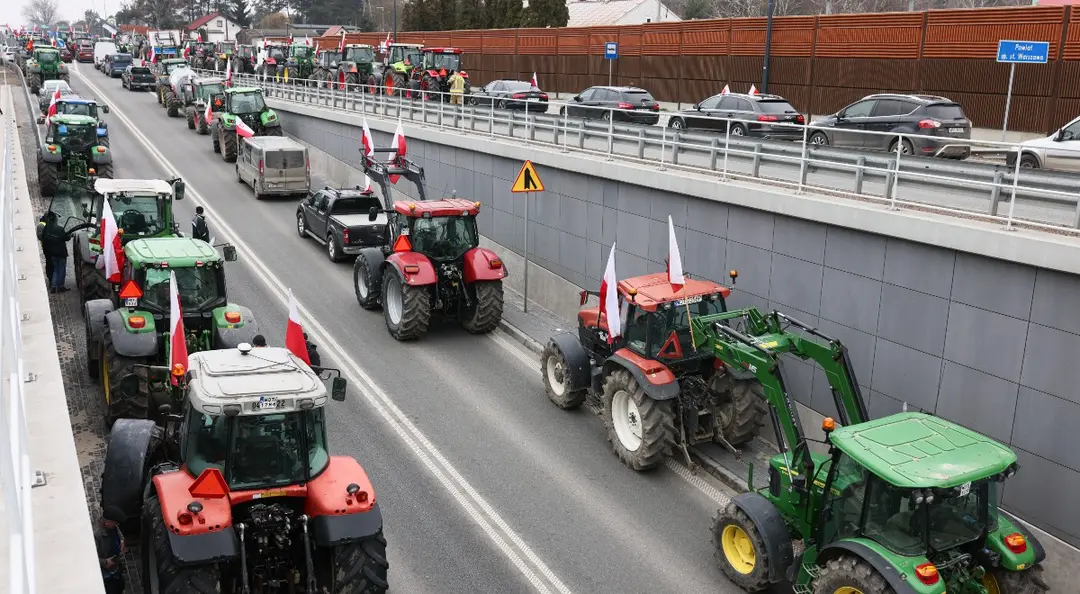 ЕКСКЛЮЗИВ
On Tuesday, 19 March, Polish Minister of Agriculture Czeslaw Siekerski signed an agreement with Polish farmers. This became known on 20 March, when large-scale farmers’ protests were taking place in Poland, Komersant ukrainskyi  reported
As far as Ukraine is concerned, according to Polskie Radio, Sekerski promised the farmers to ask Prime Minister Donald Tusk to suspend the transit of agricultural products from Ukraine, which is subject to an embargo, through Poland. The embargo itself remains in force.
The two sides also stated in the document that trade relations between the two countries should be regulated, including market access for products such as cereals, rapeseed, corn, sugar, poultry, eggs, soft fruits and apples. One of the traditional mechanisms for such regulation is customs tariffs.
If the government accepts Sekerski’s proposal, Ukraine will not be able to export its products to third countries through Poland.
It is now known that Poland has imposed an embargo on Ukrainian grains and oilseeds, including wheat, corn and rapeseed. This decision violates EU rules, but it did not stop Poland.
Who benefits?
Denys Marchuk, deputy head of the Ukrainian Agrarian Council, believes that the answer to the problematic issues in Ukrainian-Polish trade should not be found in Ukrainian goods. After all, the figures clearly illustrate the insolvency of the official claims of Polish farmers.
“I’ll give you simple figures – over the last 2 months of the new year, about 100 thousand tonnes of Ukrainian products were in transit. And even then, it was transported not to Europe, but to third countries. Therefore, when we say that we export 2.5 million tonnes, 100 thousand tonnes in transit are clearly not the figures that can lead to such protests,”
– says the expert.
According to him, Polish think tanks openly claim that the actions of Polish protesters towards Ukraine cannot be justified economically. It is also untrue that Ukrainian products are returned to Poland after transit. This has never been proven.
Therefore, the answer should be sought elsewhere, Marchuk believes. The situation becomes clearer if we recall that local elections are due to take place in Poland in April and there is a fierce election campaign going on.
“It is this turbulent political process that leads to such radical actions. For a certain category of people, this is the only way to express themselves, a large number of politicians are coordinating the protesters, and the agrarian movement in Poland is very politicised. They have a clear affiliation to some political forces, parties, and they do not advocate a purely economic issue, there is a lot of politics involved,”
– explains the expert.
He believes that the European Union should intervene in this situation and that it should be resolved by a strong-willed decision of the European authorities:
“What logic can there be in stopping Ukraine’s trade with Spain, Italy or other countries because someone is against transit? There should be a clear and weighty decision of the European Commission itself – not on the import of Ukrainian products, but on the actions of the protesters who deliberately violate the law.”
Leonid Kozachenko, President of the Ukrainian Agrarian Confederation, believes that Ukraine will be able to cope with exports even if Poland closes the transit:
“If this decision allows us to stop the blockade and open the movement of our cars, buses and trains [meaning not freight trains – ed.
However, Ukraine’s response to Polish measures should also be tough, he believes:
“But we need to think about how we will react to this in terms of trade with Poland. If we are blocked, then, of course, we don’t need Polish products either, we can do without them. And then let the Poles calculate whether it is profitable for them or not. I would do the same.
Border blockade and trade wars
on 9 February 2024, Polish farmers launched a nationwide strike and a blockade of the border with Ukraine, which is scheduled to last until the end of April. The initiator was the independent farmers’ trade union Solidarity. The main demand of the protesters is to cancel the preferential trade regime with Ukraine and to return the permit system for importing goods into Poland. According to the Polish farmers, cheap and low-quality Ukrainian products have flooded Polish and European markets and are driving Polish producers out of them.
As part of the protest, Polish farmers block the movement of trucks at checkpoints on the Ukrainian-Polish border, and sometimes the movement of freight trains across the border. Several times, the protesters have poured Ukrainian grain directly onto the ground. The Polish government has hardly reacted to these actions, has not tried to unblock the routes and generally supports the protesters’ position. Poland has imposed an embargo on Ukrainian grain and threatens to impose an embargo on all Ukrainian agricultural products. Thus, the protesters are blocking even the transit of Ukrainian goods.