Over UAH 110 billion in revenue: which Baltic country earns the most?
23 February 16:45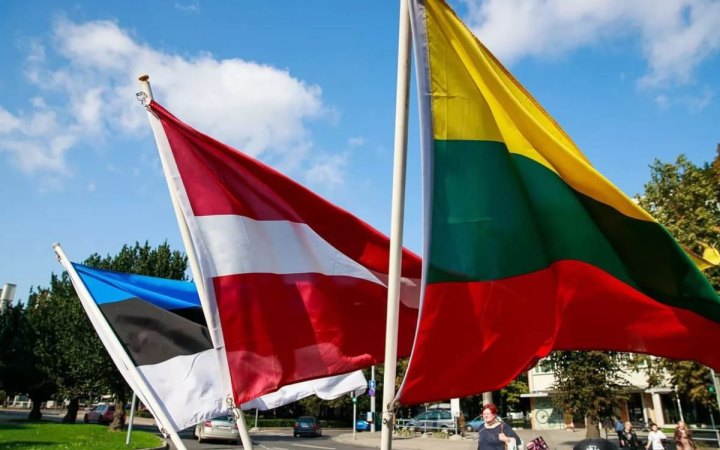
Investors from the Baltic states — Estonia, Latvia, and Lithuania — have significantly increased their presence in the Ukrainian economy over the past four years. This is according to a study by the YouControl analytical system, as reported by "Komersant Ukrainian".
In the first three quarters of 2025, the total revenue of companies with Baltic capital exceeded UAH 110 billion. This is happening against the backdrop of a full-scale war and, according to analysts, indicates continued interest in the Ukrainian market.
Who is growing faster
The highest growth rates in 2022–2025 were demonstrated by residents of Estonia (23%) and Latvia (20%).
At the same time, Lithuania leads in terms of revenue: companies with Lithuanian co-owners declared UAH 53.7 billion in income for the first nine months of 2025.
Lithuanian capital is represented by 1,407 companies, mainly in Kyiv and the surrounding region. The key player is considered to be the BT Invest group, which manages the Novus supermarket chain and the Stolitsa Group’s development projects.
Latvia and energy
Latvian business in Ukraine comprises 1,171 companies with a total revenue of UAH 28.7 billion.
Among the largest players are IT equipment distributor Elko Ukraine and a number of regional power distribution companies that are part of the VS Energy International group. Some of the beneficiaries of this group were previously included in sanctions lists.
Estonian focus: development and import
Estonia is represented by 983 companies, almost half of which are registered in the capital.
Universal Fish Company, an importer of fish products, had the highest revenue. At the same time, a significant portion of the assets are linked to the Arrikano development group, whose key figures have been under NSDC sanctions since June 2025.
Risks in the ownership structure
Despite the overall positive dynamics, the study identified more than 80 companies with Baltic capital that have links to Russian beneficiaries or are subject to sanctions.
This creates reputational and legal risks — both for the companies themselves and for the Ukrainian market as a whole.
Business optimism despite uncertainty
Against this backdrop, Ukrainian businesses remain moderately optimistic about future business activity. Some companies are already setting the hryvnia exchange rate at 46 UAH per dollar in 2026 and are betting on investments in technology, particularly artificial intelligence.
In this context, Baltic capital appears to be one of the most stable European segments, continuing to operate in Ukraine even in wartime — but not without controversial nuances.