Violation of wartime practices: experts surprised by court ruling on Shufrich
9 January 19:50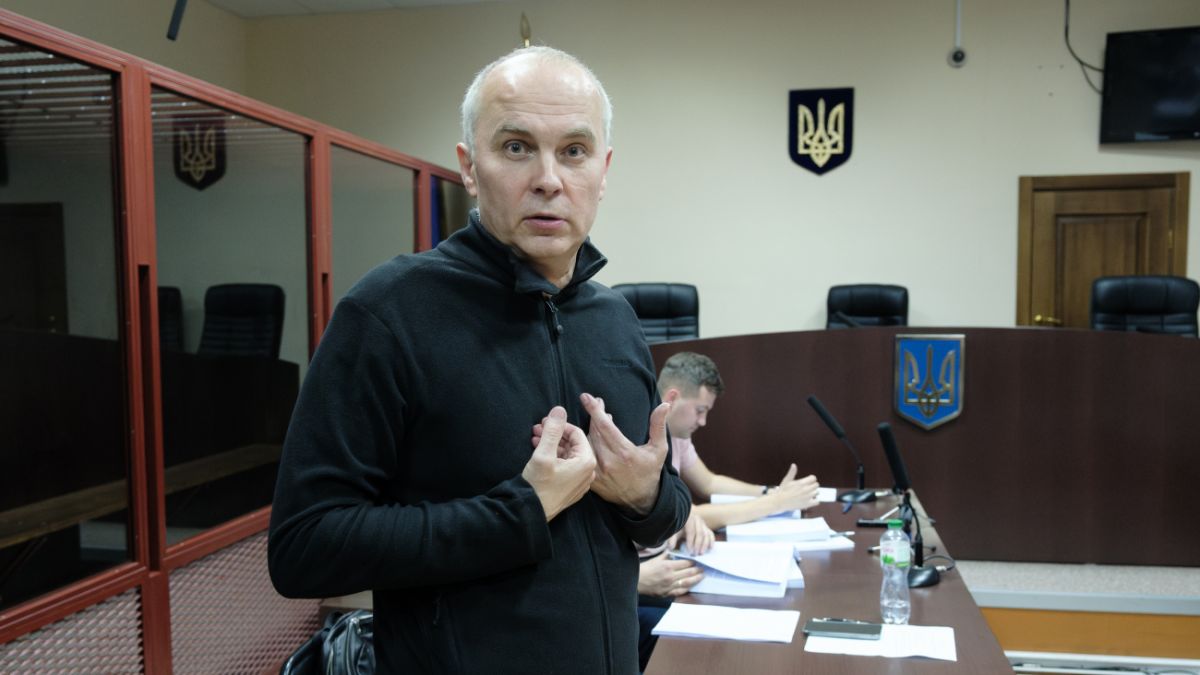
The Kyiv Court of Appeals left him in custody but set an alternative—a bail of over 33 million hryvnias for Nestor Shufrich, a member of parliament suspected of treason and collaboration. Komersant investigated whether the MP, who is charged with serious crimes, has a chance of being released.
According to the Prosecutor General’s Office, there is a ruling by the Kyiv Court of Appeals dated January 6 on the determination of an alternative preventive measure in the form of bail in the amount of 33 million 280 thousand hryvnia. But he has not been released yet, as the bail has not been paid. The son of the arrested MP said he was hoping for help from his party colleagues, some of whom are dollar millionaires, as the sum is not small.
In essence, it can be said that Nestor Shufrich is already one foot out of prison, even though his term of detention ends on January 17. His lawyers have been seeking his release from pretrial detention all this time, citing health problems. In addition, some of his fellow party members were willing to vouch for him, but the court continued to extend his arrest and, for the first time, took the step of offering freedom in exchange for an impressive cash bail.
In practice, no one has ever been released from pre-trial detention on such charges.
As lawyers point out, if the charge is under Article 111 — high treason — and the person is released from custody, this is very strange, since the sanctions of the article do not provide for any alternative, including bail, except for detention, and it is considered particularly serious. And Article 110, Collaboration, especially when committed by a member of parliament, is also considered serious, and Nestor Shufrich is accused of financing the Russian Guard.
“The combination of these articles means that the investigation and the court consider the actions of the accused to be extremely dangerous for the foundations of statehood and security of Ukraine, especially in the context of martial law. When choosing a preventive measure (Article 177 of the Code of Criminal Procedure), the court is obliged to take into account the severity of the charge, the personality of the suspect, his behavior, occupation, health, marital status, and other circumstances. However, according to Article 176 of the CPC, for those accused of a crime punishable by imprisonment for more than 10 years (and according to Article 111 of the Criminal Code – up to 15 years or even life imprisonment), detention is the main, rather than an exceptional, measure,” says lawyer Valentin Serkov in a comment to Kommersant Ukrainian.
The court must assess whether there is a risk that the defendant will: hide from the investigation and the court (the risk is particularly high in cases of treason). Obstruct the investigation (destroy evidence, influence witnesses, etc.). Continue to engage in criminal activity (an extremely weighty argument in cases of collaboration and treason). May pose a threat to national security (an exceptional risk in such cases). In cases of such gravity, the court de facto assumes that all these risks are obvious and extremely high, and therefore the only preventive measure that can be applied is detention.
“But there is another nuance to consider: since the introduction of martial law, the practice of imposing preventive measures in cases related to state security has significantly increased, and the courts have become much more categorical. Evidence of personal guarantees (surety, bail, house arrest) is almost never taken into account, as it cannot neutralize the risks to national security. In fact, according to Articles 111 and 110-2 of the Criminal Code, there is a presumption of the need for detention,” the lawyer notes.
Theoretically, instead of detention, personal surety from reputable individuals may be chosen (but who would vouch for someone accused of treason?). Or a statement of voluntary surrender and active cooperation with the investigation. This is probably the only realistic chance to change the preventive measure to house arrest or a travel ban. But the decision remains at the discretion of the court and the prosecutor’s office. Health conditions incompatible with detention in a pre-trial detention center (which must be confirmed by a medical examination and be very serious) are also taken into account. But even in this case, house arrest under enhanced security may be chosen.
After bail, they may be returned to their cell
The chances that a person charged under Part 3 of Article 110-2 and Part 1 of Article 111 of the Criminal Code of Ukraine will be released on alternative preventive measures at the investigation or trial stage are close to zero. The seriousness of the charges, their direct connection to state security, and the conditions of martial law make detention practically mandatory and inevitable until a verdict is reached. Therefore, as lawyers note, it is all the more surprising that Shufrich was released on bail.
In this situation, the position of the prosecutor’s office, which does not object to the change of preventive measure, is suspicious, notes lawyer Oleg Leontiev. If the defense managed to reach an agreement with the prosecutor’s office, the prosecutor may make concessions and delay the consideration of the case altogether. However, it is not certain that Nestor Shufrich will even cross the threshold of the detention center after paying the full amount of bail.
“There is a practice in law enforcement agencies whereby a person is released from custody. But as soon as the person walks out the door of the detention center, they are immediately served with a new charge, detained, and taken to court, where the judge applies a preventive measure in the form of arrest on the new charge. This is done to individuals who are believed to be influencing or evading the investigation, destroying evidence, or fleeing abroad,” the lawyer notes.
In fact, as lawyers note, few of those accused of treason—a particularly serious offense—have been released in recent years, during martial law. Whether Shufrich has a chance will become clear in the coming days, or even hours.
Author: Alla Dunina