Serbian president promises to block supply of ammunition to Ukraine after accusations from Russia
30 May 2025 11:50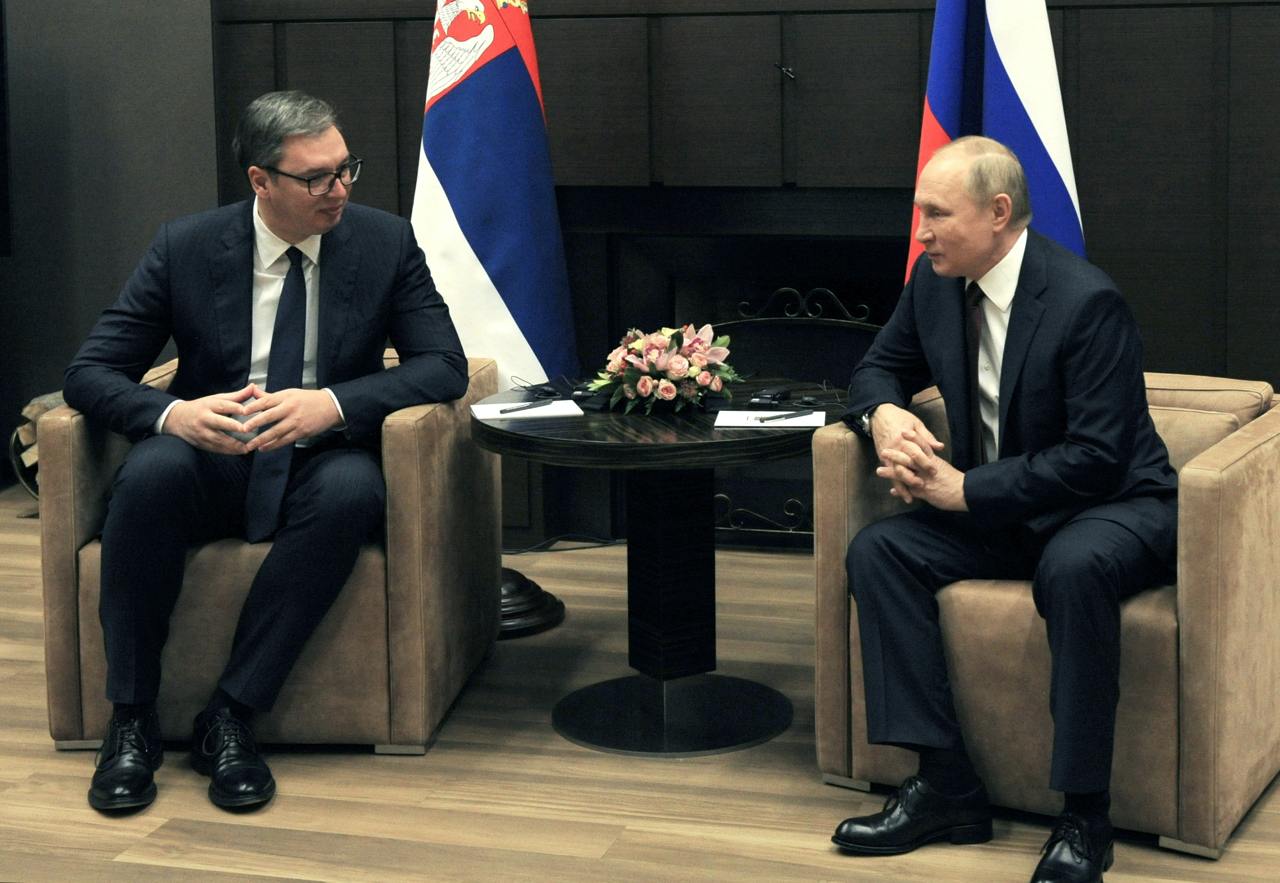
Serbian leader Aleksandar Vucic has announced his intention to stop selling weapons to buyers if it turns out that they are being delivered to Ukraine. This was reported by "Komersant Ukrainian" with reference to Russian media.
Vucic announced the decision on Serbian radio and television, saying:
“I will definitely give an order and a warning that in case of suspicion of misuse by end users and sending to battlefields without our knowledge, such contracts will not be fulfilled.”
This statement came after Russia’s Foreign Intelligence Service accused Serbian defense companies of supplying weapons to Kyiv despite Belgrade’s declared neutrality. According to Russian intelligence services, Serbia sells military products to the Ukrainian side through forged documents and intermediary countries, including NATO members such as the Czech Republic, Poland, Bulgaria, and some African states.
Vucic said that he had discussed this issue with Russian President Vladimir Putin both in the presence of official delegations and during private conversations. As a result of these talks, it was decided to form a joint working group to clarify the circumstances, because, as Vucic said,
“some of the things that are being claimed are simply not true.”
The Serbian president also mentioned the claims made by “two ambassadors” about arms supplies to Russia through a Turkish company. He asked the question:
“If we cannot export to America, Turkey, Arab countries, then, excuse me, where can we export weapons?”
Vucic emphasized the importance of the defense industry for the Serbian economy, which employs 23,000 people in the public sector and another 25,000 depend on private enterprises.
“The Russians have a good saying: ‘The more you wash, the blacker the crow. It’s the same here, when you are a self-sufficient country, everyone attacks you,”
– vucic expressed his dissatisfaction, adding that he could not keep track of all military agreements.
Earlier, the Financial Times reported that Ukraine had received approximately 800 million euros worth of Serbian ammunition through third countries. Vucic recognized this amount as “generally accurate” and emphasized that Serbia does not officially supply weapons to either Russia or Ukraine, but has contracts with Western countries, and
“…what they end up doing with it is their job. My job is to make sure that we legally handle our munitions, that we sell them. I have to take care of my people, and that’s it. That’s all I can say. We have friends in Kyiv and in Moscow. These are our Slavic brothers.”
Читайте нас у Telegram: головні новини коротко
Serbia and Russia = love
The warm relations between Serbia and Russia have deep historical roots, which have always been based on the common Orthodox faith, Slavic kinship and common interests in the Balkans. Russia has traditionally supported Serbia in its struggle for independence in the nineteenth century, and later during conflicts in the Balkans, including the Kosovo issue. This historical solidarity forms the basis of a positive perception of Russia in a large part of Serbian society.
At the present stage, relations between the two countries retain the character of a strategic partnership. Russia supports Serbia’s position on non-recognition of Kosovo’s independence, which is a key foreign policy priority for Belgrade. In addition, Russia supplies Serbia with energy on preferential terms and cooperates in the field of military equipment and security. Serbia, for its part, although seeking EU integration, does not support sanctions against Russia after its full-scale invasion of Ukraine, which distinguishes it from other European countries.
At the same time, warm relations between Belgrade and Moscow are a source of tension in Serbia’s relations with the West. Despite the officially proclaimed course toward European integration, the Serbian government is forced to balance pressure from the EU with the expectations of a pro-Russian electorate. This multi-vector policy allows Serbia to maintain strategic flexibility, but at the same time complicates its path to full membership in the European Union.
Читайте нас у Telegram: головні новини коротко