Food security and exports: why the decision on nitrate is critical right now
16 February 21:36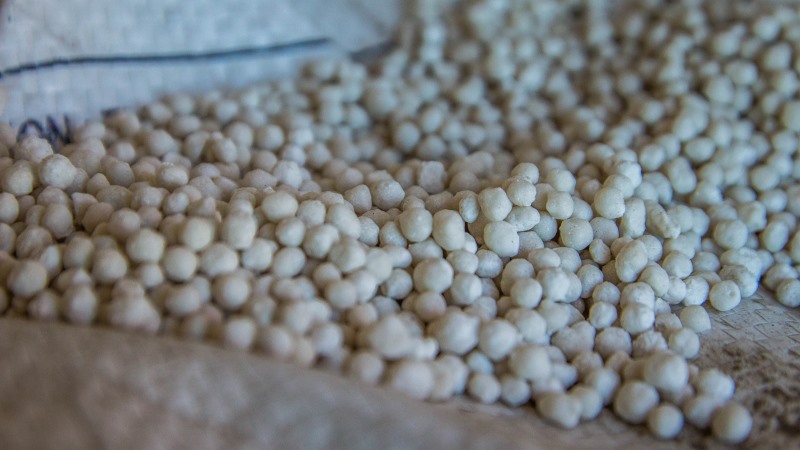
Agricultural associations have appealed to the Ministry of Economy, Environment, and Agriculture of Ukraine with a request to open imports of calcium ammonium nitrate through seaports. They warn that maintaining the current ban could directly affect this year’s harvest.
The appeal was reported by the All-Ukrainian Agrarian Council, according to "Komersant Ukrainian".
Why the problem arose
According to agricultural associations, the fertilizer market is already experiencing an acute shortage:
- as of February 2026, there is a shortage of 100-170 thousand tons of ammonium nitrate;
- domestic production has almost halved:
- 1.99 million tons in 2024–2025
- 1.016 million tons in the 2025–2026 season.
The reasons for this are attacks on infrastructure and power outages, which have directly affected the chemical industry.
What farmers are saying
The Ukrainian Agribusiness Club, together with the UkrainianAgrarian Council, warns of systemic consequences:
the reduction in the total harvest due to nitrogen deficiency could reach 20%.
At the same time, ammonium nitrate can be replaced with calcium ammonium nitrate on approximately half of Ukrainian soils, but due to the ban, farmers are effectively deprived of access to alternatives.
Ports and security
After Russian strikes on port infrastructure in Ukraine, a ban was introduced on the transshipment, storage, and transportation of a number of cargoes, including ammonium nitrate and calcium ammonium nitrate.
At the same time, agricultural associations argue that classifying calcium ammonium nitrate as explosive cargo is unfounded. They refer to international standards:
- according to UN Model Regulations, the product belongs to UN 2071 — non-explosive cargo;
- grades A and B with a mass fraction of nitrogen up to 28% are non-flammable and non-explosive.
What they propose
The associations recognize the need for increased safety measures, but insist on controlled imports:
- through Ukraine’s Danube ports — products with an ammonium nitrate content of up to 80% (nitrogen up to 27.52%);
- through Ukraine’s Black Sea ports — up to 70% (nitrogen up to 24.08%);
- mandatory safety passport and clear control conditions.
Why is this important right now?
The issue of nitrate is becoming more acute on the eve of the spring sowing season. The following depend on the government’s prompt decision:
- the size of the harvest in 2026;
- the stability of agricultural exports;
- Ukraine’s food security against the backdrop of war.
Against this backdrop, farmers remind us that since February 2022, Russian strikes have damaged or destroyed 686 port facilities and over 24,000 railway infrastructure facilities, further increasing the importance of every logistics decision.