Proxy war or direct aggression: what is behind the term promoted by the Kremlin?
9 July 2025 19:32
 ANALYSIS
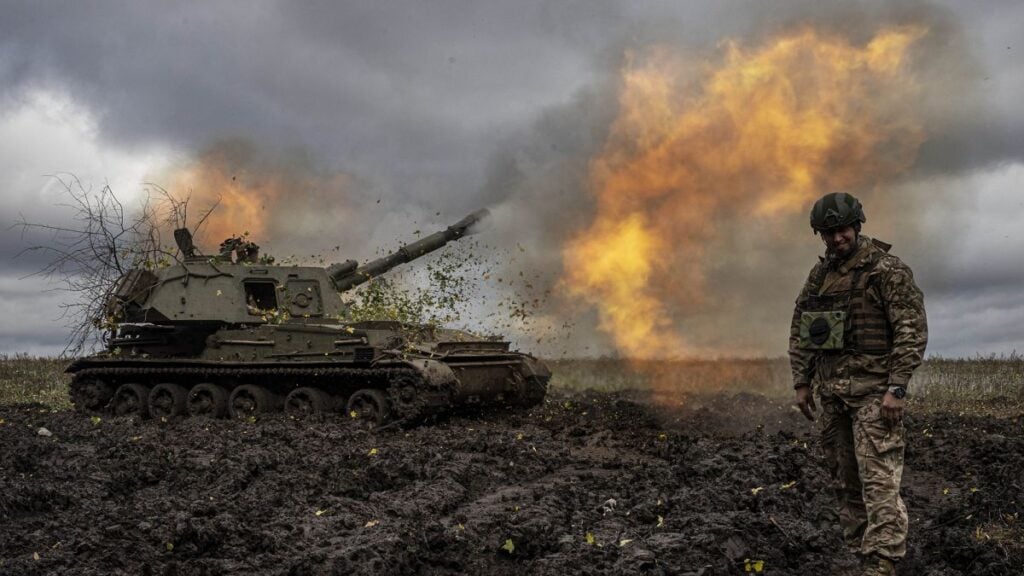
Russia’s war against Ukraine is often described in the Western media as a proxy conflict, i.e. a war in which the great powers fight through a “third” country. This term is also present in the rhetoric of Russian officials and propagandists. What is a proxy war and can this term be applied to Russia’s war against Ukraine? Why it is beneficial for the Kremlin to promote the thesis of a “conflict with the West” – read more in the article of
What is a proxy war?
Aproxy war is a conflict in which two or more great powers confront each other indirectly, through the support of third parties – usually in the form of weapons, money or influence, but not through direct participation.
Typical examples:
- The Vietnam War (US vs. USSR/China).
- The war in Syria (US, Russia, Iran, Turkey through local forces).
- The conflict in Yemen (Saudi Arabia vs. Iran).
The case of Ukraine: aggression or proxy?
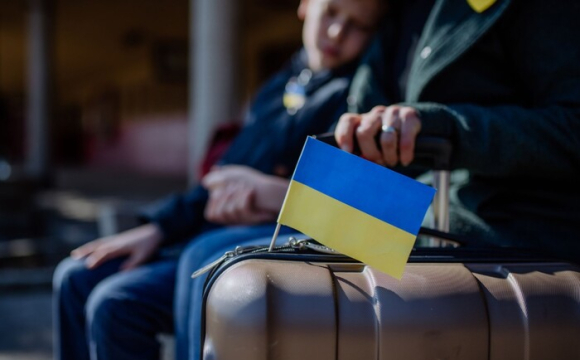
The Ukrainian state and society are not “puppets” of the West, as the Kremlin constantly tries to present. Ukraine is a sovereign state that has been subjected to an act of armed aggression by Russia. It is a direct war of Russia against Ukraine with the aim of destroying Ukrainian statehood, subjugating the people and taking imperial revenge. The previous U.S. administration shared the same view. Joe Biden explicitly rejected the phrase “proxy war” in relation to Ukraine, emphasizing that this is the Ukrainian people’s struggle for freedom.
“We are not seeking a NATO war with Russia. No matter how much I disagree with Mr. Putin, no matter how savage I think his actions are, the United States will not seek his overthrow in Moscow. Until the United States or its allies are attacked, we will not be directly involved in this conflict, either by sending American soldiers to fight in Ukraine or by attacking Russian forces,”
– Biden said.
Читайте нас у Telegram: головні новини коротко
What do those who call it a proxy war say?
Statements about the war in Ukraine as a proxy war appeared in the United States during Donald Trump’s second term in the White House. In March 2025, U.S. Secretary of State Marco Rubio said that Russia’s war against Ukraine is a “proxy war” between Washington and Moscow.
“Frankly, this is a proxy war between the nuclear powers-the United States, which is helping Ukraine, and Russia-and it has to end. But no one has any idea or plan on how to do that,”
– Rubio said in an interview with Fox News, published on the US State Department’s website.
The official’s comments were not left without a reaction from Moscow. Kremlin spokesman Dmitry Peskov said that this is fully in line with the position of the Russian authorities.
“We can and want to agree with this, and we agree with this. This is the case. And we have repeatedly spoken about this. We have said that this is, in fact, a conflict between Russia and the collective West, and the main country of the collective West is the United States,”
– Peskov said at the briefing.
Risks of rhetoric: who benefits from the “proxy war” formula
The term “proxy war” has been actively promoted by Russian propaganda for several years. Its purpose is to devalue the Ukrainian struggle, to present Ukraine as a “pawn” in global geopolitics, and to absolve the Kremlin of responsibility for the aggression.
This formulation is also convenient for those politicians in the United States who advocate for the curtailment of support for Kyiv: the conflict is protracted, futile, and therefore requires a “compromise” end.
Since the beginning of the full-scale invasion, Ukraine has insisted that this is not a proxy war, but a classic act of aggression – the invasion of one state into another. And the country is not fighting “for someone else,” but for its own existence.
Avoiding the term “proxy war” is not weakness, but a balanced diplomatic position. Sergiy Yahodzinsky, Doctor of Philosophy, Professor, Vice-Rector of the European University in an exclusive commentary
The scholar emphasizes that Russia is actively using the term “proxy war” to shift the responsibility for its aggression to the West.
“The Russian Federation finds it quite beneficial to say that the war in Ukraine is a proxy war, which is being waged because there are some global interests. That is why different states are solving their own issues on the territory of Ukraine.”
– Serhiy Yahodzinsky
But this is nothing more than an attempt to absolve themselves of responsibility for the invasion and turn Ukraine into a minor player. And Ukraine is not a field for other people’s battles, the professor emphasizes.
“Despite the war, we have not turned into a collection of certain private military companies. And we are maintaining the legal framework.”
– emphasizes Serhiy Yahodzinsky
Despite the restrictions on rights and challenges of wartime, statehood has been preserved. Ukraine is neither a failed state nor a foreign arena.
“The world is global – but this does not make us a proxy”
Yahodzinsky recognizes that any war in the 21st century has an international context.
“Any war today can be called a proxy war. Because the world is global. In the global world, there is no such thing as a war being fought on a local territory and not involving the interests of outsiders.”
– Serhiy Yahodzinsky
However, according to the professor, one should distinguish between influence and control. We are not fighting for the interests of other states. We are fighting to stop the armed aggression against our country, emphasizes Yahodzinsky.
Who benefits from the war in Ukraine?
The professor gives an example: other states may benefit from the war, but this does not change the main thing – a direct military conflict between two sovereign states:
“Let’s not hide the fact that China has received quite a few bonuses from the war in Ukraine. Taiwan also received them, and, accordingly, it received a relaxation from China. Because the US is not so much tied to this conflict today. Has Europe benefited? Yes. In 20-21, Putin used to impose extremely high energy tariffs. And today, Europe is living a great life – they have received oil and gas at tariffs they never expected.”
However, the professor notes that this is not a reason to downplay Ukraine’s role in the war. After all, we are not at war because someone used us. We are at war because Russia attacked. Because it believes that we are its vassal. Because it does not recognize our subjectivity. And we are defending our right to exist.
Therefore, statements that there is a proxy war in Ukraine are an outright manipulation and an element of Russian propaganda.
Читайте нас у Telegram: головні новини коротко