Failed laws and repeated votes: Servant of the People pointed to political bargaining as part of reality
15 January 19:44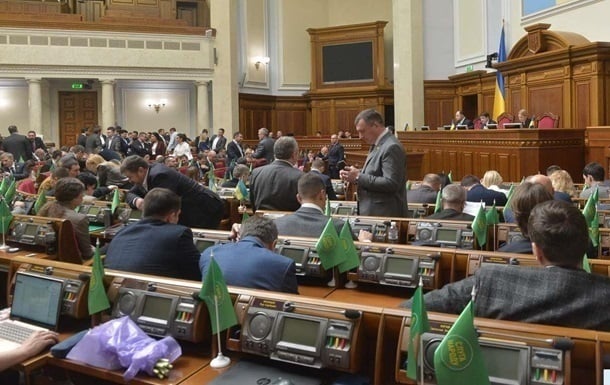
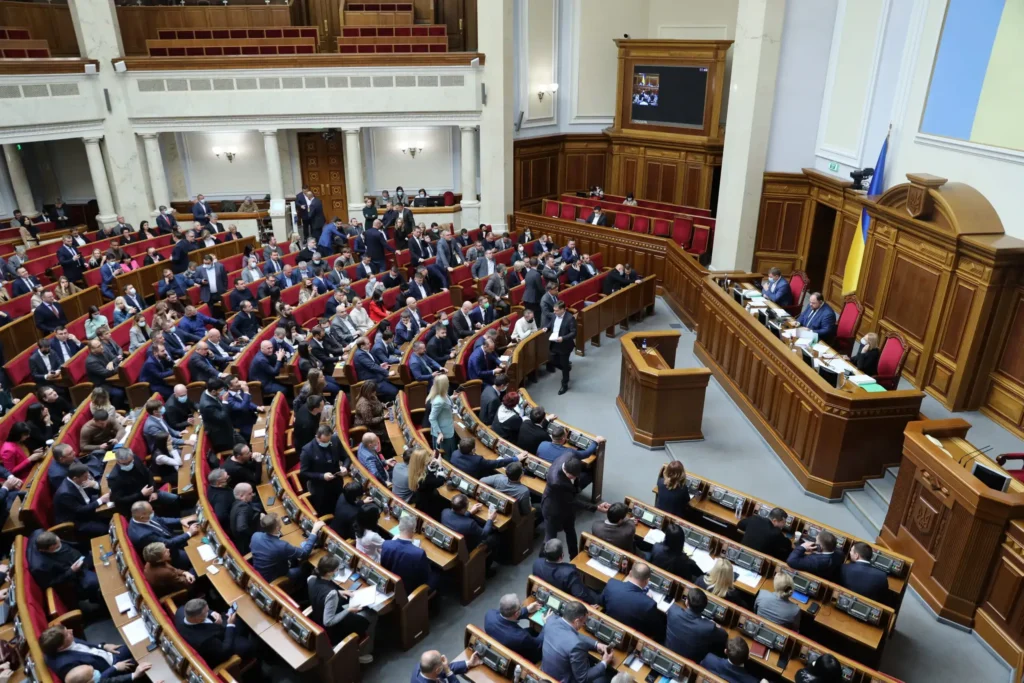
The January votes in the Verkhovna Rada were a clear example of the political crisis in which the Ukrainian parliament finds itself. Several key decisions—from personnel appointments to sensitive issues of mobilization—were either rejected or passed only on the second attempt. The opposition accuses the majority of being ineffective, some of the “servants” admit to political bargaining, and MPs publicly talk about a loss of trust, a lack of communication, and a lack of systemic decisions. Why is parliament increasingly “stumbling” on key votes, and what does this mean for the government and society?
On January 13, the Verkhovna Rada did not have enough votes to appoint Denys Shmyhal as the new Minister of Energy, and the personnel decision had to be made only on the second attempt.
The difference between the two votes was noted by Oleksiy Honcharenko, a member of parliament from European Solidarity. In his post, he drew attention to the change in the positions of individual factions:
“By the way, Batkivshchyna gave as many as four votes in favor of the appointment. Two abstained. And yesterday there were zero votes. Today, there were eight votes from Holos. Yesterday, there were zero. Today, there were 167 votes from Servants of the People. Yesterday, there were 153,” Goncharenko wrote.
He hinted that these figures may indicate active inter-faction negotiations and attempts by the Bankova to “push through” the necessary result between the first and second votes.
At the same time, parliament was unable to proceed to a vote on another high-profile appointment — Mykhailo Fedorov as Minister of Defense.
A similar situation arose in the Verkhovna Rada Committee on National Security, Defense, and Intelligence, which only supported the dismissal of SBU Chairman Vasyl Malyuk during a second review. On January 15, parliament failed to pass a bill on a 12-month deferral of mobilization for contract soldiers aged 18–25 — only 202 MPs supported the document in the second reading. Commenting on the failure of the vote, MP Mariana Bezuhla said:
“Everything you need to know when trying to resolve issues piecemeal without comprehensive solutions: without replacing the military leadership, without defining terms of service, rotations, without rethinking the work of the TCC and the deceitful front management system. […. ] The Verkhovna Rada has just closed due to a lack of votes,” Bezugla wrote.
The Batkivshchyna party explained the difference in votes for Shmyhal
In a comment to Komersant Ukrainsky, Oleksiy Kucherenko, a member of parliament from the Batkivshchyna party, reacted harshly to the votes of some members of the faction in favor of appointing Denys Shmyhal, who supported the candidate contrary to the official position of the party. According to him, such actions are unacceptable for an opposition political force and require internal party assessment and serious discussion. Kucherenko does not hide his indignation and emphasizes that factional discipline on this issue was clearly defined in advance.
“The fact that our four voted — well, not four, but three, because one person [ed. — Lyudmila Buimister] left and went away, and I applauded that. She should not have been accepted into the faction; it was a mistake, and this was discussed earlier. But as for our three deputies, I will insist that we have a very serious conversation with them. I categorically dislike this. I can guess why Ivchenko voted the way he did — this will be a separate, tough conversation. And Yulia Tymoshenko also said that such behavior is unacceptable,” Oleksiy Kucherenko emphasized.
At the same time, according to the MP, attention should be paid not to the arithmetic of individual votes, but to the systemic political problem.
“Here, we should not focus on the nuances, but on the fundamental point. Tymoshenko has never hidden this, and I personally support her: the existing coalition, the so-called mono-coalition, is incapable and unable to take responsibility, form a government, control it, and generate something adequate for the situation,” Kucherenko said.
Kucherenko emphasizes that the Batkivshchyna faction deliberately does not participate in votes on government appointments by the mono-majority.
“As an opposition force, we recognize that this is absolutely not the right coalition. Accordingly, we must have our own tactics and strategy for behavior and voting. We do not support, do not vote for, and do not take responsibility for their government appointments,” says Kucherenko.
Separately, Kucherenko reacted sharply to attempts to shift responsibility for the failure of the first vote onto the opposition.
“This is not a question for us. Why is Goncharenko looking at our voting? Let him look at how the so-called mono-coalition votes. They consistently give 150-160 of their votes, and the rest are added by other groups,” said Oleksiy Kucherenko.
Political bargaining is part of reality: the position of a deputy from Servant of the People
People’s Deputy from Servant of the People Georgy Mazurashu in an exclusive comment for the publication
“Personally, I was surprised that there were no votes for Shmygal’s appointment. I thought it would be voted through without any problems,” says Mazurashu
At the same time, the deputy does not rule out that behind the failed vote there are backroom deals:
“It is difficult for me to understand what is behind these ‘bars’, as I do not participate in various backroom deals. As you can guess from analyzing the past, various political bargains are quite common in our political tradition… This is a component of political life,” Mazurashu noted
According to the MP, even despite the awareness of the imperfection of such processes, they remain a reality of Ukrainian politics. It is possible to come up with and propose models that are closer to the ideal, but it is currently unrealistic to implement them.
The deputy explained separately why he personally did not support the candidacy of Denys Shmyhal, despite his respect for his experience and competence.
“I did not vote for the appointment of Denys Anatoliyovych, despite my genuine respect for him and his experience and competence, because I did not receive any understanding from the Ministry of Defense he heads in terms of ending the shameful ‘busification’,” said Georgiy Mazurashu.
Mazurashu gave a specific example, which, in his words, became fundamental for him:
“In response to a deputy’s inquiry regarding the ‘busification’ of a lawyer who had been removed from military registration (whom, as can be seen in the video, was dragged across the asphalt by his stomach while in uniform), his deputy officially replied that no physical force had been used against this citizen,” Mazurashu said.
The deputy assessed this response from officials as a blatant lie. This means that officials under Shmygal’s leadership also lied to voters, says the MP.
Mazurashu believes that ignoring the position of MPs and society will inevitably have political consequences.
Communication instead of pressure
In conclusion, Mazurashu emphasized that even in the difficult conditions of war, the key to supporting decisions should be dialogue, not coercion.
“MPs may disagree with some decisions. If these decisions are really promising and beneficial for the country, then it is necessary to communicate normally, talk, and with mutual respect, it is always possible to do more good. And if you rely only on threats and suspicions, I don’t think that’s a promising vector,” Mazurashu concludes.
Thus, the failure of the law on deferment for contract soldiers and the complicated appointment of Shmyhal have shown that without honest communication, clear rules of service, personnel accountability, and real coalition discipline, parliament will continue to be a source of political turbulence. In wartime, such instability is much more costly — both for the state and for society.