The Rada wants to change financial monitoring rules for politicians and state-owned banks: a provision regarding PEPs has been added to the bill on parcels
7 April 09:56
A new debate has erupted in the Verkhovna Rada over Bill No. 15112-1, which officially concerns the taxation of e-commerce transactions with value-added tax. The bill was registered on April 3, 2026; its sponsor is MP Andriy Motovylovets, and the relevant committee has already recommended that parliament adopt this specific version as a basis, rejecting several alternatives.
However, the public outcry arose not because of the parcels themselves, but because of another provision reported by MP Olga Vasilevska-Smaglyuk, according to "Komersant Ukrainian"
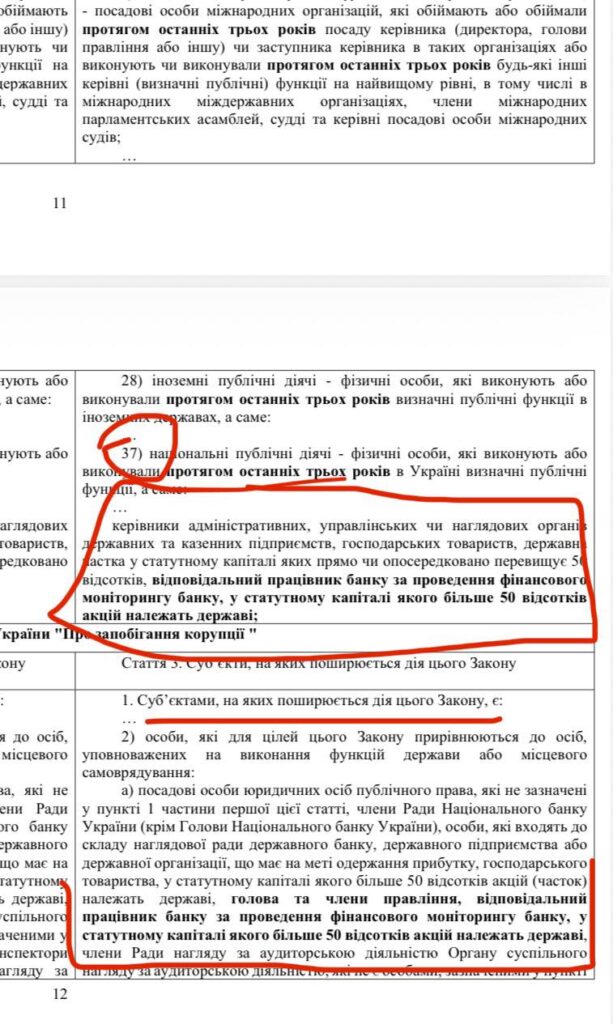
According to her, a provision was added to the bill that limits the status of national public figures subject to lifelong financial monitoring to three years after the end of their term of office.
“A provision limiting the status of national public figures subject to lifelong financial monitoring to three years after the end of their term of office was inserted into Motovilovets’ draft law on the taxation of parcels No. 15112-1,” she wrote.
Additionally, according to the lawmaker, the bill proposes designating employees of state-owned banks responsible for conducting financial monitoring as national public figures.
What is a PEP and why is this a sensitive issue
PEP stands for politically exposed person. Under Ukrainian law, this refers to individuals who hold or have held important government positions and are therefore considered a high-risk group for financial monitoring. It is precisely regarding such individuals that banks and other financial monitoring entities must pay heightened attention to the origin of funds and financial transactions.
The issue is particularly sensitive because in October 2023, Ukraine reinstated the lifetime PEP status, and the National Bank explicitly explained at the time that this decision was necessary to comply with international standards and obligations to the EU and the IMF.
The NBU emphasized that this specifically refers to lifetime status, although this does not imply an automatically equally strict approach to every transaction by such an individual.
What exactly they want to change now
If public statements regarding the amendment’s content are to be believed, the new rule effectively proposes reinstating the PEP status restriction three years after the end of a person’s term of office. In other words, instead of the current model of lifetime status, a time-limited approach is being reintroduced.
Another innovation mentioned in public statements is the designation of state bank employees responsible for financial monitoring as national public figures. This would expand the list of individuals subject to PEP rules to include not only politicians and officials in the traditional sense, but also a specific category of banking employees in the public sector.
Why this caused a stir
The controversy arose for two reasons. The first is substantive: the proposal touches on the highly sensitive area of anti-corruption oversight and financial monitoring of politically exposed persons.
The second is procedural: we are talking about an amendment to a bill that officially concerns the taxation of e-commerce and parcels—a topic that, at first glance, seems far removed from the PEP regime.
Is the lifetime PEP status currently in effect in Ukraine?
Yes. This is precisely the rule that was reinstated following the 2023 amendments. The National Bank explicitly stated in its official clarifications that the law restored the lifetime PEP status, which had previously been limited to the term of office and three years following dismissal.
Therefore, if the provision from draft law 15112-1 is indeed adopted as described, it will mean a reversal of the model —from lifetime status to a three-year restriction following the end of term. This is precisely why the amendment appears politically and reputationally sensitive.
What is known about Bill 15112-1
The bill’s entry on the Verkhovna Rada website confirms that No. 15112-1 is registered as a draft law amending the Tax Code of Ukraine regarding the taxation of e-commerce transactions with value-added tax. The relevant committee has already recommended that parliament adopt it as a basis, and a separate draft resolution on this decision has been registered.
In other words, from a formal standpoint, this is indeed a bill concerning parcels and e-commerce. And that is precisely why the story surrounding the PEP amendment has attracted so much attention: it appears as a provision from a different subject area, tacked onto an economic document. This does not automatically prove the illegitimacy of such an approach, but it certainly creates political and public controversy surrounding the bill.
What this could mean going forward
If the amendment remains in the text and is supported by parliament, the logic of financial monitoring for former high-ranking officials in Ukraine may change. This would mean that three years after the end of their term, a person would no longer have the special status of a national PEP for financial monitoring purposes. At the same time, some employees of state-owned banks responsible for financial monitoring may, conversely, receive such status.