Zircon and Oniks missiles: why they are difficult to shoot down
25 March 2024 15:11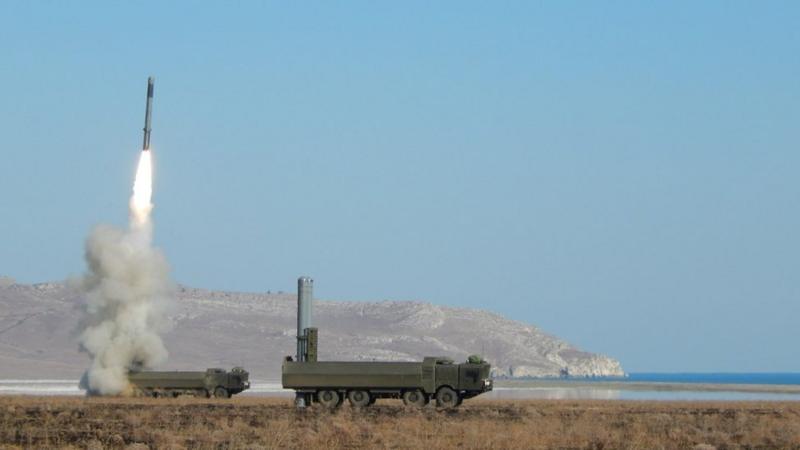
It is likely that during the shelling of Kyiv on the morning of 25 March, Russia used Zircon or Oniks missiles, which are not always shot down by the Ukrainian air defence system. Komersant ukrainskyi  looked at what these missiles are and how to deal with them.
Russian Zircon and Oniks missiles are modern missile systems that pose a serious threat to Ukraine.
A Zircon missile
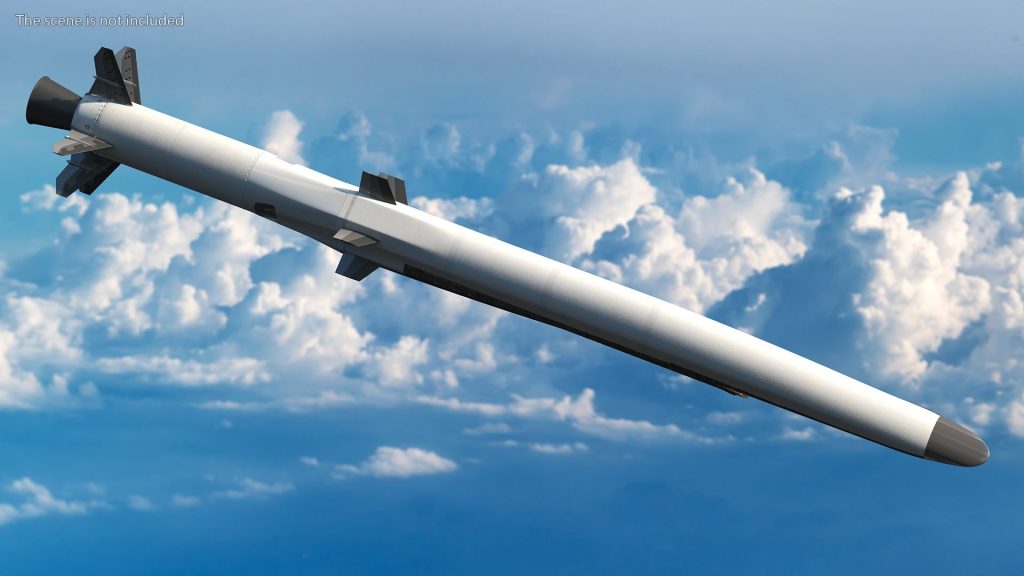
“The Zircon is one of the latest developments of the Russian Federation, adopted only in 2023. Its fundamental difference from missiles is its high speed: the hypersonic weapon can reach approximately 11,016 km/h, according to Russian sources.
Technical characteristics:
- Speed: The Zircon missile has a supersonic speed exceeding the speed of sound several times (Mach 8-9). This makes it very difficult for defence systems to detect and intercept.
- Range: 450-650 km (according to European experts), and according to the Russian Federation – 1,000 km.
- Manoeuvrability: “The Zircon can perform radical manoeuvres during flight, making it difficult to destroy.
- Areas of use: “The Zircon can be launched from shore-based installations, as well as from sea and air platforms, providing a wide range of possible targets
- Payload – 300 (up to 400) kilograms.
- Theprice of the Zirconmissile is unknown.
Oniks missile
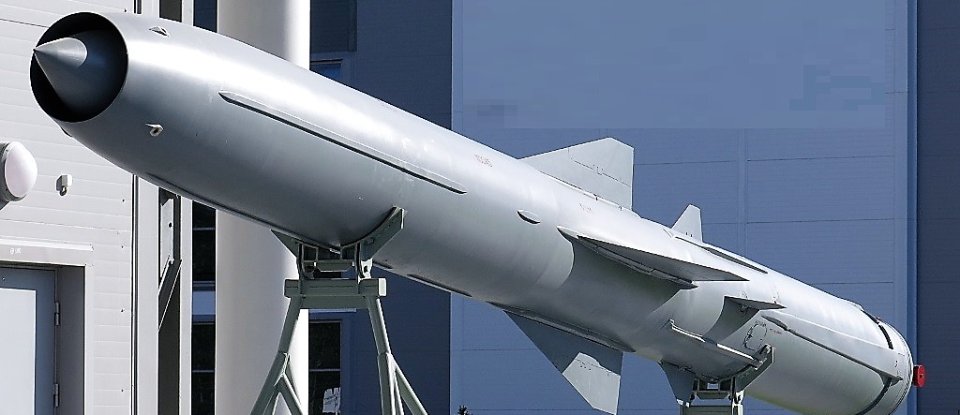
The Oniks missile is versatile in that it can be launched from submarines, ships, aircraft, etc. Bastion coastal systems are used for strikes against Ukraine.
Technical characteristics:
- Speed: Although the Oniks’ speed (Mach 2.5-3) is lower than that of the Zircon, it is still relatively high and allows the missile to approach the target quickly.
- Range: The range of the basic version of the Oniks missile is 300 km. In 2019, the Russian Armed Forces adopted Oniks-M missiles with a range of up to 800 km.
- Manoeuvrability: “The Oniks is also highly manoeuvrable, making it difficult to intercept.
- Areas of use: “The Oniks is designed to attack both land and sea targets, including ships and coastal installations.
- Thewarhead of the Oniks weighs 300 kg.
- Theprice of an Oniksmissile is $1.25-1.3 million.
Why is it difficult to destroy Zircon and Oniks?
It is very difficult or impossible to shoot down these missiles with most air defence systems available in Ukraine. The main problem for our air defence is high speed and low altitude.
Former Ukrainian Air Force spokesman Yuriy Ihnat explained why it is difficult for Ukrainian air defences to shoot down the Oniks missiles that Russia used to attack Odesa and Mykolaiv. According to him, these missiles fly at high speed and low altitude, making them difficult to detect and shoot down.
“Oniks missiles are designed to destroy boats and ships, they fly at Mach 2.6. That’s over 3000 km/h, so the speed is high. When on the march, it can climb high to save fuel, and when it hits the target, it can actually fly 10-15 metres above the water to destroy the ship,”
– said the serviceman.
“This makes it very difficult for our radars to capture them. The Oniks system is invisible to radar stations because it uses technologies that reduce radio signal reflection (STELS). Therefore, the Oniks missile is more difficult to intercept than the subsonic Kalibr, and it is cheaper to produce than Russia’s new Zircon and Kinzhal hypersonic missiles.
Yuriy Ihnat also clarified that it is difficult to fight such missiles, but it is possible to use certain electronic warfare (EW) tools.
To destroy Russian Oniks missiles, Ukraine needs more American Patriot anti-aircraft missile systems. The French SAMP/T missile defence system could also be effective against Onyx missiles.
In such cases, the most effective response would be to destroy the Bastion launchers based in Crimea.